

Can translation practice go hand in hand with local history? Can literary studies intertwine with historical research—and can learning a foreign language open a window into the remarkable lives of German settlers who made Russia their home? It turns out, it absolutely can!
This academic year, third-year students majoring in “Foreign Philology (German Language and Literature)” at Samara University took part in a unique practicum that merged linguistic training with historical discovery. As part of their translation coursework, they joined a project dedicated to studying the heritage of the Volga Germans.
The initiative was led by the Samara Center for German Culture “Nadezhda” (Hope). Students worked directly with archival handwritten documents from the 1920s—ethnographic and local history materials related to the Zelman Canton of the former Volga German Autonomous Republic. Their task: transcribe and translate these fragile manuscripts into printed form in both German and Russian.
Despite the complexity of the script and historical terminology, the students completed this meticulous work efficiently and accurately. In deciphering the texts, they not only significantly expanded their German vocabulary but also gained profound insights into the lives, traditions, and struggles of German settlers in early Soviet Russia—broadening their cultural and historical horizons in the process. The digitized materials now offer invaluable firsthand testimony about life in this vivid and transformative period of Russian history.
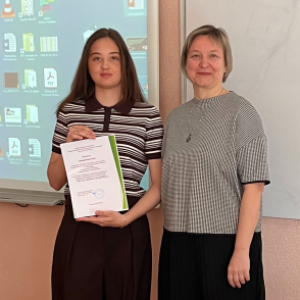
The project will culminate in the publication of a new volume in the series “Our Canton: Local History Materials.” In recognition of their dedication, active participants received certificates of appreciation, presented by Yulia Nikolaevna Kartashova, Director of the Samara Center for German Culture “Nadezhda.”
The Department of German Philology extends its sincere gratitude to the Center’s staff for this meaningful collaboration—proving once again that language is not just a tool for communication, but a bridge to the past.
