

Scientists from Samara State Medical University (SamSMU) and Samara University are continuing their groundbreaking research on microorganism strains, plants, and seeds that orbited Earth aboard the Bion-M spacecraft in 2013 and Bion-M No. 2 in 2025.
This interdisciplinary effort is led by the Department of Medical Microbiology and Immunology and the Scientific and Educational Professional Center for Genetic and Laboratory Technologies at SamSMU, alongside the Department of Pharmacognosy with Botany and Fundamentals of Phytotherapy. From Samara University, the research involves the Botanic Garden and the Department of Ecology, Botany, and Nature Conservation.
"Cosmonaut" Bacteria: Preparing for Deep Space
Researchers have evaluated how the extreme factors of spaceflight affect the functional and biological properties of these "cosmonaut" bacteria. The primary goal is to understand how radiation and microgravity influence microorganisms. Ten species of microorganisms—representatives of the normal human and environmental microflora, including non-pathogenic Neisseria, Streptococcus, and several Gram-negative bacilli—were sent into space.
"This is crucial for understanding what might happen to the human body in space," says Olga Kondratenko, Doctor of Medical Sciences, Associate Professor, and Head of the Department of Medical Microbiology and Immunology at SamSMU.
"Looking ahead to long-term, multi-year deep space missions, we must ensure that astronauts remain safe from the adverse effects of the space environment and do not require emergency medical intervention. Furthermore, these studies could reveal new microbial properties acquired in space, which could be highly beneficial for biotechnology, genetic engineering, and the development of novel antibiotics."
This marks the second batch of bacteria to return from orbit. Each time, SamSMU scientists select a diverse set of microorganisms to track changes in their properties. Specialists have assessed their viability and genetic features post-flight, compiling a massive volume of analytical reports.
"The Samara Region has deep historical ties to space exploration, and we are incredibly proud of that," Kondratenko adds. "Therefore, it is vital for us that representatives from various local disciplines participate in such experiments. It’s a way to discover new things about microorganisms and contribute to the advancement of global science."
Orbital Seed Banks and Rare Flora
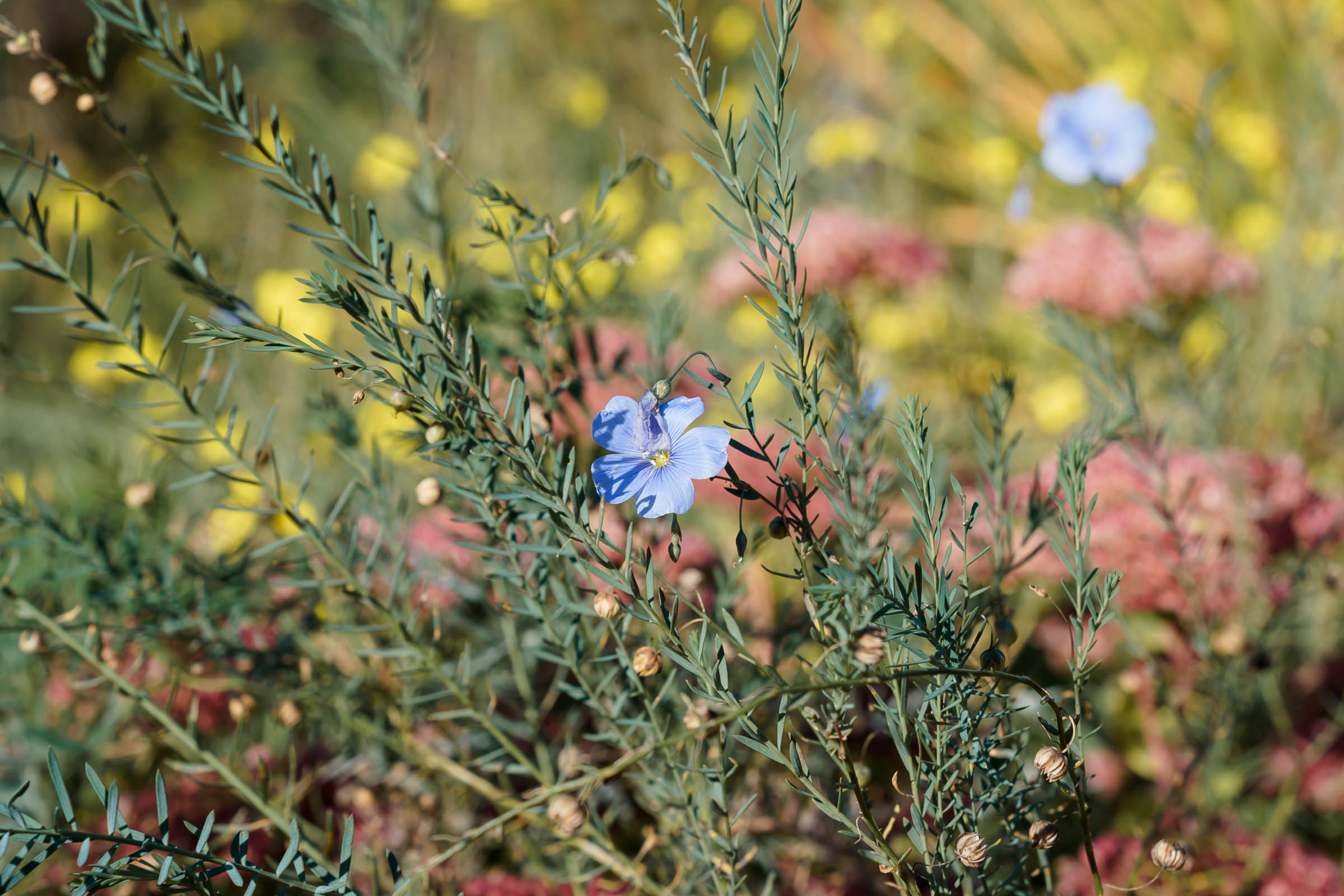
Seeds of rare plants, specially selected by Samara University scientists, also journeyed into space. The collection included Clematis integrifolia, Alpine aster, Andrzejowski's pink, perennial flax, Greek valerian, large-cupped primrose, dwarf iris, martagon lily, and pasqueflower.
"The choice of wild, predominantly rare native flora seeds is driven by the need to evaluate their potential placement in extraterrestrial orbital seed banks," explains Lyudmila Kavelenova, Doctor of Biological Sciences, Professor, and Head of the Department of Ecology, Botany, and Nature Conservation at Samara University.
"Seed banks could be deployed in space, safeguarding them against natural catastrophes on Earth. Moreover, in the future, such orbital banks could support interplanetary missions. Only experiments that begin in orbit and conclude on Earth allow us to fully assess the complex impact of the space environment on seeds."
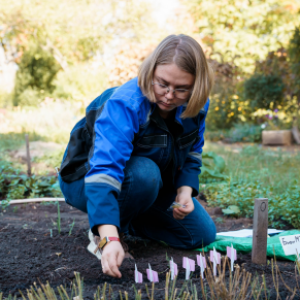
The "cosmonaut" seeds were planted in the Samara University Botanic Garden, where they are now under continuous, multi-year observation. Scientists are evaluating seed germination rates, plant development, leaf and flower morphology, and microscopic structural changes.
"Field trials conducted in the Botanical Garden after the first Bion-M flight showed that space had a stimulating effect on several plant species—seed germination rates reached 70-80%, compared to just 30-50% for seeds that never left Earth. Currently, we are evaluating how spaceflight factors have affected the seeds that returned on Bion-M No. 2," Kavelenova added.
Unlocking New Medicinal Properties
SamSMU scientists are also investigating how spaceflight factors influence the biosynthesis and anatomical-morphological characteristics of medicinal plants with immunomodulatory, regenerative, and diuretic properties.
"First and foremost, we are interested in the chemical composition—the metabolome," explains Vladimir Kurkin, Doctor of Pharmaceutical Sciences, Professor, and Head of the Department of Pharmacognosy with Botany and Fundamentals of Phytotherapy at SamSMU.
"These are the substances used to evaluate the quality of raw materials and pharmaceuticals. We need to understand how spaceflight factors alter the plant's chemical profile—whether the indicators improve or degrade. It is also possible that new substances with unique properties could be synthesized. Perhaps a plant could become a source for a completely new drug with a different therapeutic effect. Deep space flights will happen eventually. Depending on the changes we observe, we can make informed decisions on how to minimize the harmful effects of the space environment on both plants and humans. Participating in this research gives you the profound feeling that you are contributing to a grand global space project. Humanity dreams of conquering space and finding new habitats. We are thrilled to contribute and bring tangible benefits to our country," Kurkin concluded.
Background Information:
"Bion" is a series of spacecraft developed by the Progress Rocket Space Centre, designed for research in space biology, physiology, and biotechnology. Bion-M was launched on April 19, 2013, to conduct fundamental and applied space biology experiments in orbit, with results returned to Earth. After a 30-day mission, Bion-M landed in the Orenburg Region. The scientific program included 79 experiments covering biomedicine, gravitational biology, radiation physics, radiobiology, exobiology, and biotechnology.
Bion-M No. 2 was launched into space on August 20, 2025. A portion of its scientific hardware and equipment was designed and manufactured at Samara University. The mission's preparation involved staff from the university's Faculty of Biology, Botanic Garden, Institute of Space Instrument Engineering, and the Research Institute of Modeling and Control Problems, alongside scientists from across Russia.
The spacecraft carried 75 mice, approximately 1,500 fruit flies (Drosophila), fungi, bacteria, cellular tissues, and seeds of 25 rare plants from the Samara Botanic Garden (some of which are descendants of the seeds that flew on the first Bion in 2013 and successfully germinated upon their return). A primary goal of the scientific program is to investigate the biological effects of microgravity and high levels of cosmic radiation on living organisms at the systemic, organ, cellular, and molecular levels.
