

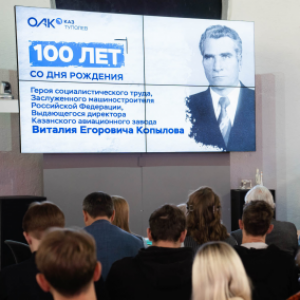
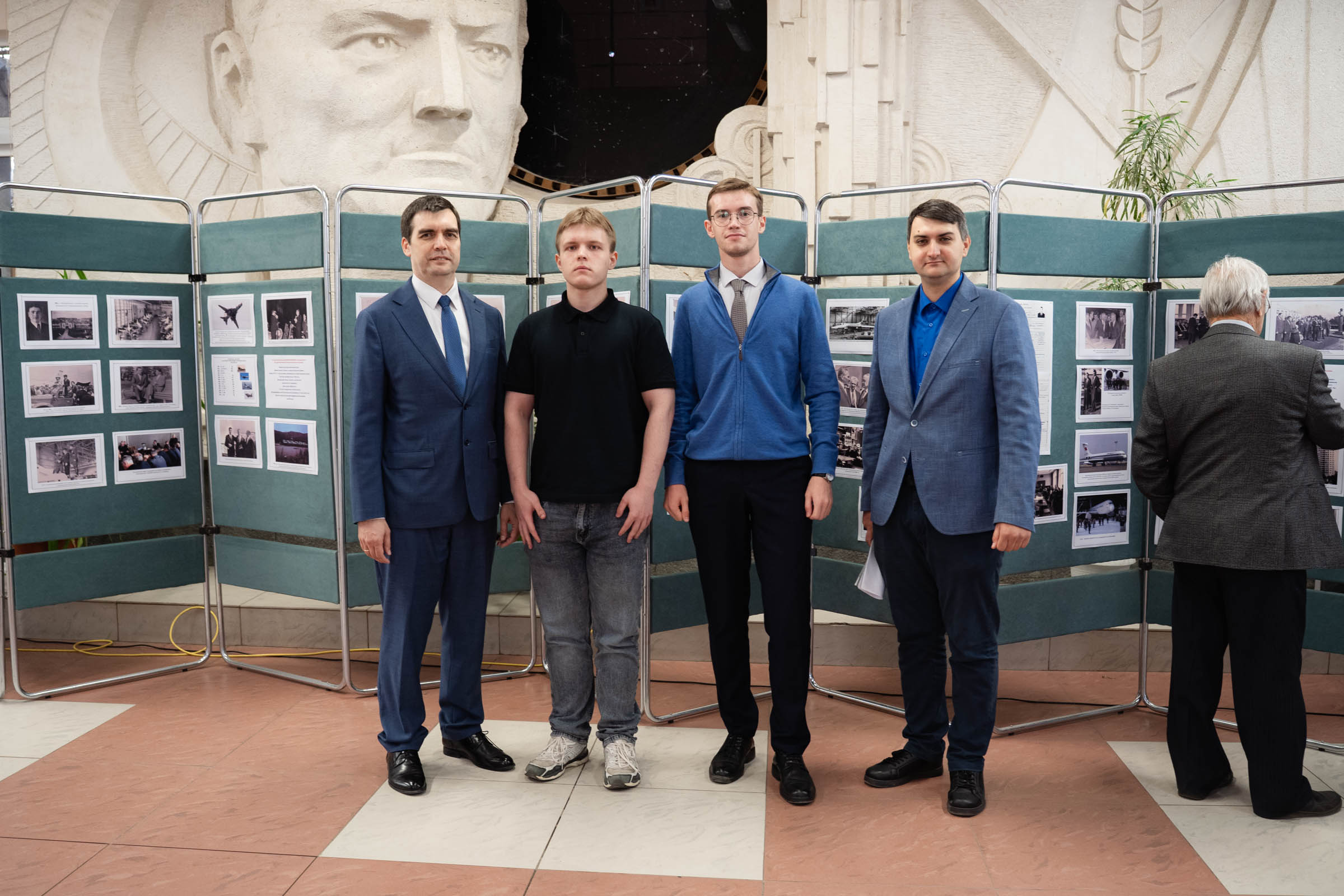
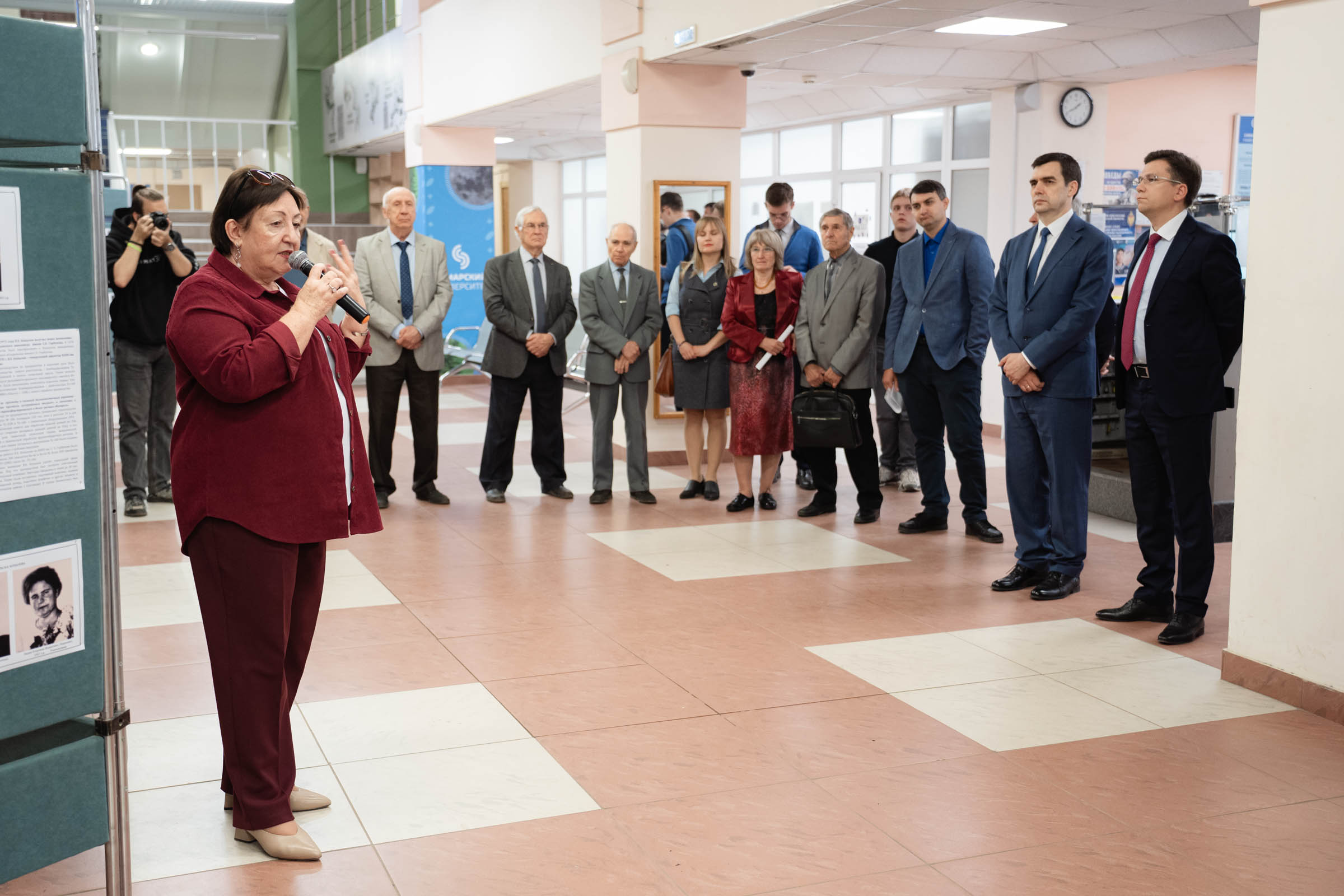
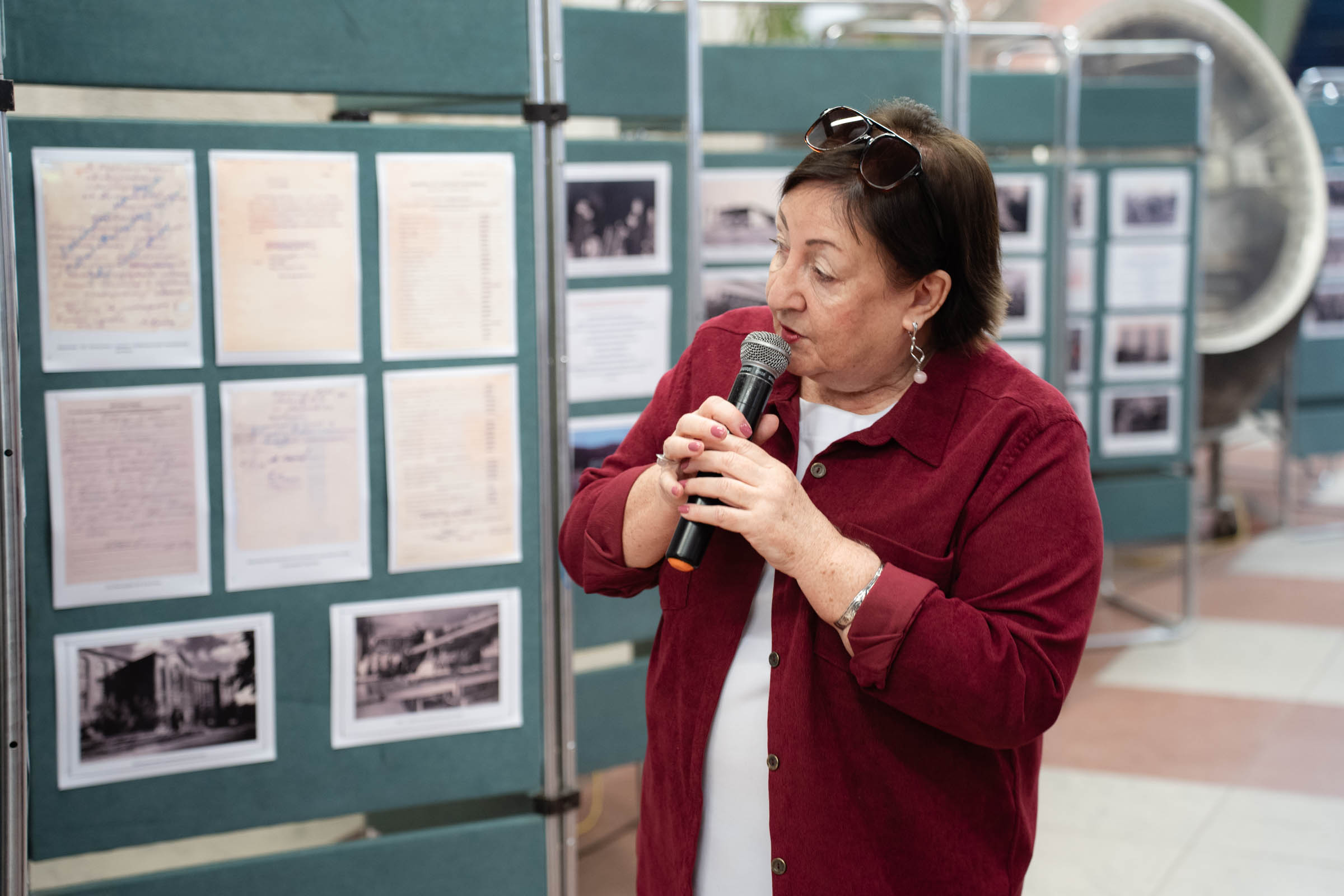
This week, an exhibition titled "The Legendary 'Red Director'" opened in Building 3 of Samara University. The event is dedicated to the centenary of the birth of Vitaly Yegorovich Kopylov, an outstanding alumnus of the Kuibyshev Aviation Institute (KuAI).
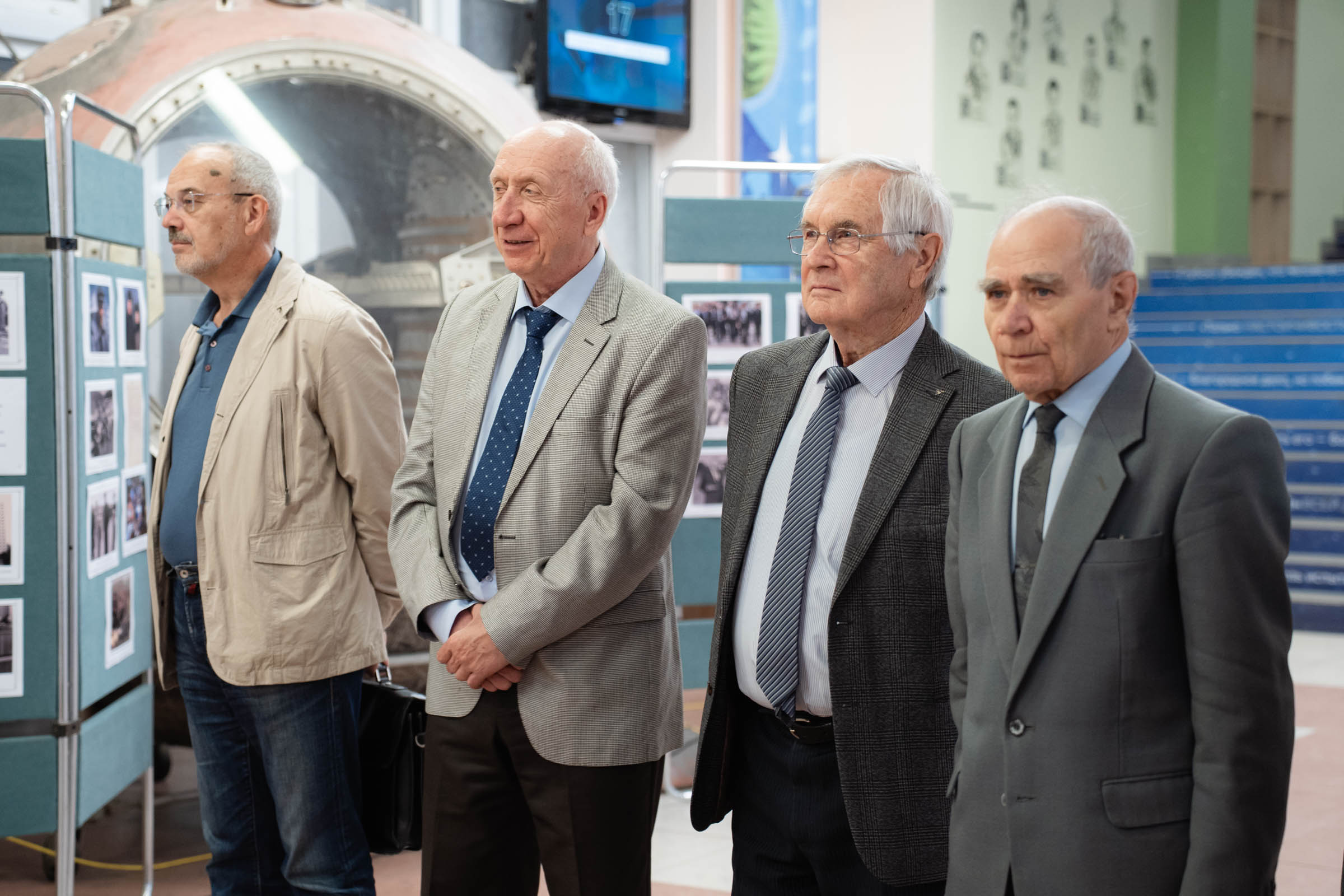
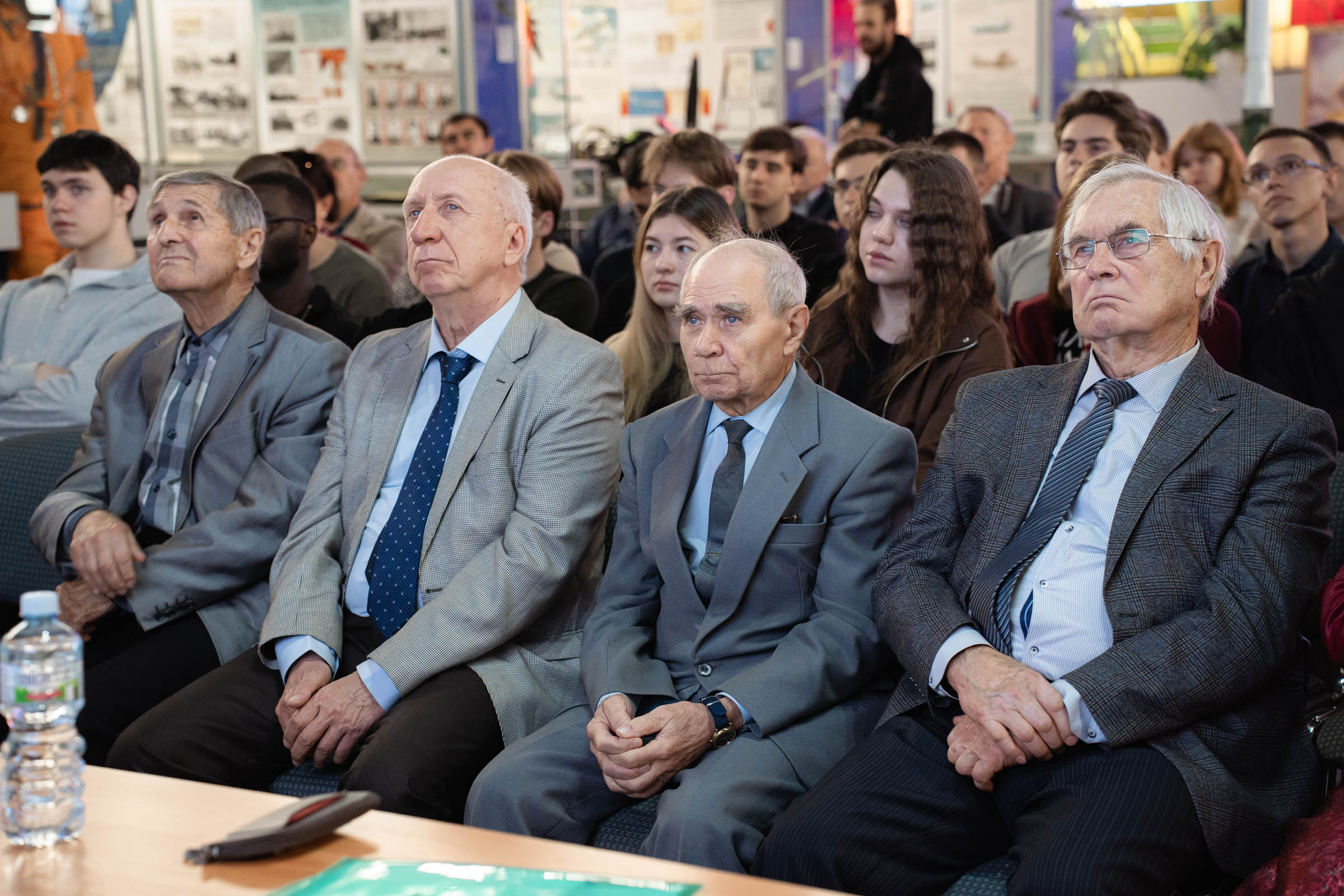
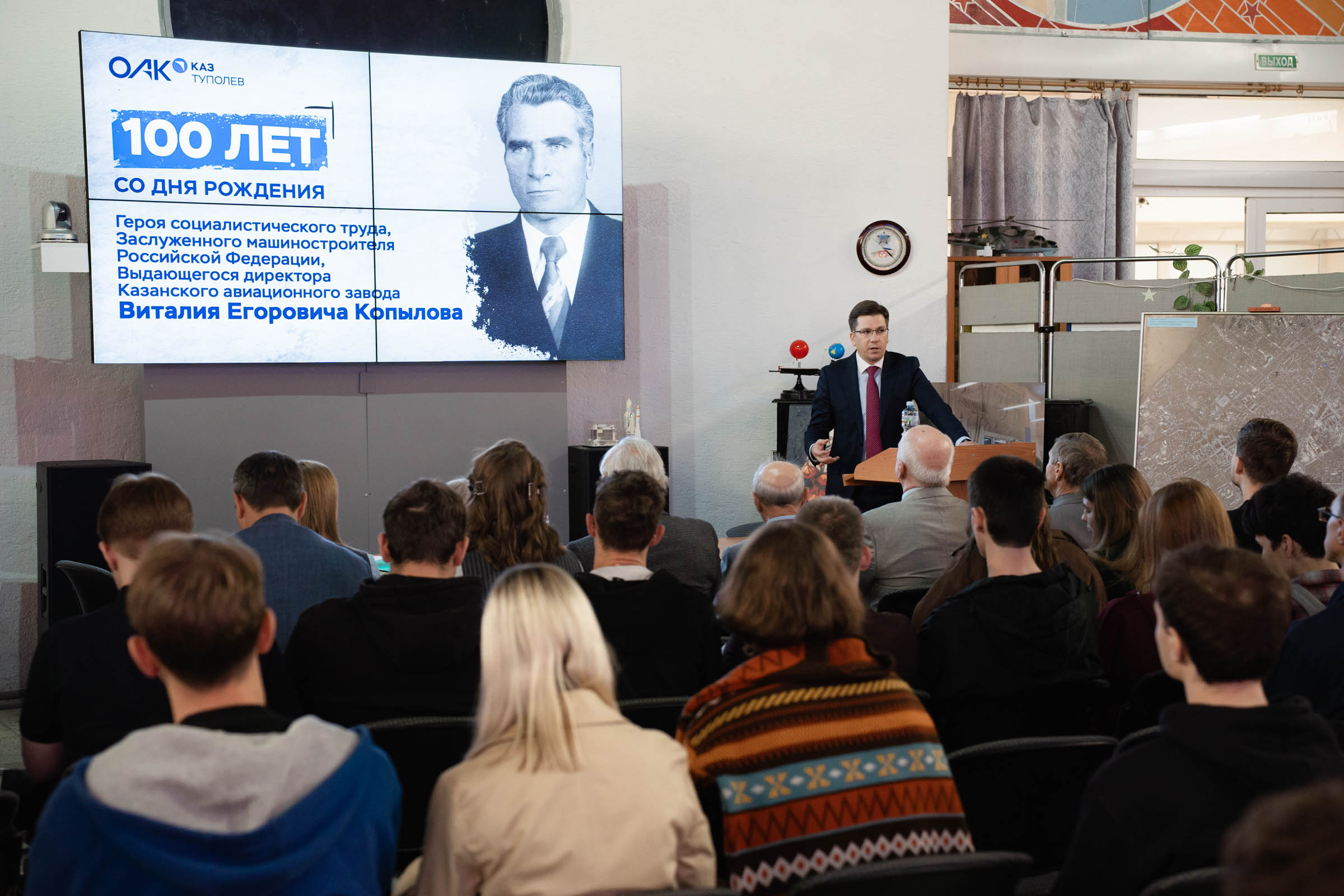
On the same day, a lecture honoring the jubilee figure was held at the University Museum of Aviation and Cosmonautics. The commemorative events were attended by KuAI and Faculty of Aircraft alumni, faculty members, and guests from the S. P. Gorbunov Kazan Aviation Plant, the Ural Civil Aviation Plant, PJSC "UEC-Kuznetsov," and the Samara branch of the Tupolev Design Bureau.
Bridging the Generational Communication Gap
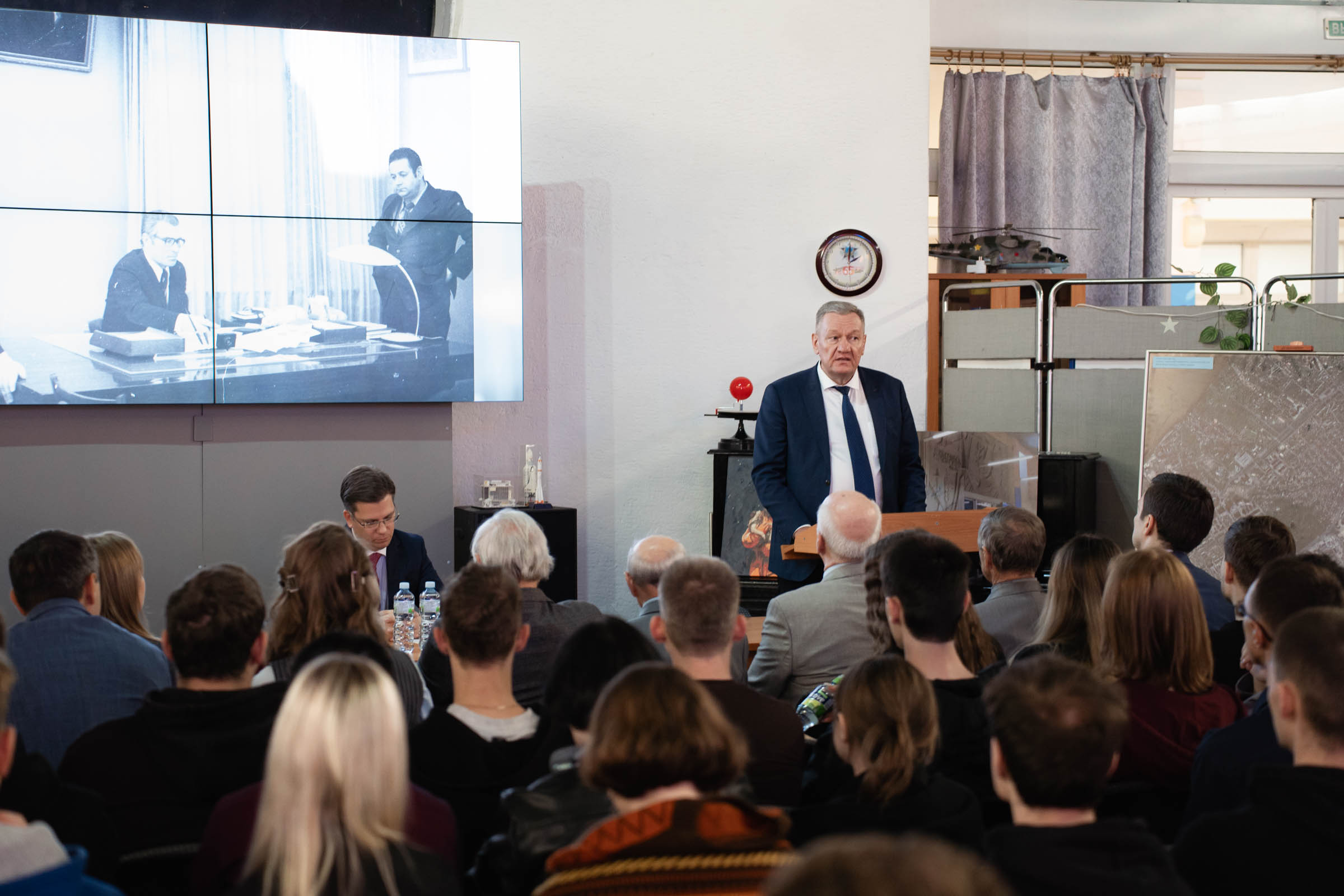
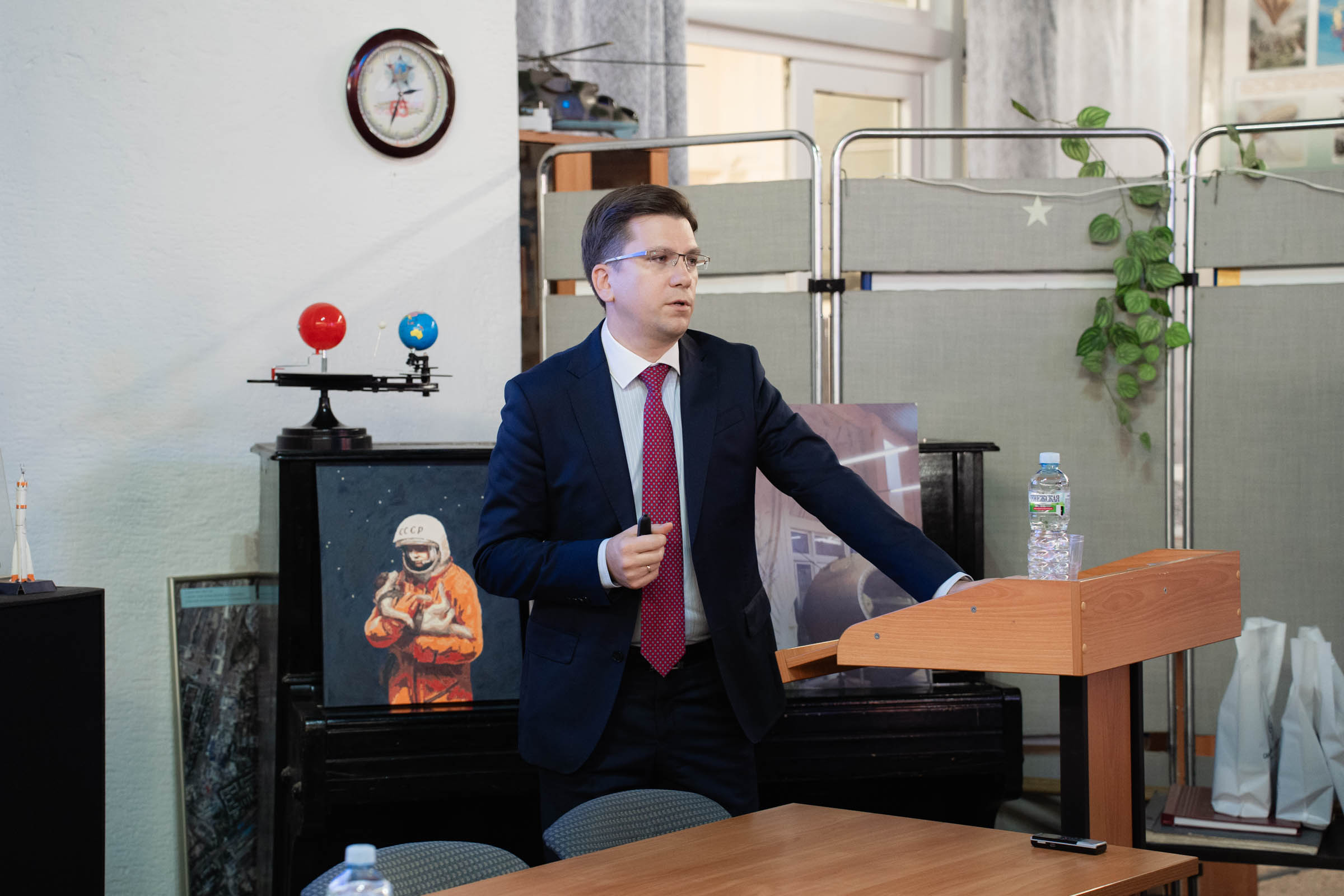
Sergey Tishin, Deputy Minister of Industry and Trade of the Samara Region, addressed the participants. He emphasized that Vitaly Kopylov’s life path proves that a graduate of Samara University can reach the highest professional peaks.
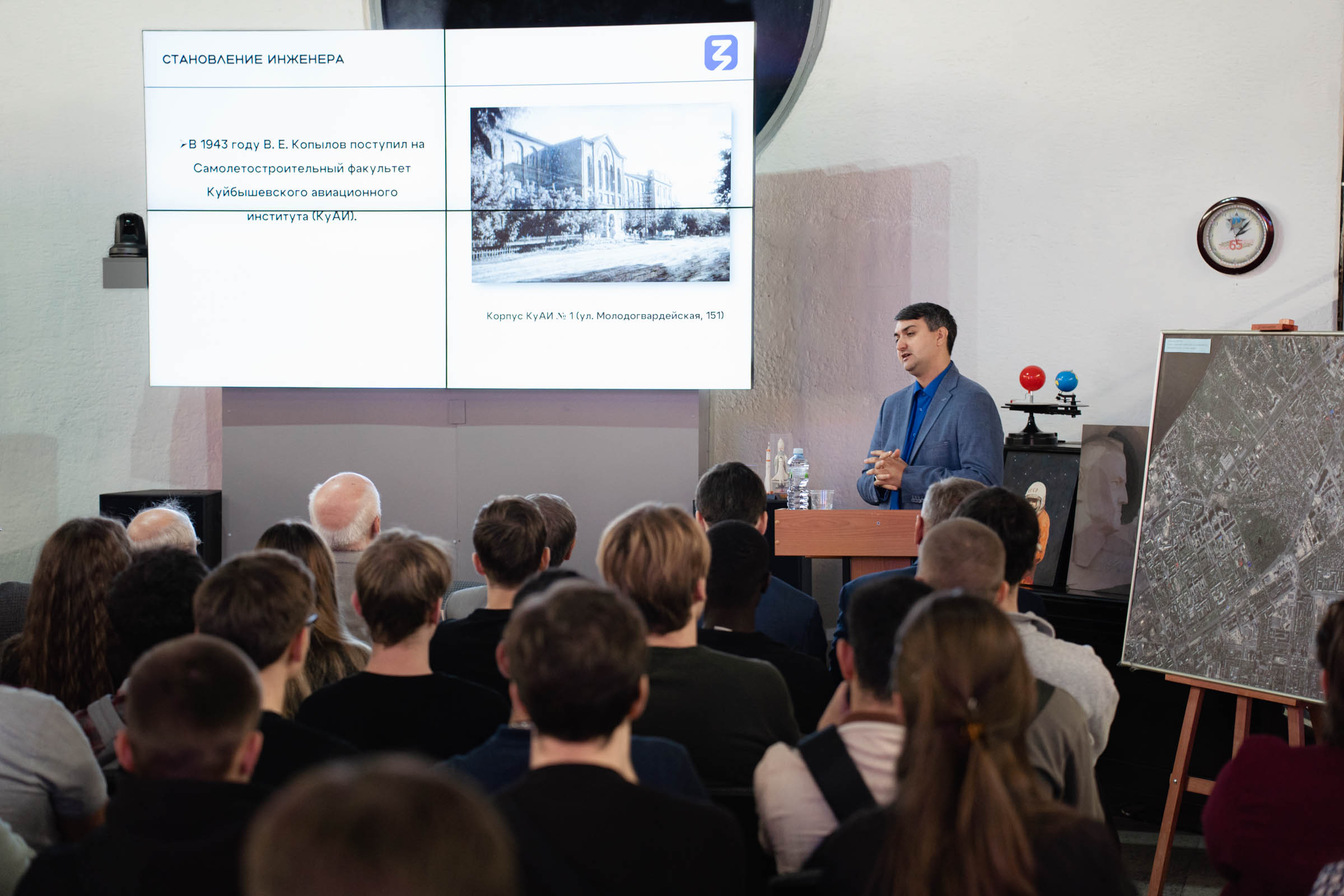
Mikhail Leonov, Vice-Rector for Educational Work, noted that while KuAI has produced brilliant alumni, a generational communication gap means not all young people today know about them. To bridge this gap, Andrey Eliseyev, Associate Professor at the Department of Russian History and Historiography, shared key moments from the legendary aircraft builder's biography as part of the activities of the "Znanie" (Knowledge) Society.
"When you delve into the history of Vitaly Yegorovich Kopylov, you see the sheer scale of this figure and his immense contribution to the aircraft manufacturing industry," Eliseyev emphasized.
Kopylov’s life journey spanned three cities: Kuibyshev, Komsomolsk-on-Amur, and Kazan. After graduating from KuAI in 1949, he was assigned to Komsomolsk-on-Amur, where he climbed the career ladder from technologist and head of the technical bureau to senior shop foreman, shop manager, chief plant technologist, and finally Deputy Chief Engineer of the Far Eastern Machine-Building Plant. Thus, he knew the enterprise inside and out. At the age of 39, he became the plant's director. Initially, the plant produced Su-7 aircraft, but under Kopylov’s leadership, it transitioned to assembling the Su-17 with variable-sweep wings. By 1991, around a thousand of these aircraft had been exported to 15 countries, and even today, some remain on active duty. For this achievement, Vitaly Kopylov was awarded the title of Hero of Socialist Labor.
His next major challenge came in 1973 when he was appointed director of the Kazan Aviation Plant. Under Kopylov, the plant produced the Il-62 (then the primary aircraft for the country's leadership), the Tu-22M strategic bomber, and the Tu-160, affectionately known as the "White Swan" due to its elegant design.
Beyond aircraft manufacturing, Vitaly Yegorovich ensured a high quality of life for the plant's workers, overseeing the construction of housing, schools, and hospitals. It was during this period that his demanding and rigorous leadership style was forged. He maintained complete control over all production processes, practically living at the plant, and expected the same dedication from his management team.
"I remember going to his office to request my annual leave and feeling like a deserter abandoning the battlefield at the most critical moment," recalled one employee.
"Vitaly Yegorovich Kopylov preferred to speak briefly, clearly, and persuasively. He wrote the same way—without jargon, focusing on substance. It is no surprise that he disliked listening to long reports," added Andrey Eliseyev. "He was strict, valued discipline, and was a firm but fair man. If an employee struggled, he would help them, but if he saw negligence, he would penalize them."
"It is fundamentally important that we continue to remember our outstanding alumni and tell the younger generation about them, hoping that they will carry the knowledge of great figures like Vitaly Yegorovich Kopylov forward," emphasized Ivan Tkachenko, Director of the Institute of Aerospace Engineering (IAE). Through the lens of Kopylov’s biography, he spoke about IAE's past, its current research projects, and its future objectives.
The "SamSat-Korolevets" Educational Project
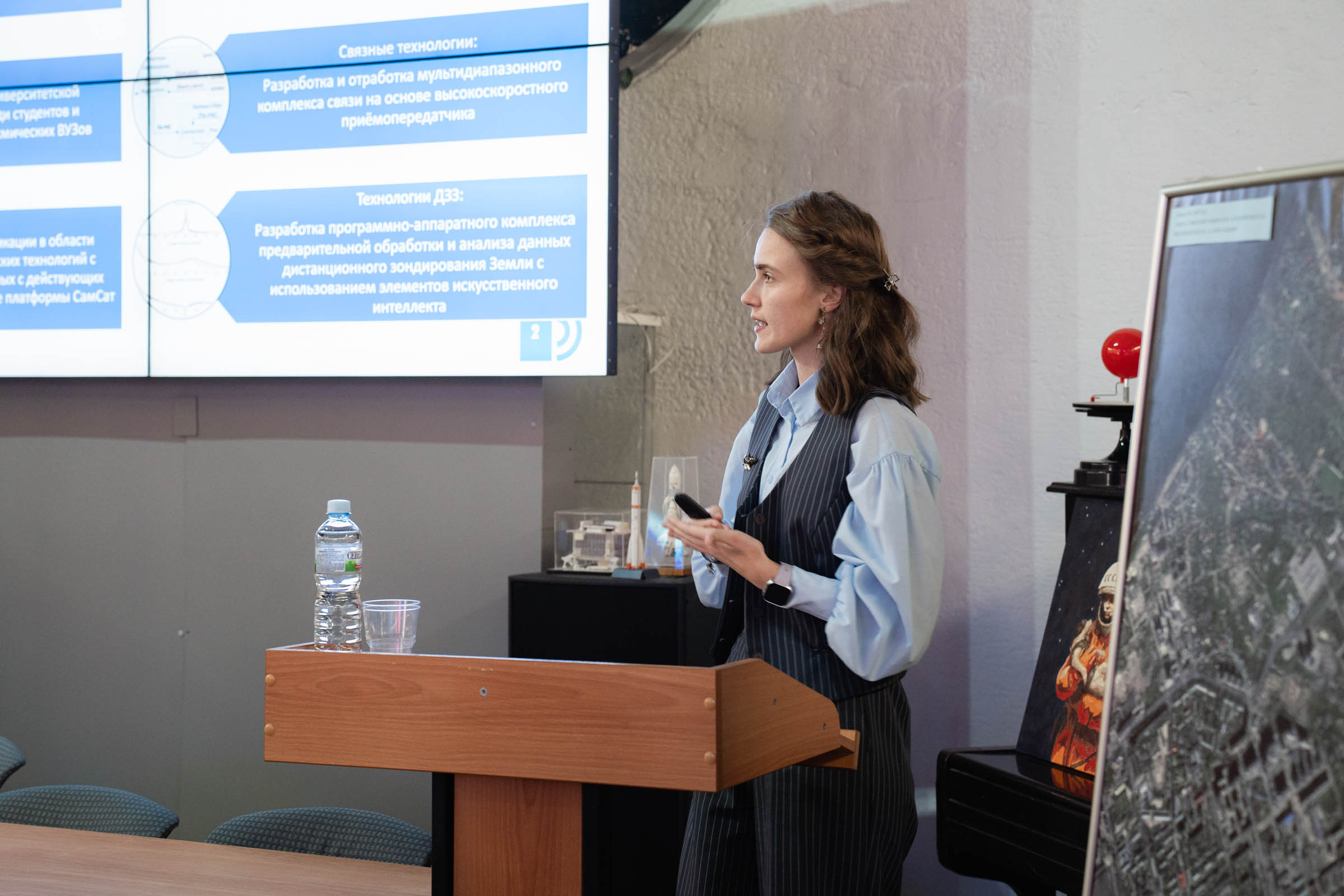
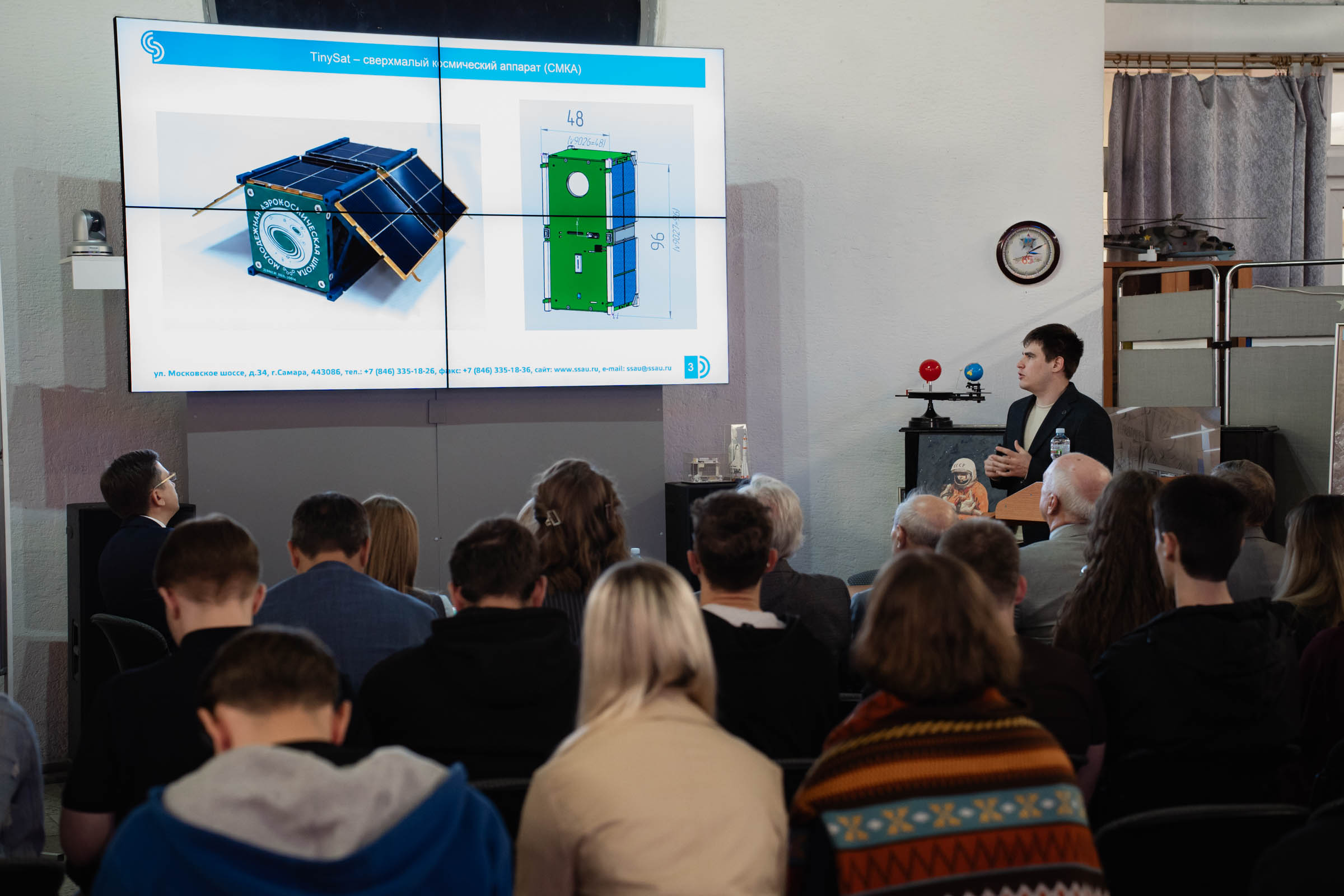
The future of the institute was presented to the event participants by master's student Polina Yakovleva and postgraduate student Sergey Ivlev. Polina spoke about the implementation of the "SamSat-Korolevets" nanosatellite project, while Sergey presented the project to create a constellation of ultra-small spacecraft. Both projects are being carried out under the Russian Ministry of Science and Higher Education's federal project "Personnel for Space" within the national "Space" project.
As the Chief Designer of the "SamSat-Korolevets" spacecraft, Polina highlighted two main directions of the project: the educational component, where over 30 students are being trained to work with nanosatellites, and the practical component, which involves the actual creation of the spacecraft (whose name pays homage to Sergei Pavlovich Korolev).
The nanosatellite is planned to carry three payloads: a navigation receiver, a communication complex, and an optical Earth observation complex. The spacecraft platform includes all basic systems necessary for operation. The nanosatellite will be able to broadcast messages and photos as it passes over various points on Earth, including on Cosmonautics Day, allowing radio amateurs worldwide to decode the greetings and images. The spacecraft is also scheduled to conduct a series of scientific studies in the field of Earth remote sensing. Data from the satellite will be received at the Flight Control Center of the Interuniversity Department of Space Research, with the students themselves acting as communication session operators.
A Constellation of Eight Ultra-Small Spacecraft
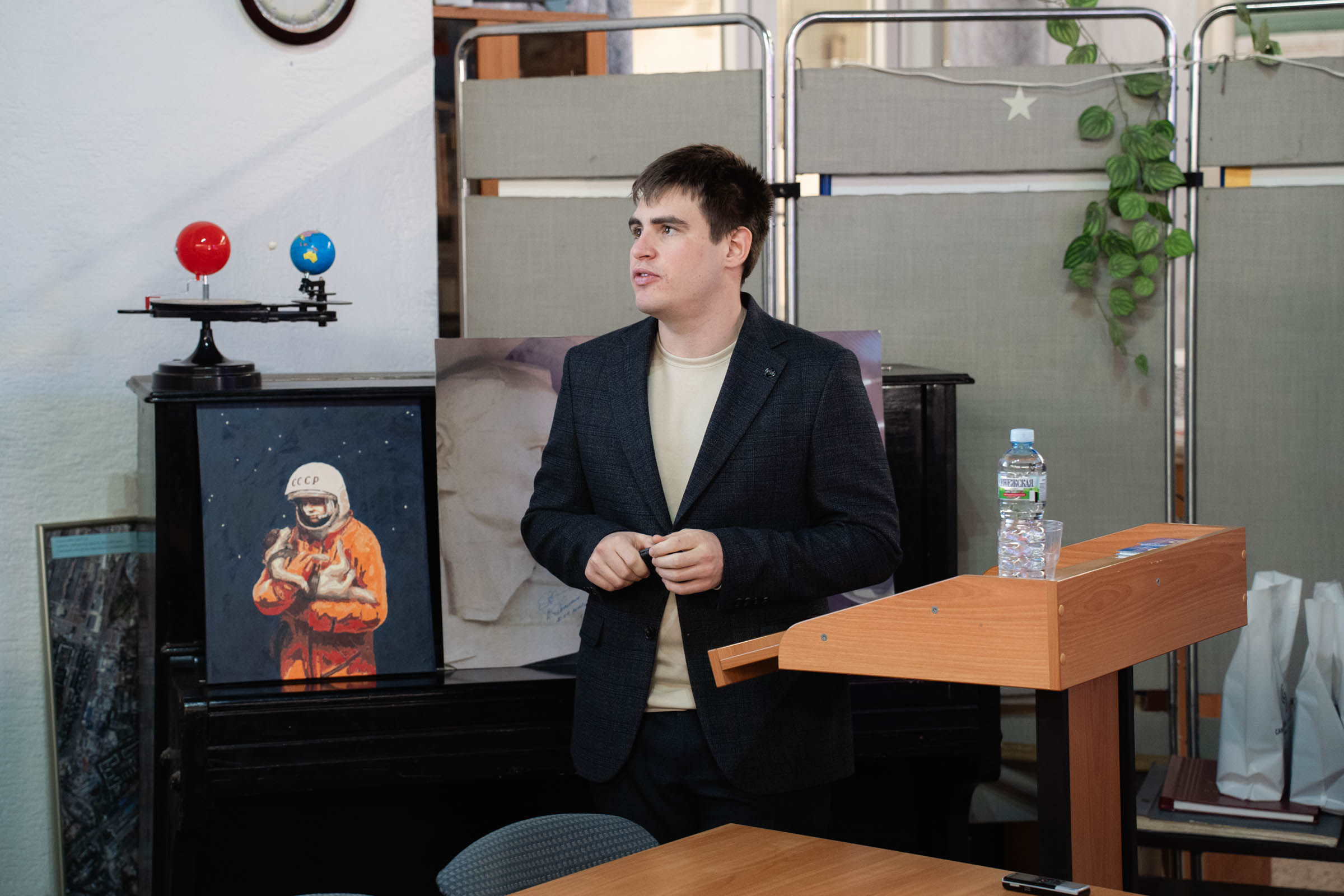
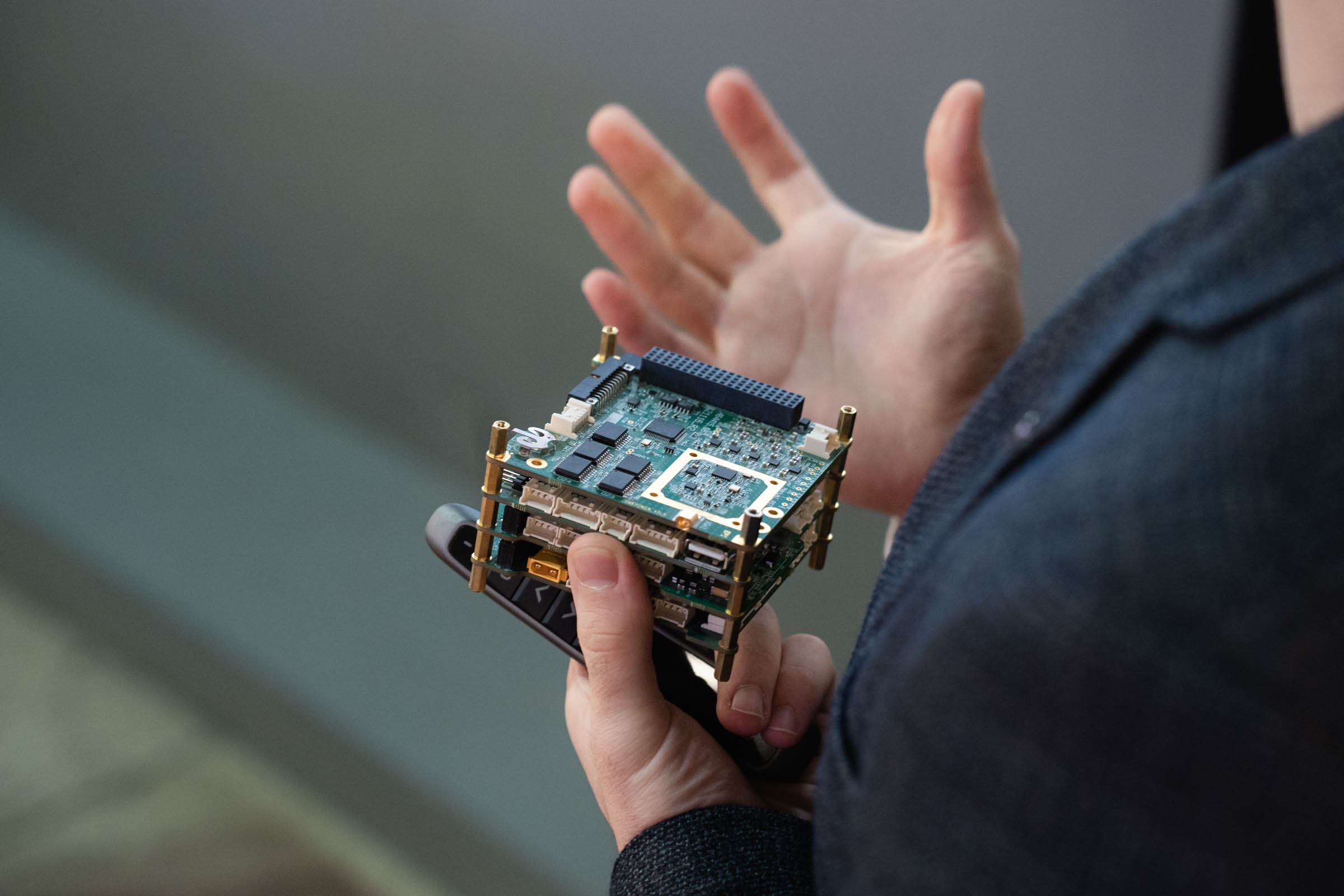
Sergey Ivlev, Chief Designer for the creation of a constellation of eight ultra-small spacecraft (picosatellites) measuring 5x5x10 cm, explained what this space mission will entail. All eight apparatuses will be equipped with a radio transmitter, an onboard computer, and a miniature power supply system. As part of this project, the antenna equipment at the university's Flight Control Center will also be upgraded to handle the reception of information from the picosatellites.
Sergey demonstrated to the guests the operation of the nanosatellite launch container, which was also developed by the student team, explaining that the container will behave in exactly the same way in Earth's orbit. The picosatellite constellation is planned to be distributed along Earth's orbit in such a way that each apparatus can transmit data to Earth every 10 to 20 minutes.
Photo: Olesya Orina
