

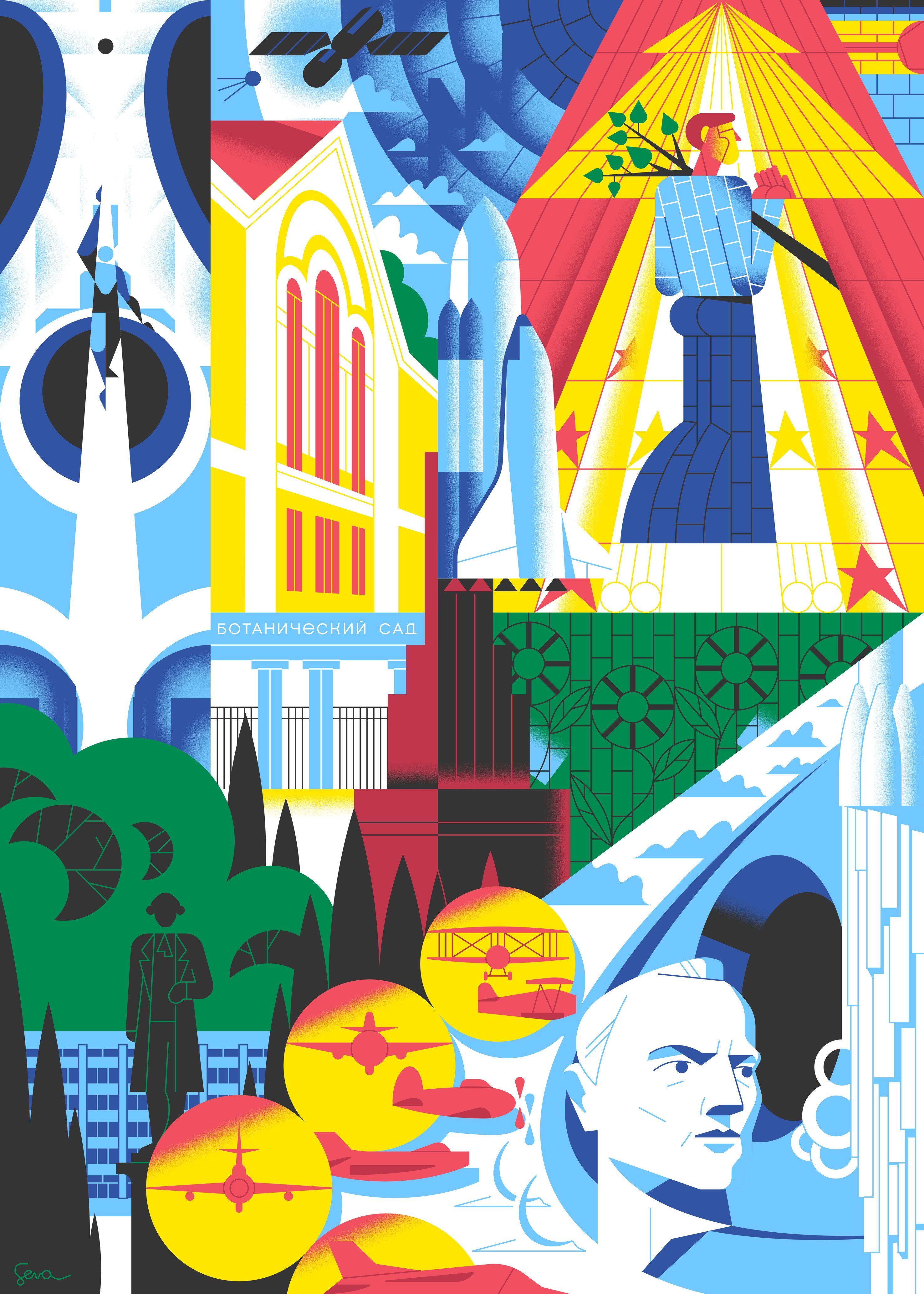
During Space Week, we celebrate not only science and flight—but also the art inspired by them. A standout contemporary artwork is the poster created by illustrator Seva Vyvodtsev for Samara University. It features mosaics, bas-reliefs, stained glass, and other visual references to iconic campus landmarks. Use this poster to design your own walking tour—it’s sure to be fascinating, not just on Cosmonautics Day, but any day of the year.
Fine Art in Relief
A Poster as a Guidebook
The collaboration between Seva Vyvodtsev and Samara University began with a simple idea: to create a foundation for university-branded souvenirs. Seva was given a guided tour of the campus, shown its most emblematic sites and masterpieces of Soviet monumental art—all of which became the visual backbone of his illustration.
What makes this poster truly unique is that it was printed using relief (letterpress) printing at Samara’s Letterhaus Museum-Studio, one of the oldest printmaking techniques. In relief printing, raised elements on a custom-made plate sit slightly higher than the non-printing areas; ink is applied only to these raised surfaces and transferred onto paper under pressure.
“I wanted to create a genuine art object,” says Seva Vyvodtsev. “That means using analog printing methods—not a digital printer, but working hand-in-hand with a master craftsman. What’s special here is that we used seven colors—normally, relief prints use just one. Each color had to be layered by hand. It’s an incredibly complex process.”
Mosaics “Aero” and “Cosmos”
34 Moskovskoye Highway
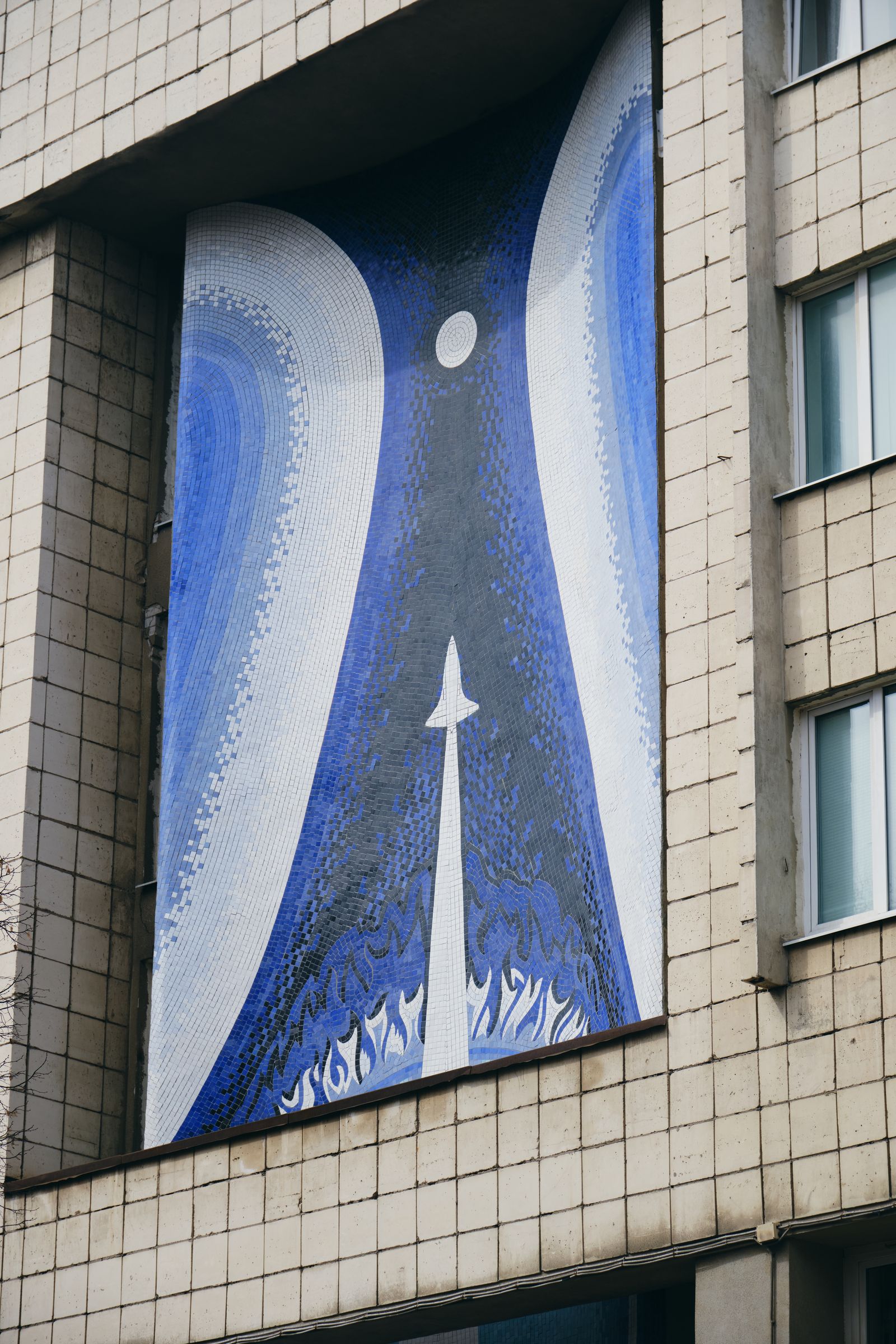
On the façade of the university’s administrative building (constructed in 1988), two vibrant mosaic panels—“Aero” and “Cosmos”—capture the spirit of space exploration. Designed by Vyacheslav Gerasimov, Honored Artist of the Russian Federation, they replaced an earlier plan to install nymph reliefs conceived by Moscow artists. University leadership originally believed feminine figures would symbolize creative inspiration—even in technical fields.
But by the mid-1990s, the niches were filled with mosaics made of rectangular glazed ceramic tiles, embodying the romanticism of cosmic discovery. The left panel shows a spacecraft; the right features a cosmonaut raising his right hand in greeting. Their color palette echoes that of Samara’s “Gagarinskaya” metro station, creating a cohesive visual narrative across the city.
Stained Glass “Path to the Stars”
34A Moskovskoye Highway
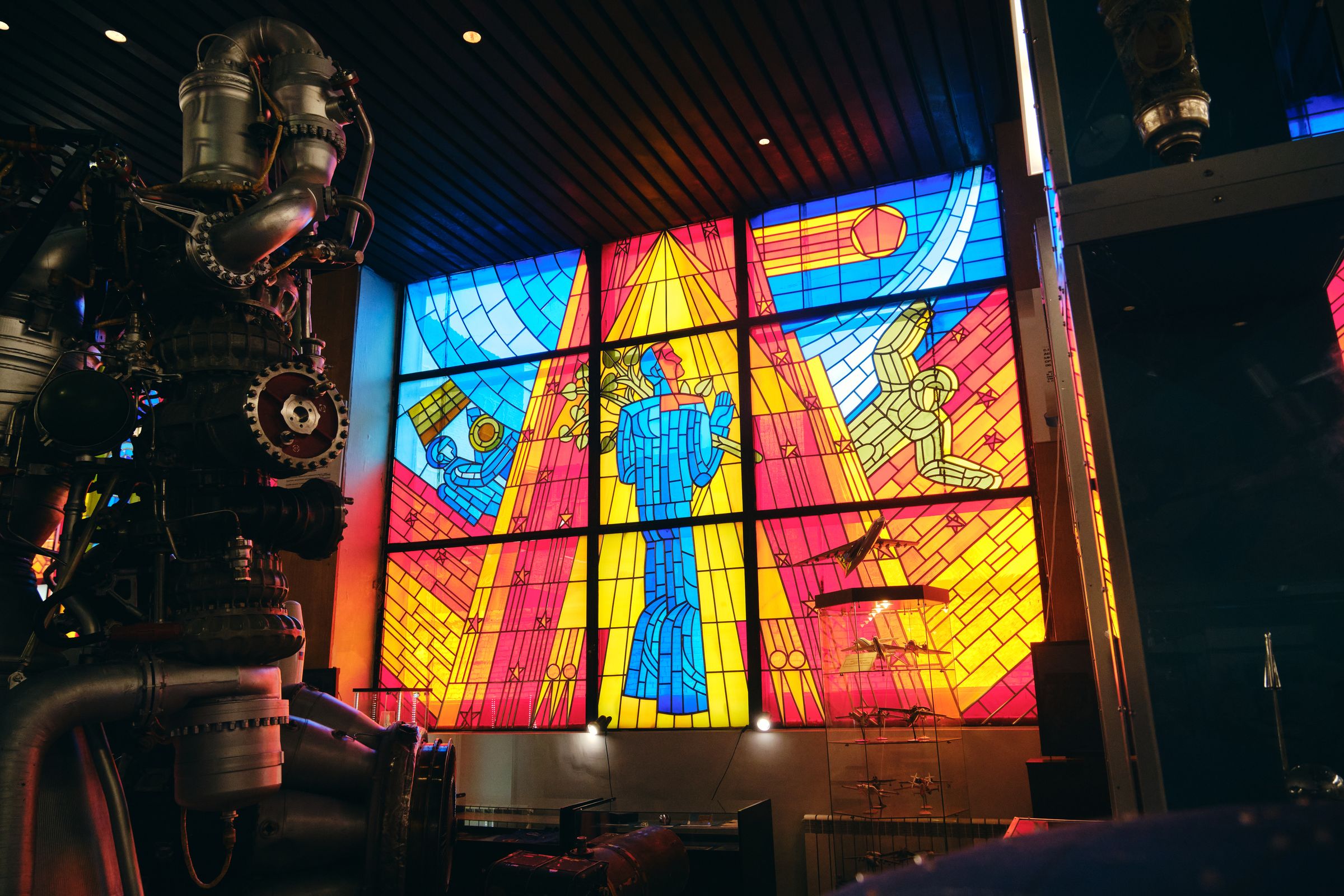
The enormous windows of the Museum of Aviation and Cosmonautics are adorned with stained-glass compositions titled “Path to the Stars,” created in 1976 for the museum’s opening. The expressive design was crafted by Vitaly Petrov (Praski Vitti), a renowned Chuvash monumental artist.
The structure uses an aluminum frame to divide the image into colored segments—a technically demanding process that required selecting compatible glass from available stock, fragmenting the composition, and assembling intricate lead cames.
Bas-Relief “Cosmos and Korolev”
34A Moskovskoye Highway
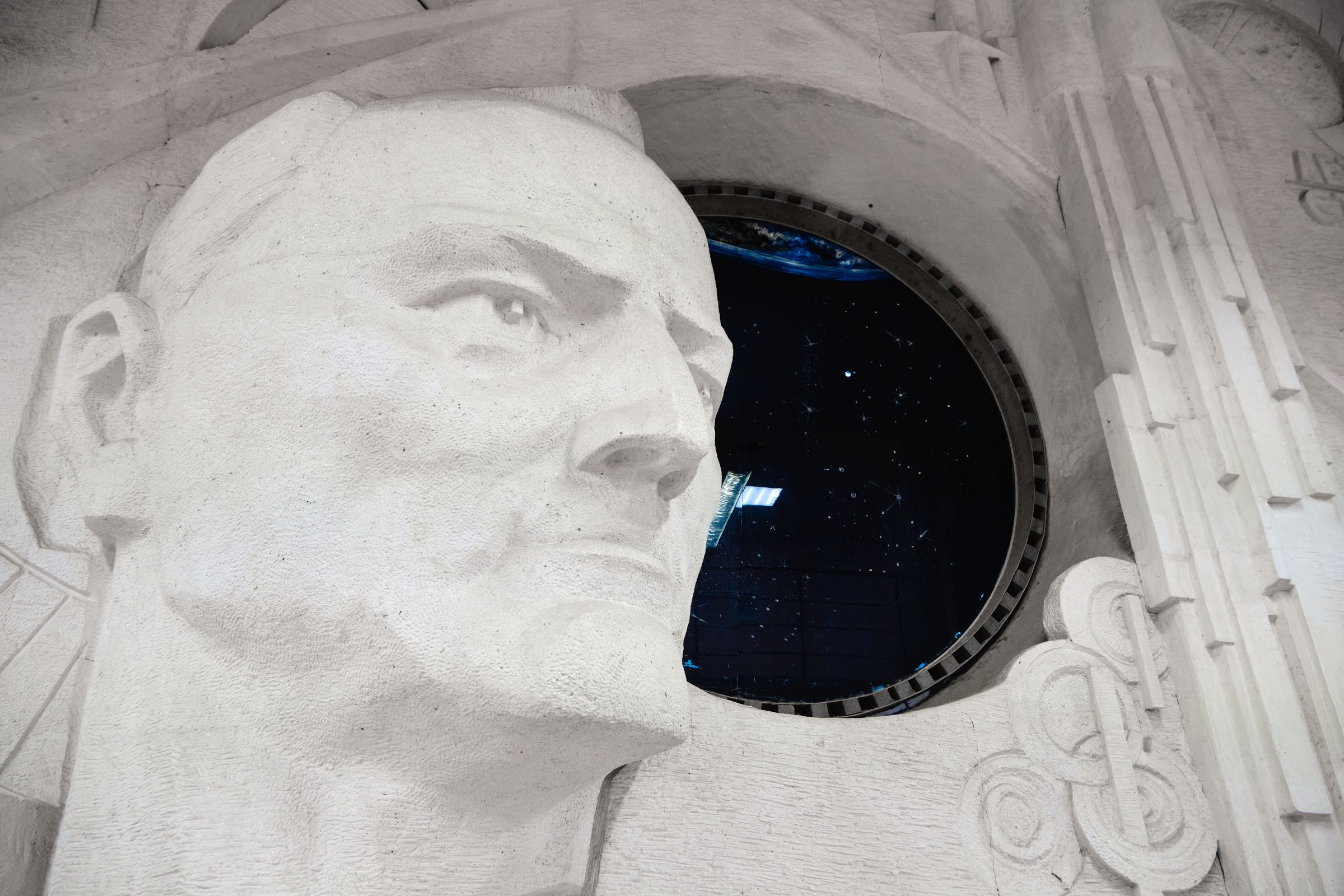
At the museum entrance stands the bas-relief “Cosmos and Korolev,” created in 1976 by Samara sculptor Anatoly Golovnin. He developed models, oversaw plaster casting, and finished the surface to resemble artificial stone. Originally, the panel included several window openings—only one remains today, framing a cosmic vista at the heart of the composition.
“When Golovnin first designed the portrait of the Chief Designer, he based it on actor Kirill Lavrov, who played Korolev in the film Taming the Fire (1972). Later, the likeness was refined—but to me, the eyes still belong to Lavrov,” says Nadezhda Bogdanova, Director of the Museum of Aviation and Cosmonautics.
The museum is open to visitors—by guided tour or by prior arrangement.
Monument “Energia-Buran”
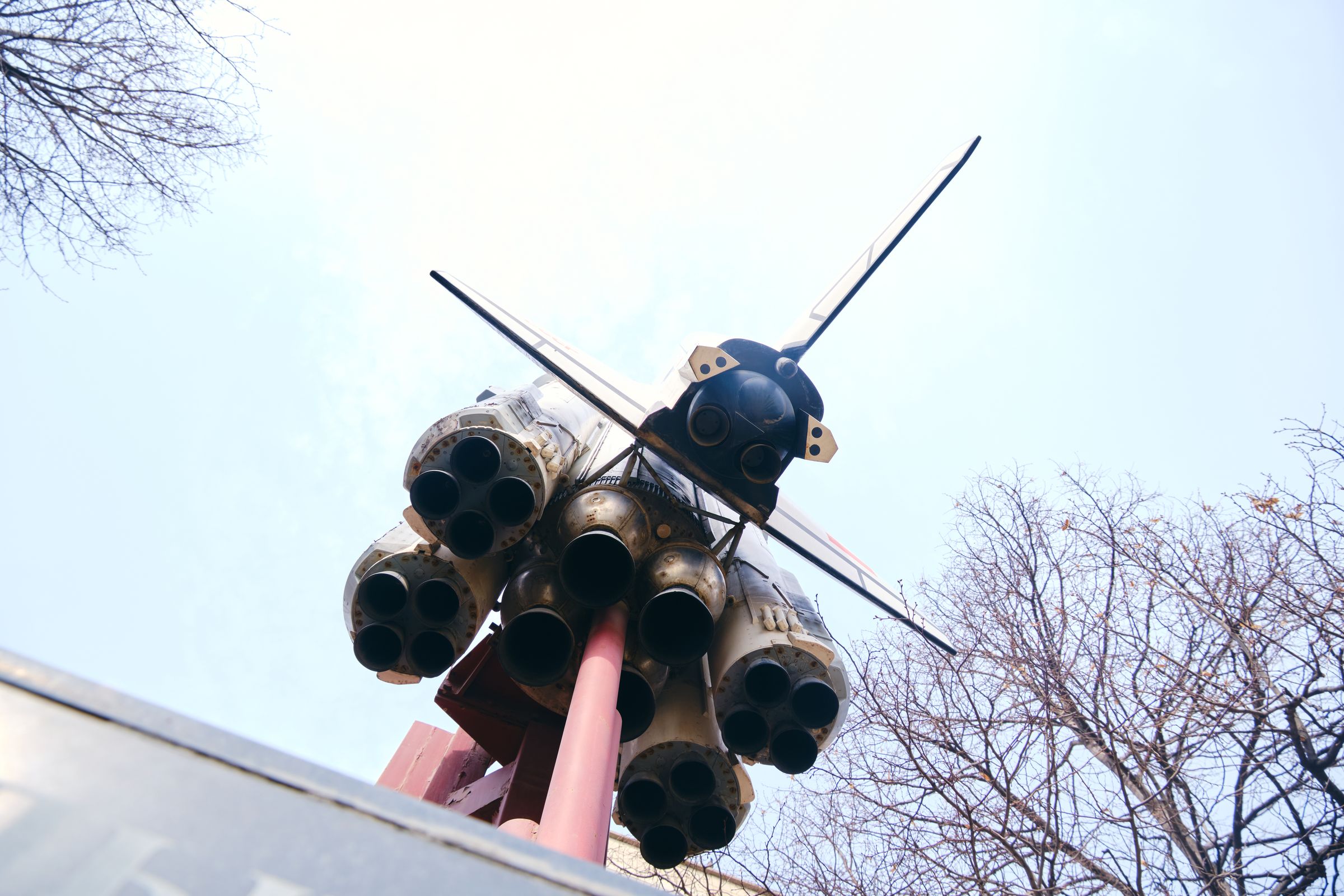
This is an authentic 1:10 scale test model that played a direct role in the USSR’s late-1980s Energia-Buran space program. It underwent numerous factory trials during the development of the real spacecraft.
The system comprised the two-stage Energia launch vehicle and the reusable orbiter Buran, designed for up to 100 missions without atmospheric re-entry destruction. Its delta wing with a leading-edge extension and aerodynamic control surfaces enabled precise maneuvering during descent.
The Soviet shuttle stands as a symbol of nationwide industrial and academic cooperation—and proof that bold dreams can become reality. The program united around 1,200 enterprises across the USSR. Notably, part of the Energia-Buran R&D was conducted at a specialized lab of the former Kuibyshev Aviation Institute (now Samara University).
Botanic Garden
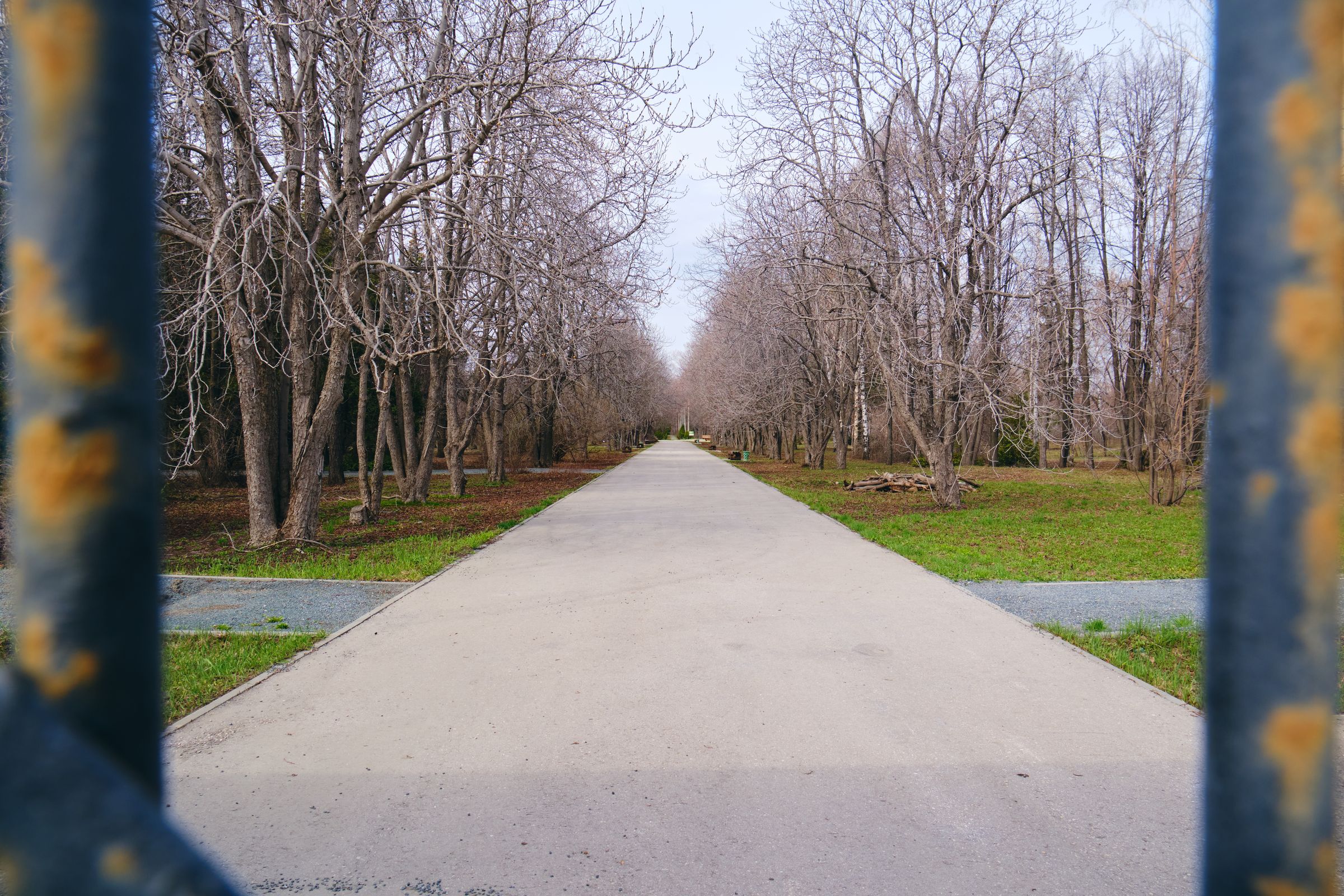
A branch of Samara University, the Botanic Garden received its iconic archway entrance from Moskovskoye Highway in 1970. After a 2019 renovation, a new entrance closer to the main campus was added. More than just a student retreat, it’s a beloved oasis for families. Don’t miss the eco-trails leading to the Upper Pond.
“Vzlyotka” (The Runway)
1 Akademika Pavlova Street
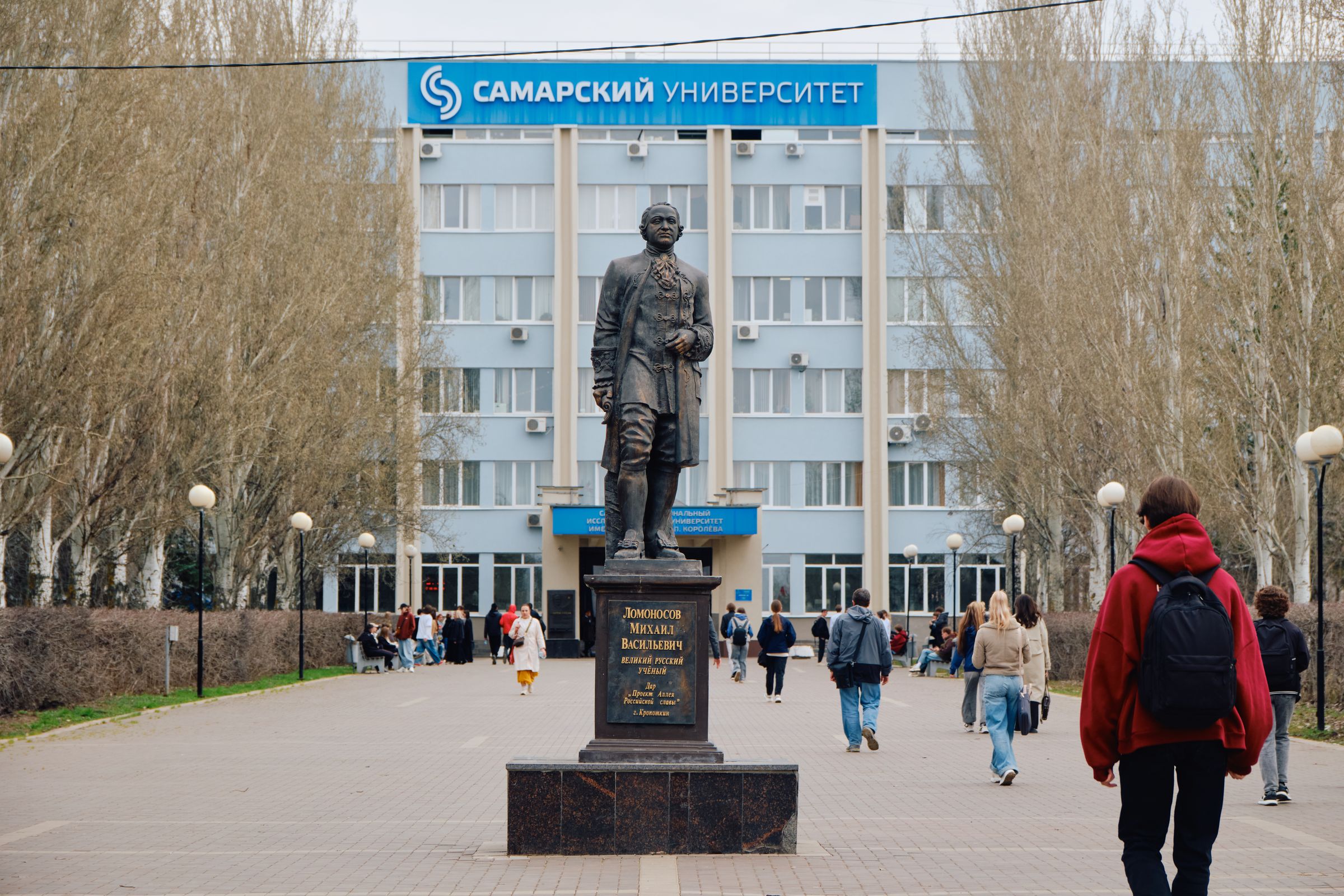
The avenue in front of the university’s Novo-Sadovaya building is affectionately called “Vzlyotka” (“Runway”) by students and faculty. Stretching hundreds of meters, its broad concrete slabs—laid until 2016—reinforce the aviation metaphor.
Lomonosov Monument
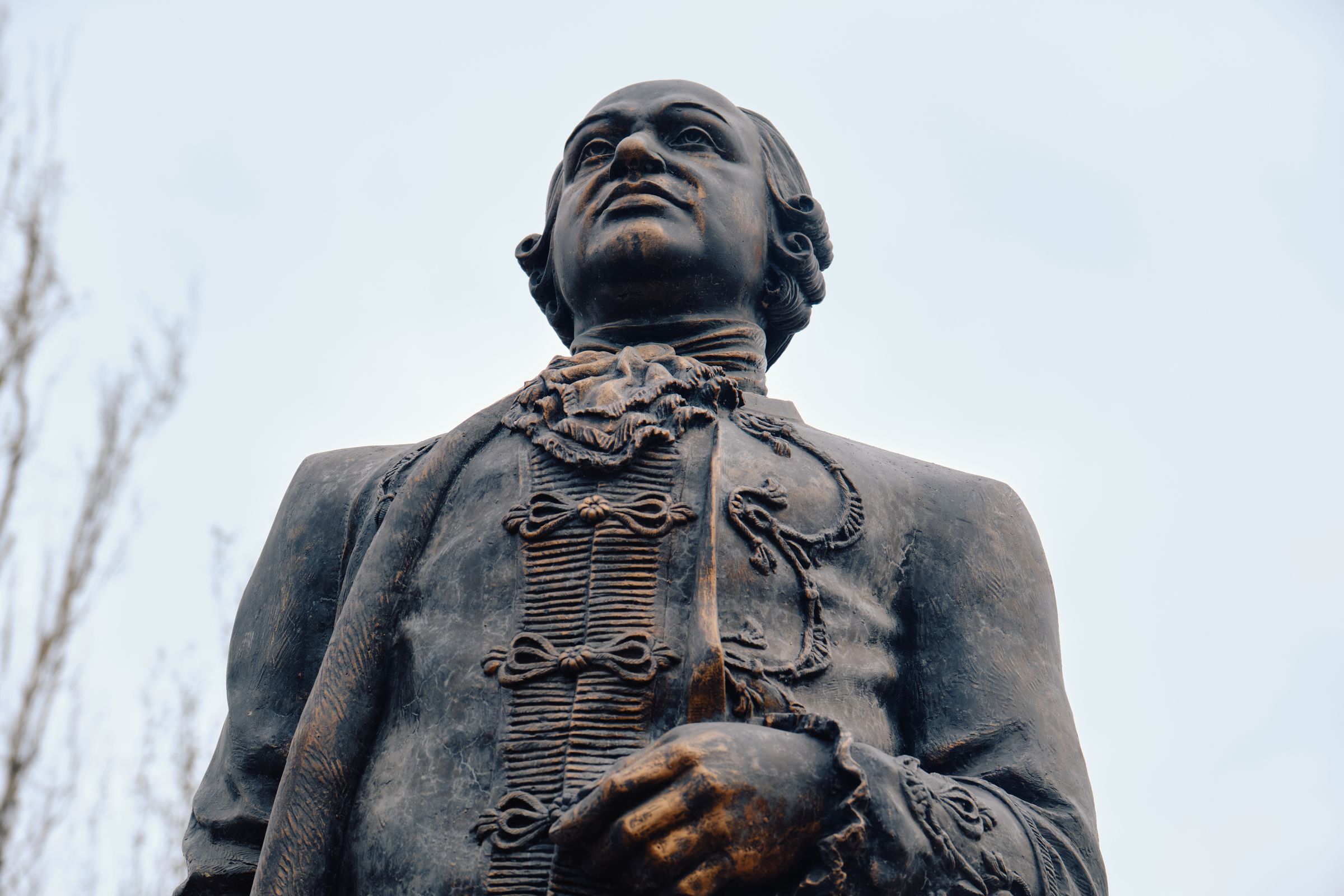
In 2011, to mark the 300th anniversary of Mikhail Lomonosov’s birth, a full-metal sculpture of the great polymath was installed on “Vzlyotka.” It was a gift from university benefactors, part of a national initiative to honor Lomonosov at Russia’s leading universities.
Main Building (Historic Campus)
151 Molodogvardeyskaya Street
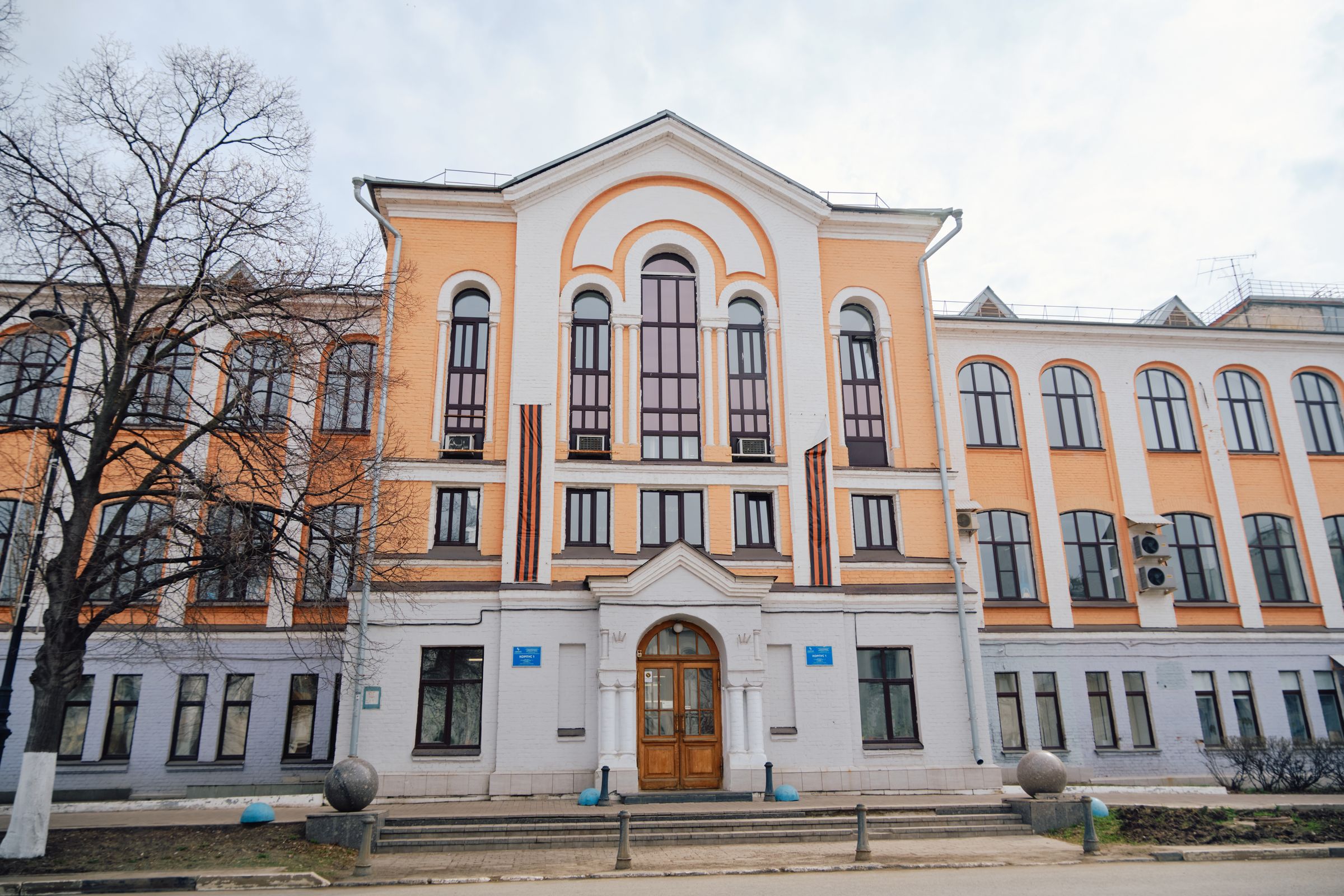
This Byzantine-style building, designed by architect Alexander Shcherbachev and completed in 1912, is a protected cultural heritage site. Originally a theological seminary—with a church dedicated to St. Sergius of Radonezh on the Studenchesky Lane side—it was secularized in the early 1930s.
Since 1942, it has housed the Aviation Institute (now Samara University). Today, it remains an active academic hub, home to:
- A branch of the Federal Research Center “Crystallography and Photonics”
- The Artificial Intelligence Center
- A planetarium
Look for two memorial plaques on the façade: one honors Viktor Lukachev, rector from 1956–1980; the other commemorates alumnus Valery Grushin—namesake of Russia’s legendary bard song festival. Inside, the Valery Grushin Cultural Center hosts concerts and houses a museum-auditorium dedicated to his legacy.
Photos by Evgeniya Turkova
Source: komunavolge.ru
