


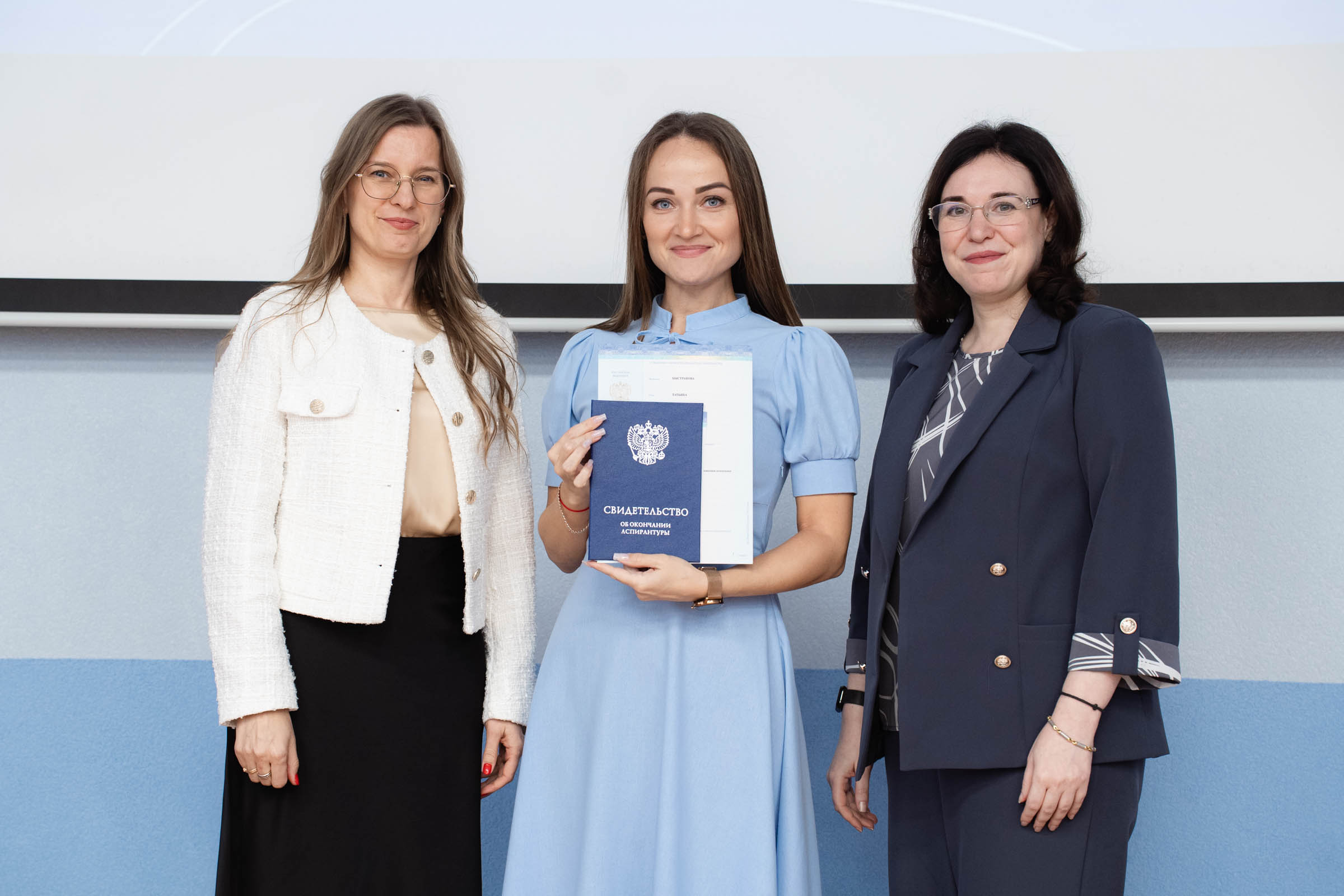
The young researchers were congratulated on this significant milestone by Anna Rozenzweig, First Vice-Rector for Science; Elena Rodionova, Head of the Postgraduate and Doctoral Studies Department; and Ivan Tkachenko, Director of the Institute of Aerospace Engineering. Almost all of the young scientists represent technical and natural science disciplines.
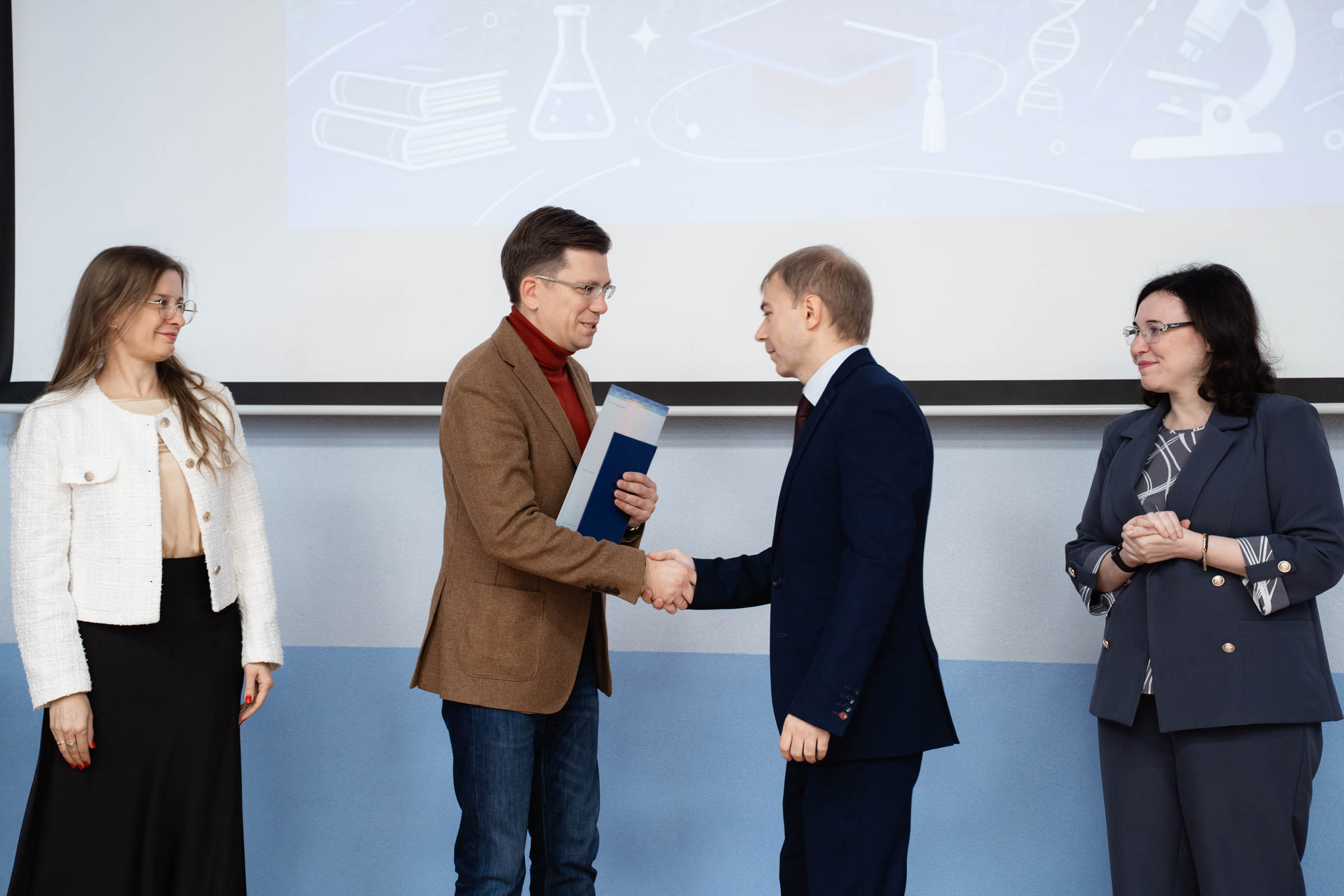
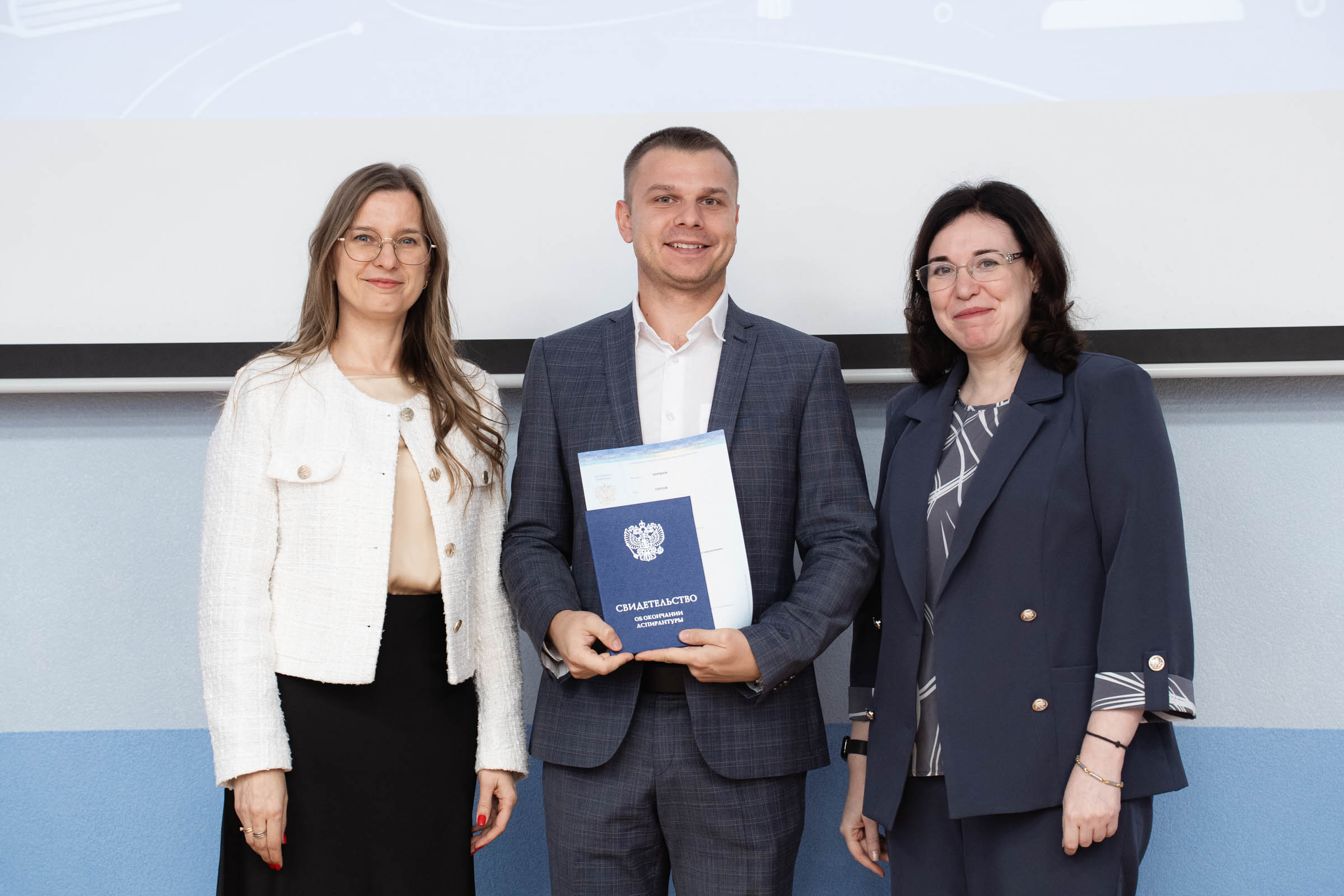
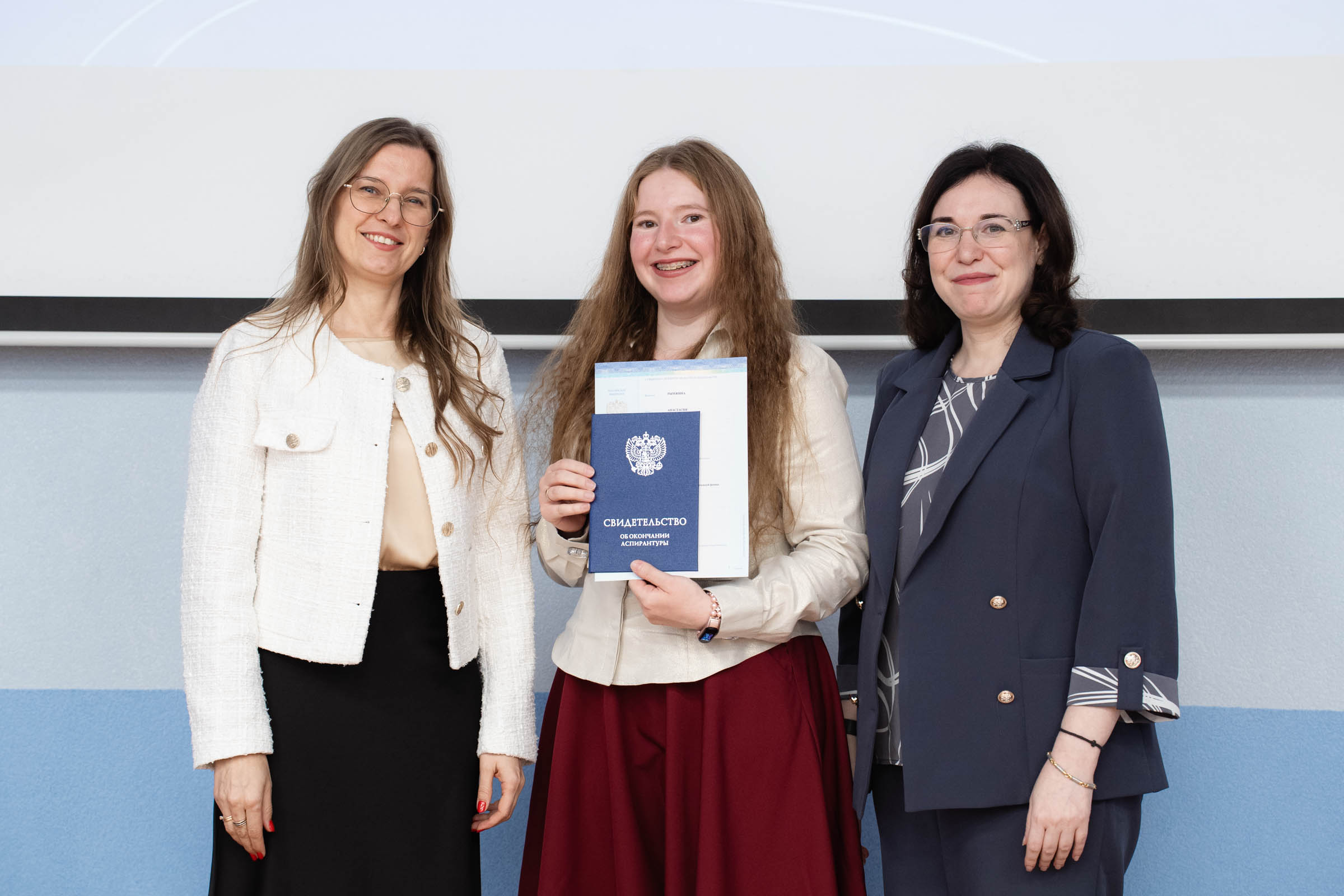
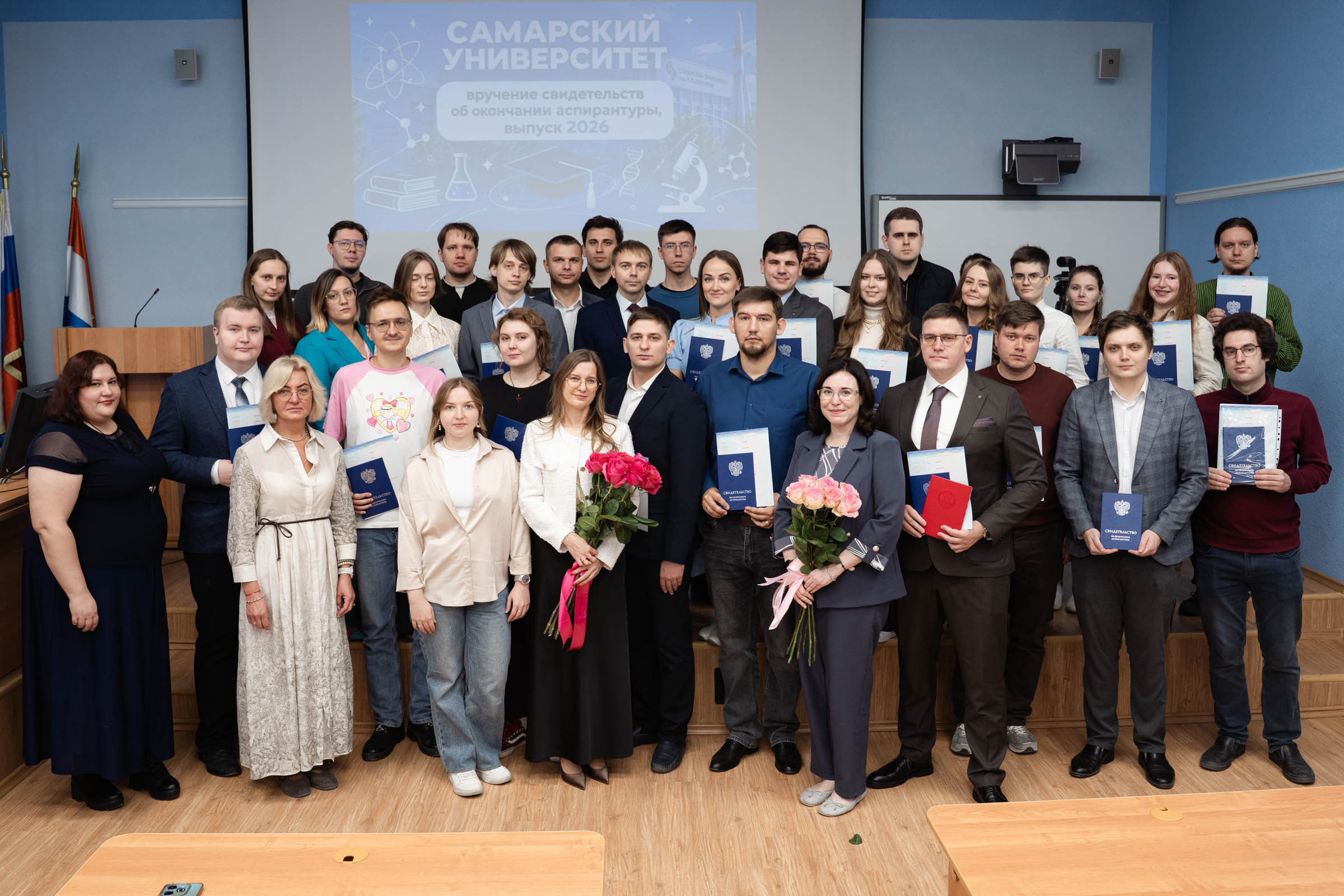
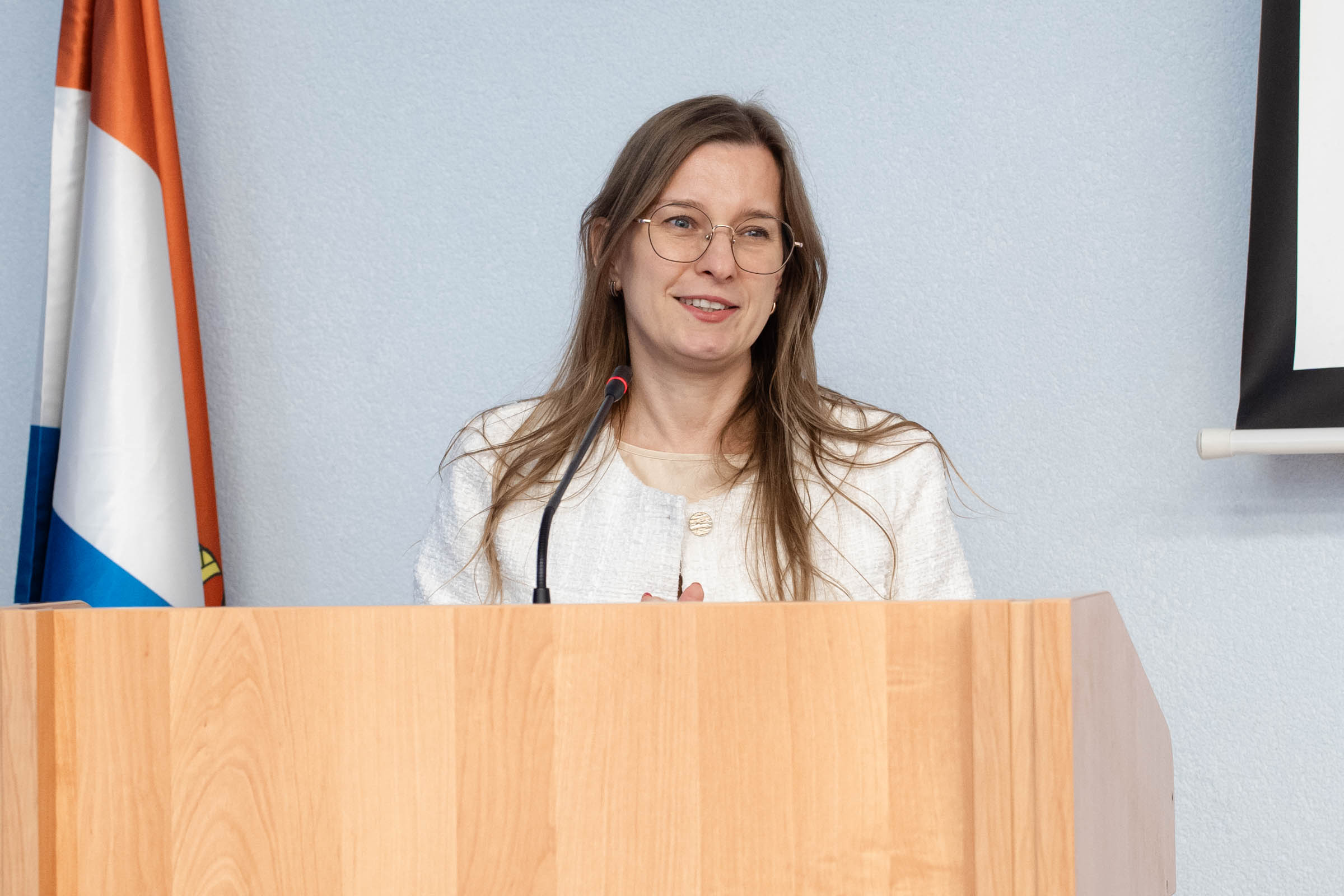

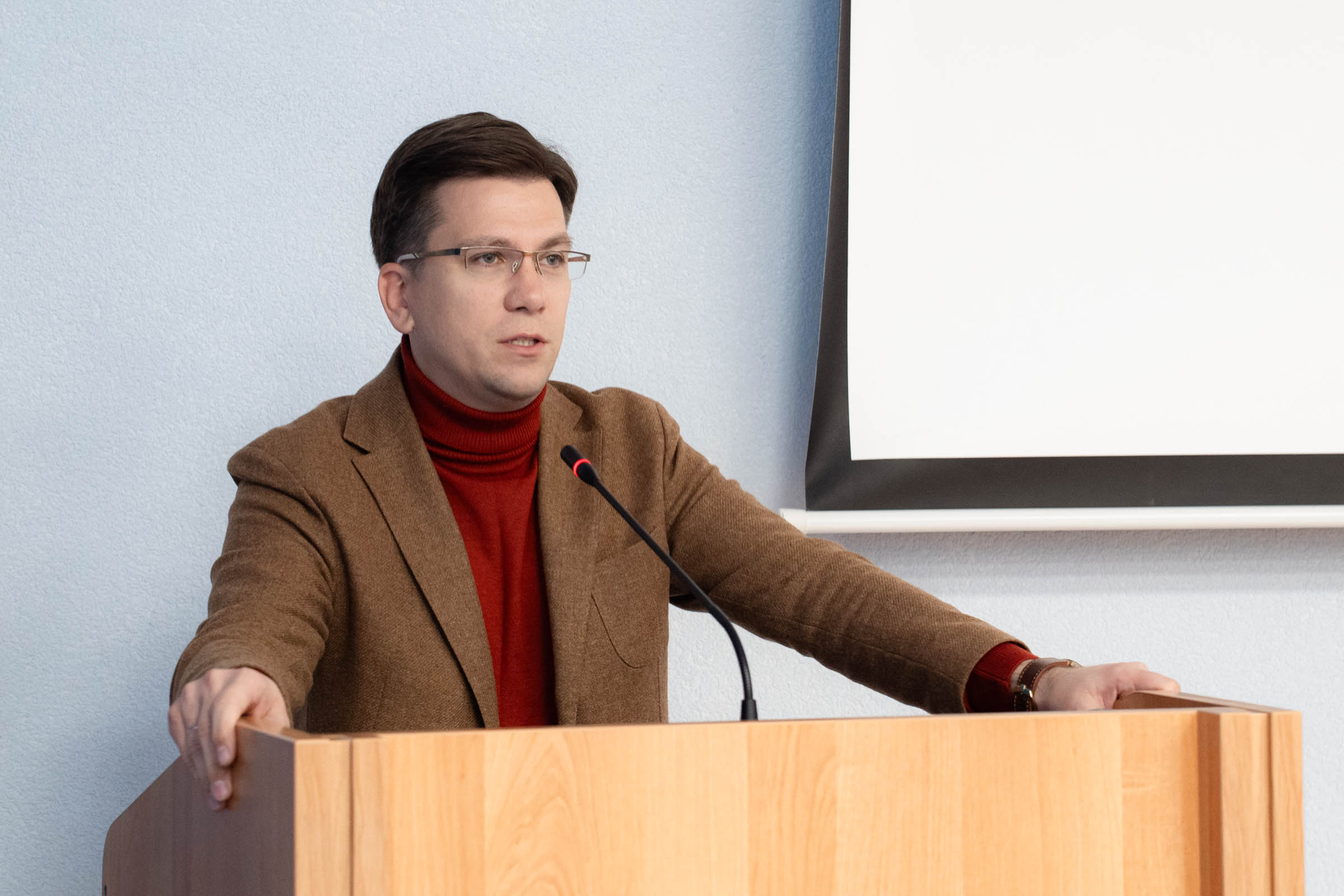
"Be bold, be courageous in your research, and dare to dream. May you find inspiration on your path to the next major step in your scientific career: the successful defense of your PhD dissertation. We eagerly await each of you in the university's laboratories!" Anna Rozenzweig addressed the young scientists.
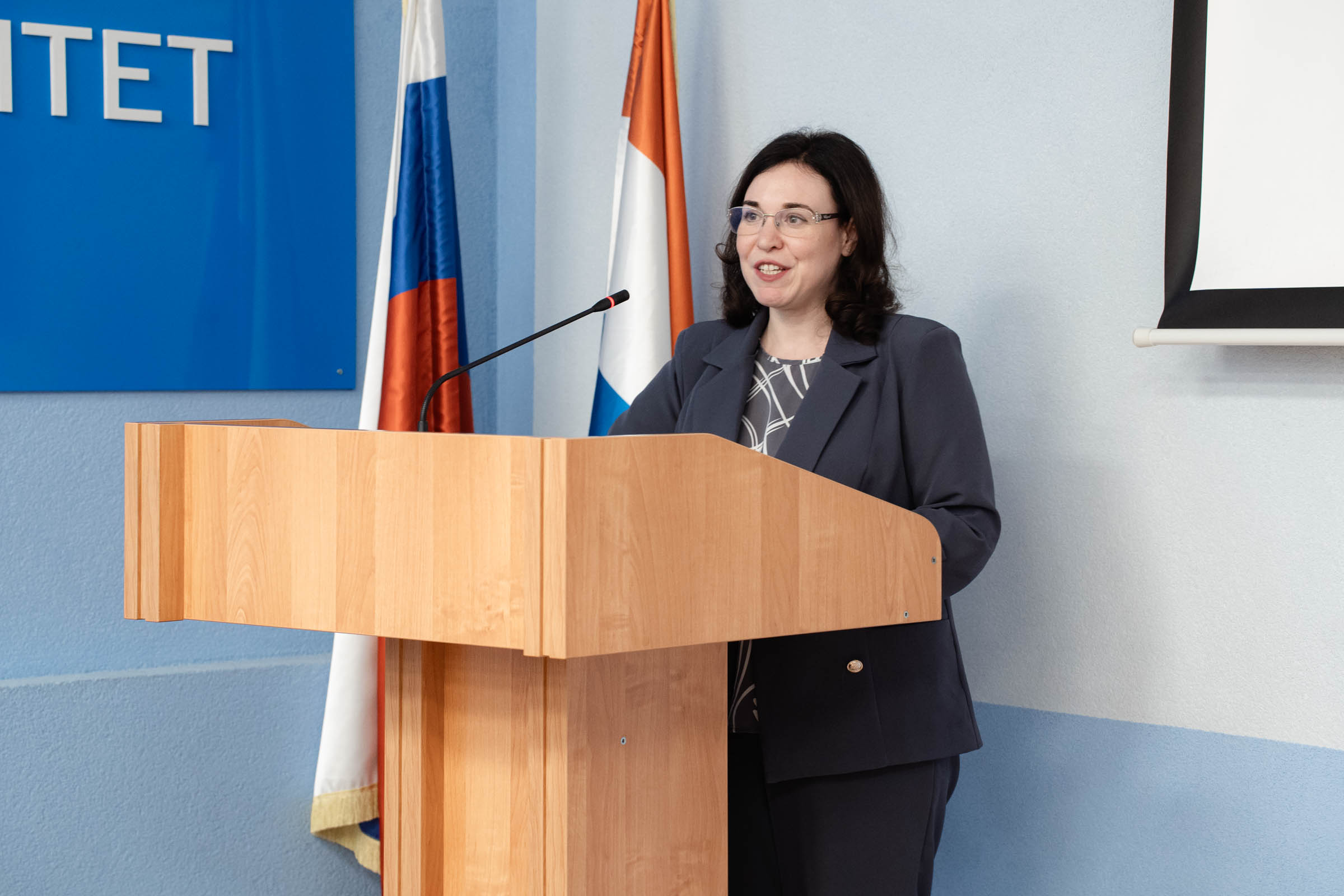
"We hope you find your true calling in science," noted Elena Rodionova. "May your life, like a beautiful pattern, organically blend research, career, and family."
Ivan Tkachenko reminded the attendees that the word "aspirant" (postgraduate student) translates from Latin as a person striving for something new:
"This process should never end. It characterizes true scientists—people who have dedicated themselves to scientific inquiry, distinguished by an insatiable thirst for knowledge, a passion for research, and a drive for innovation. Do not stop; continue your search and bring your work to its logical conclusion: earning your degree and publishing in high-ranking journals."
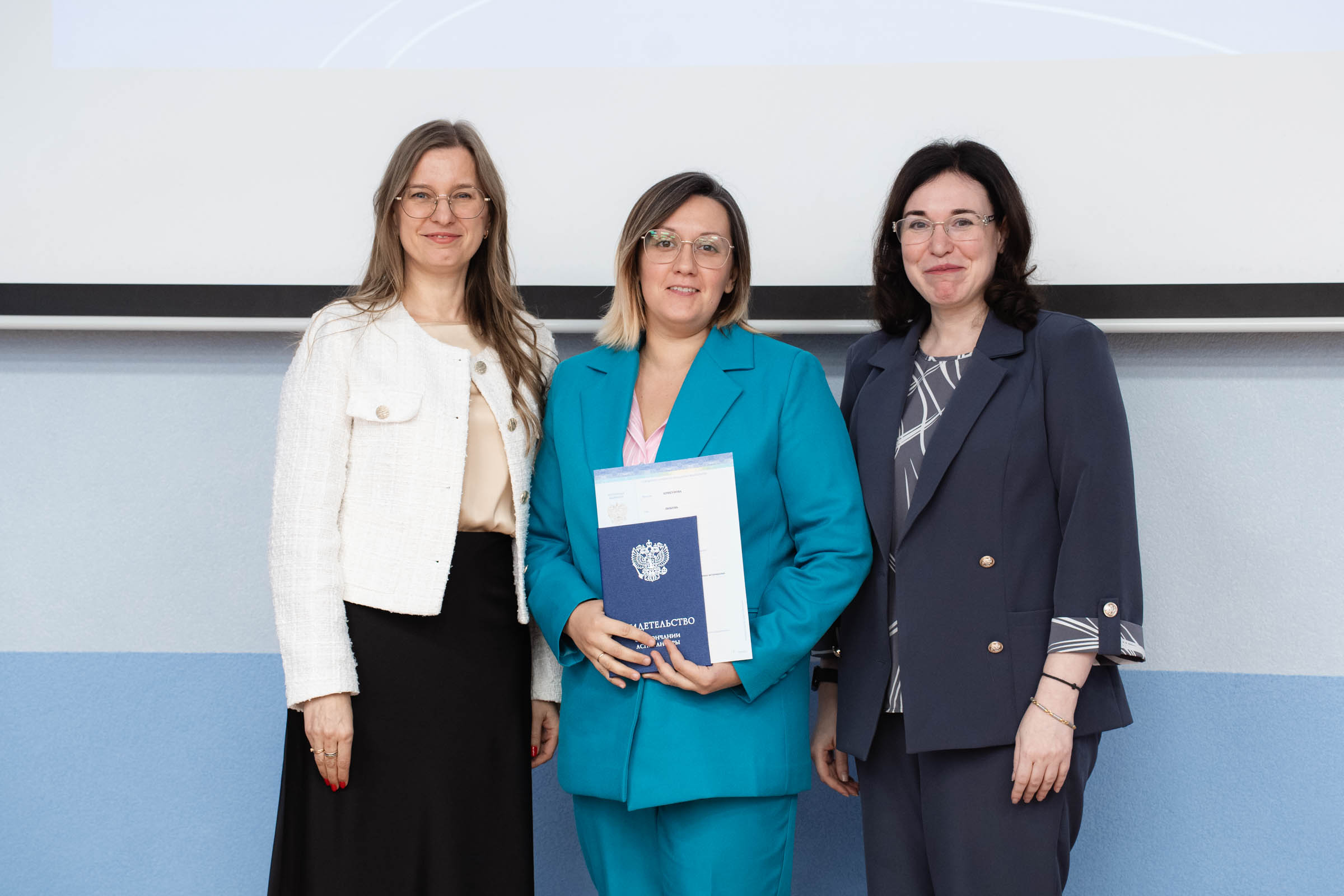
In her response, Lyubov Krikunova, a recipient of the Russian President's Postgraduate Scholarship, highlighted the high level of support provided by the Postgraduate and Doctoral Studies Department. She conducts her research under the supervision of Valeriy Azyazov, Head of the Department of Optics and Spectroscopy.
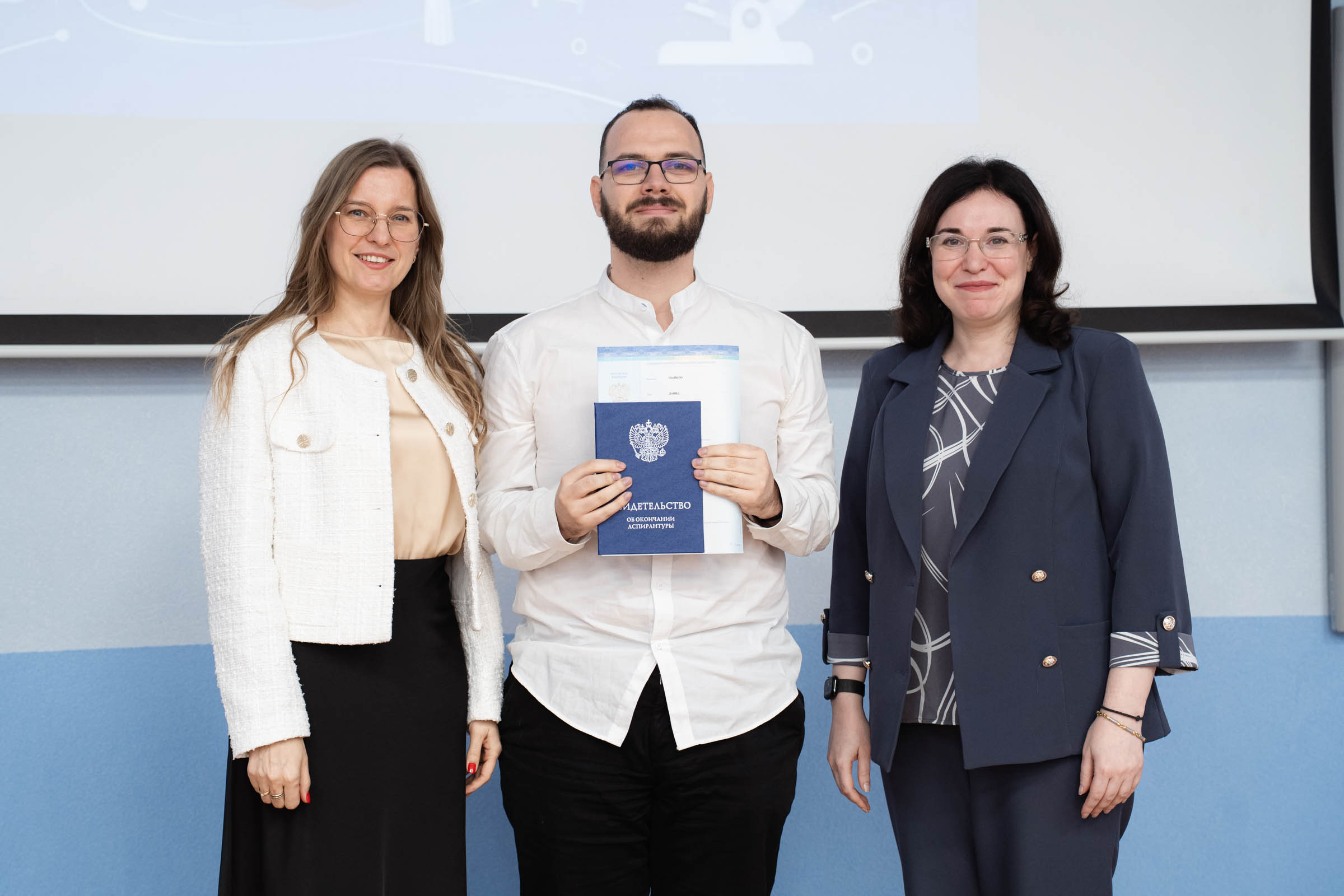
One of the ceremony participants, David Shapiro, has already successfully defended his dissertation. His thesis, titled "Phase Watermarks Ensuring the Protection of Digital Video Content in Information Processes," was completed under the supervision of Vladislav Sergeev, Professor at the Department of Geoinformatics and Information Security.
The young scientist has developed a method for embedding digital watermarks to protect copyrighted video content.
"This is the first method that embeds an additional digital mark in such a way that it cannot be extracted from a single frame. Furthermore, the method includes additional solutions that allow it to adapt to various video distortions, making the digital watermark more resistant to theft attempts," David noted.
This technology enables robust copyright protection. If someone attempts to steal a video and claim it as their own, the true author can always be proven. For ease of use, specialized software for applying these watermarks has been developed, and a patent has been granted.
"The hardest part was finding self-motivation," David admits. "The final stage was nerve-wracking: I took the feedback I received during preliminary hearings quite personally. But by that point, I had a strong desire to see it through to the end. And I am glad that the defense was a success."
David continues his work at the department and in Research Laboratory No. 55.
Photo: Olesya Orin
