


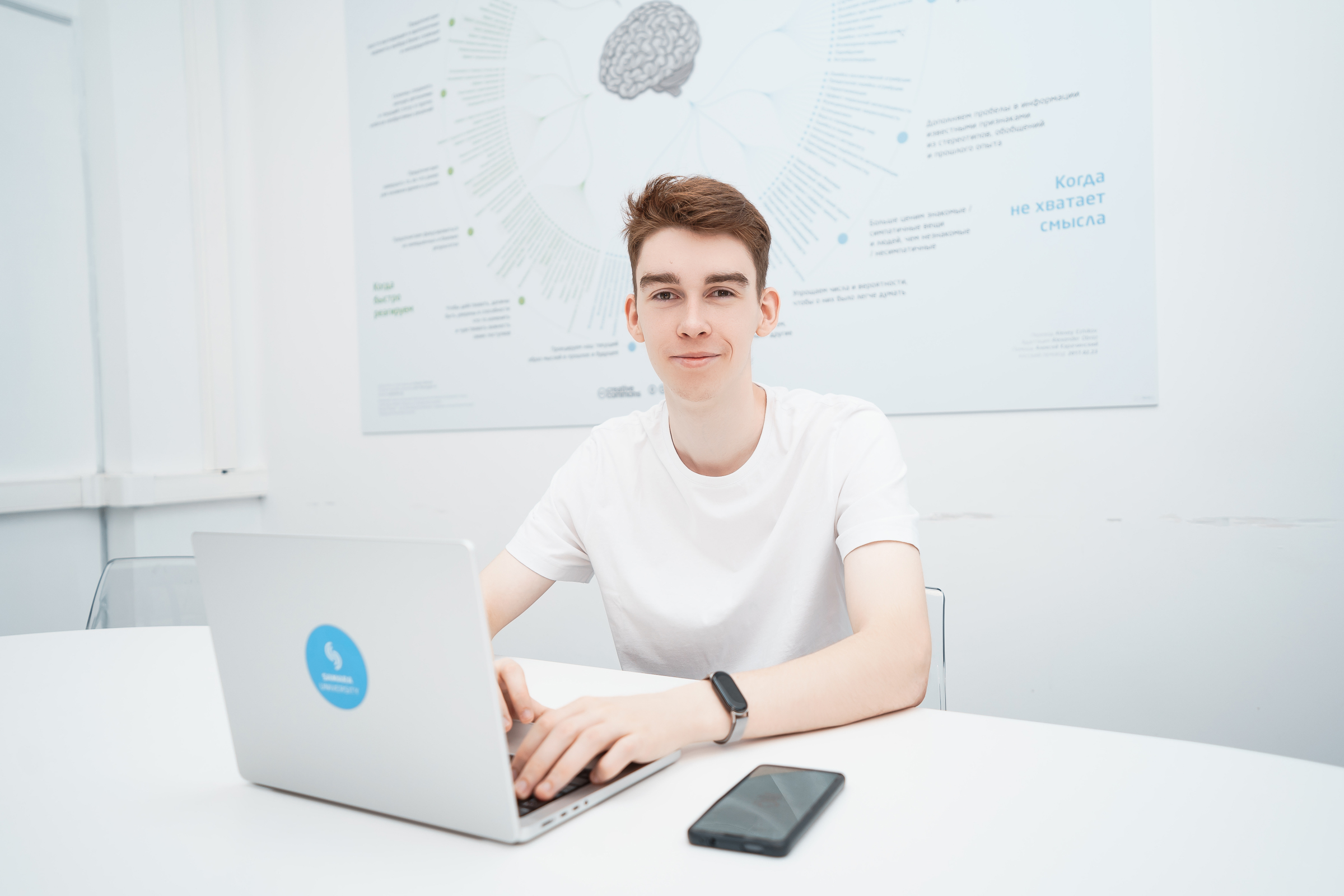
Georgy Krasavin, a 4th-year student of the Institute of IT and Cybernetics at Samara University, presented the startup “Pokormi” (“Feed!”), Russia’s first web service that makes it possible to remotely feed street cats and watch them live. The project makes helping animals transparent, targeted and available to everyone. Georgy told Volga News how the idea of “smart feeders” appeared, what has already been implemented, and how his team is developing.
“When did the idea of creating such a feeder first appear? What was the trigger?”
“The idea was born out of a simple observable problem: animal shelters often do not have enough money for food, and people who are ready to help do not always understand what way their donations are spent. I wanted the help to become transparent and alive, so that people could see how their donations turn into food. This is how the concept of a smart feeder with a camera and the online broadcast, which can be activated by one click, appeared”.
“How does the service work?”
“It’s very simple. The user visits the website, selects a specific feeder on the map and makes a small donation. The device receives a signal and automatically delivers a portion of food. The camera shows the process in real time, and the person immediately sees the result of their help. This creates confidence and makes taking part in charity simple and emotionally understandable”.
“What has been implemented so far?”
“We have assembled the first working prototype of the feeder: a wooden case with transparent panels, a screw doser, a camera and the remote control system. We have created a web service with the map of points and online broadcasts. The first device was installed in the cat-cafe “Chukotka” in Samara, and it has already been receiving real donations from users. Now we have five feeders ready, and continue to expand their network. Besides, we have developed the visual identica – the brand identity, launched the project in social networks, and built the complete content-support system. When preparing and promoting the project, we were provided great assistance by Samara University’s Startup Centre.
“What stage of the development – technology, software, or process organization – turned out to be the most difficult?”
“The most difficult stage was creating the feeder itself. Problems arose at every step, from the software operation to the mechanics of feeding. You fix one problem, and a new one appears. But this is a natural process, and due to perseverance, we have assembled a stable working prototype”.
“How many people are in the project team and how are the responsibilities distributed among the participants?”
“There are eight people in the team now. Four developers are responsible for the website, electronics and software, the designer is responsible for visual identica, and two more people are engaged in content and promotion. As the founder, I lead the product, the concept, and the process organization”.
“How did the first users and animal shelters respond when they saw the working prototype?”
“The responses were very emotional. One user left a feedback that we often recall,
“Having dropped off 50 rubles, I returned to the broadcast after the payment. At that moment, a one-eyed cat comes in and starts eating. I was happy as a child, feeling that I had done something really useful. The cat ate and left, and I decided that my food had already sprinkled while I was switching between tabs. But as soon as the cat came out, the food started sprinkling, and I realized that my donation had just worked. The cat immediately turned around and ran back. In the chat, no one understood what was going on, and I was sitting there with incredible emotions. It was very funny how the cat immediately turned back and continued eating”.
Such moments show that the project works as we intended”.
“What surprised you the most when you started watching cats through the camera of the feeder?”
“I was amazed at their response speed. Cats almost instantly notice a new feeder and immediately begin exploring it: they are sniffing, looking in, sometimes directly into the camera, as if trying to figure out who is there. Some of them come in before the feeder to be completely configured. It is very noticeable how different they are: some cats are cautious, the other dominate, and some are literally “on duty” nearby, watching the feeder as if watching TV”.
“What are your plans for the project development?”
“Now we are expanding the network of the feeders in Samara, as well as are negotiating with shelters and new partners. We want to make the service scalable and create a digital ecosystem that will allow people to help animals quickly, purposefully and conveniently. Our goal is for such feeders to appear in the city’s various districts, and later in other regions”.
“If you had the opportunity for implementing any dream related to the project, without resource constraints, what would you do?”
“I would launch a large-scale advertising campaign – on billboards all over the city, in social networks, in Telegram channels. This would contribute to involving many new users and accelerating the project development”.
The service “Pokormi” makes helping animals simple and visual: everyone can see the result of their donation live. You can support the project and learn more on the project website.
The material is prepared with the support of Russia’s Ministry of Education and Science, in the framework of the Decade of Science and Technology.
Source: volga.news
