

Today, small spacecraft—often referred to as Small Satellites or SmallSats by specialists—are capturing global interest. Their development is significantly less costly than that of large satellites, yet they deliver substantial scientific and operational value. Small spacecraft enable rapid Earth observation, serve as testbeds for new technologies, and reduce the overall cost of space missions. At Samara University, faculty, postgraduates, and students are actively contributing to this frontier by developing their own satellite constellation.
Compact Yet Powerful
Thanks to their compact size, multiple small satellites can be launched on a single rocket—a major logistical and economic advantage that dramatically expands mission capabilities. While from 1957 to 2012, approximately 150 satellites were launched globally each year, the past decade has seen an explosive surge: according to Russia’s Ministry of Economic Development, annual launches rose to 600 in 2019, 1,200 in 2020, and reached 2,600 in 2024. Russian scientists are playing a leading role in this trend, supported by state funding and major industry partners. By 2030, 48.1 billion rubles will be allocated to advance national space systems—a clear signal of strategic commitment. Miniaturization has become a universal priority across the global space sector.
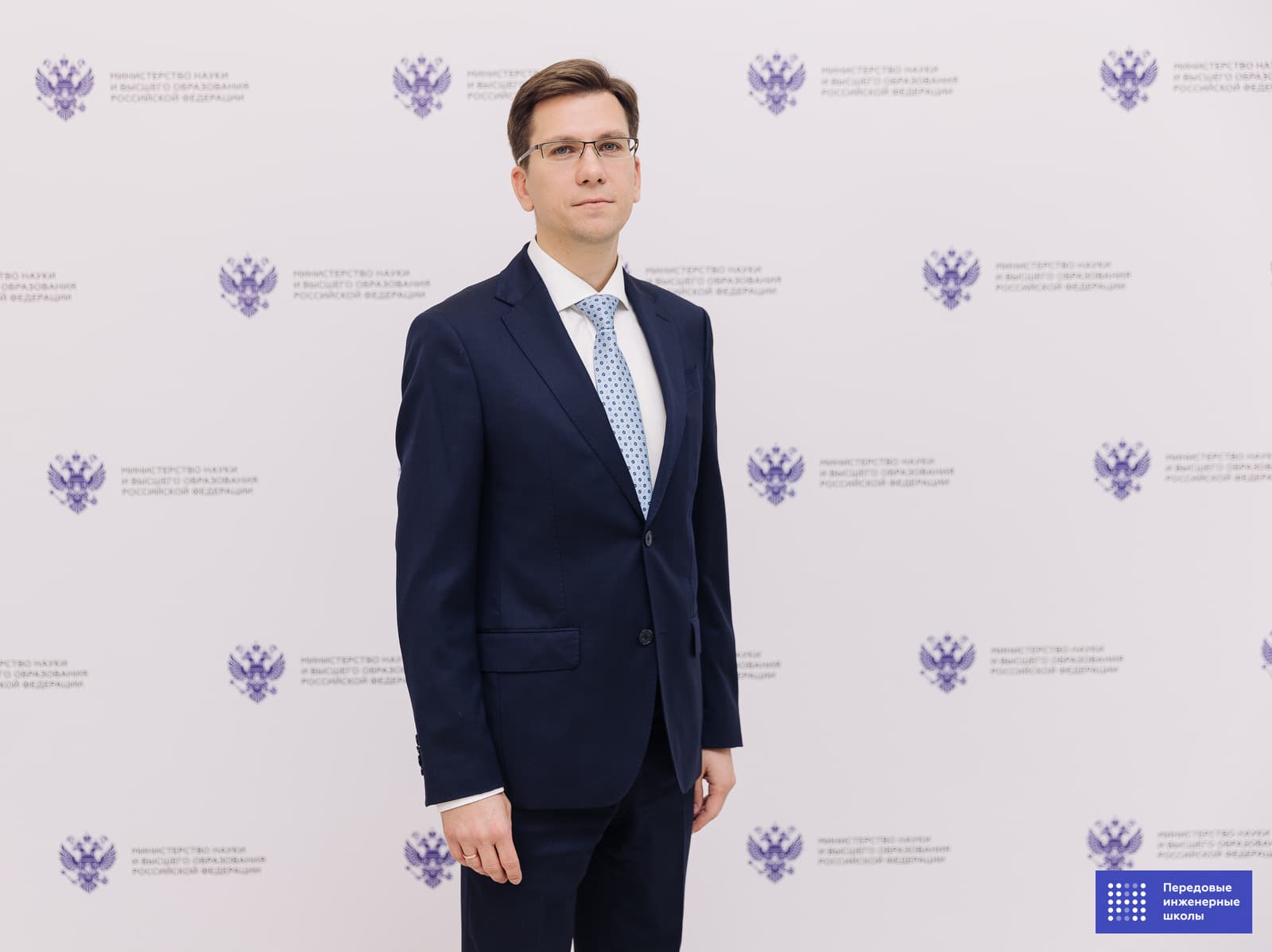
“Over the past two years, small satellites have accounted for 97–98% of all spacecraft launched worldwide,” notes Ivan Tkachenko, Doctor of Technical Sciences, Vice Rector, and Director of both the Institute of Aerospace Engineering and the Advanced Aerospace Engineering School at Samara University.
“SmallSats don’t replace large, heavy, multi-functional satellites—but they occupy a distinct niche with dedicated users and specific functions. This defines the explosive growth in their development and production.”
Work on such spacecraft began at Samara University in 2006. In collaboration with young engineers from “Progress” Rocket Space Centre JSC, university teams developed “AIST”—the first in a now-iconic series of small satellites. The 50-kg flight model (including adapter) was launched as a secondary payload aboard the “Bion-M No. 1” mission from Baikonur on April 19, 2013. Just two days later, it successfully separated and entered its own orbit—an unprecedented deployment scheme never before attempted globally.
Later that year, on December 28, 2013, a technology demonstrator of “AIST” was launched into polar orbit aboard the inaugural flight of the new lightweight Soyuz-2.1v rocket from Plesetsk Cosmodrome. Both satellites carried university-developed scientific payloads: “MAGKOM” (magnetic micro-acceleration compensation system) and “METEOR” (cosmic microparticle analyzer).
In August 2015, “Progress” Rocket Space Centre transferred control of both spacecraft to the university’s newly established Ground Control Complex for Small Satellites, enabling autonomous management of the orbital constellation. Despite a nominal design life of just three years, the flight model transmitted telemetry for 11 years; the technology demonstrator operated for over nine years, far exceeding its planned one-year lifespan.
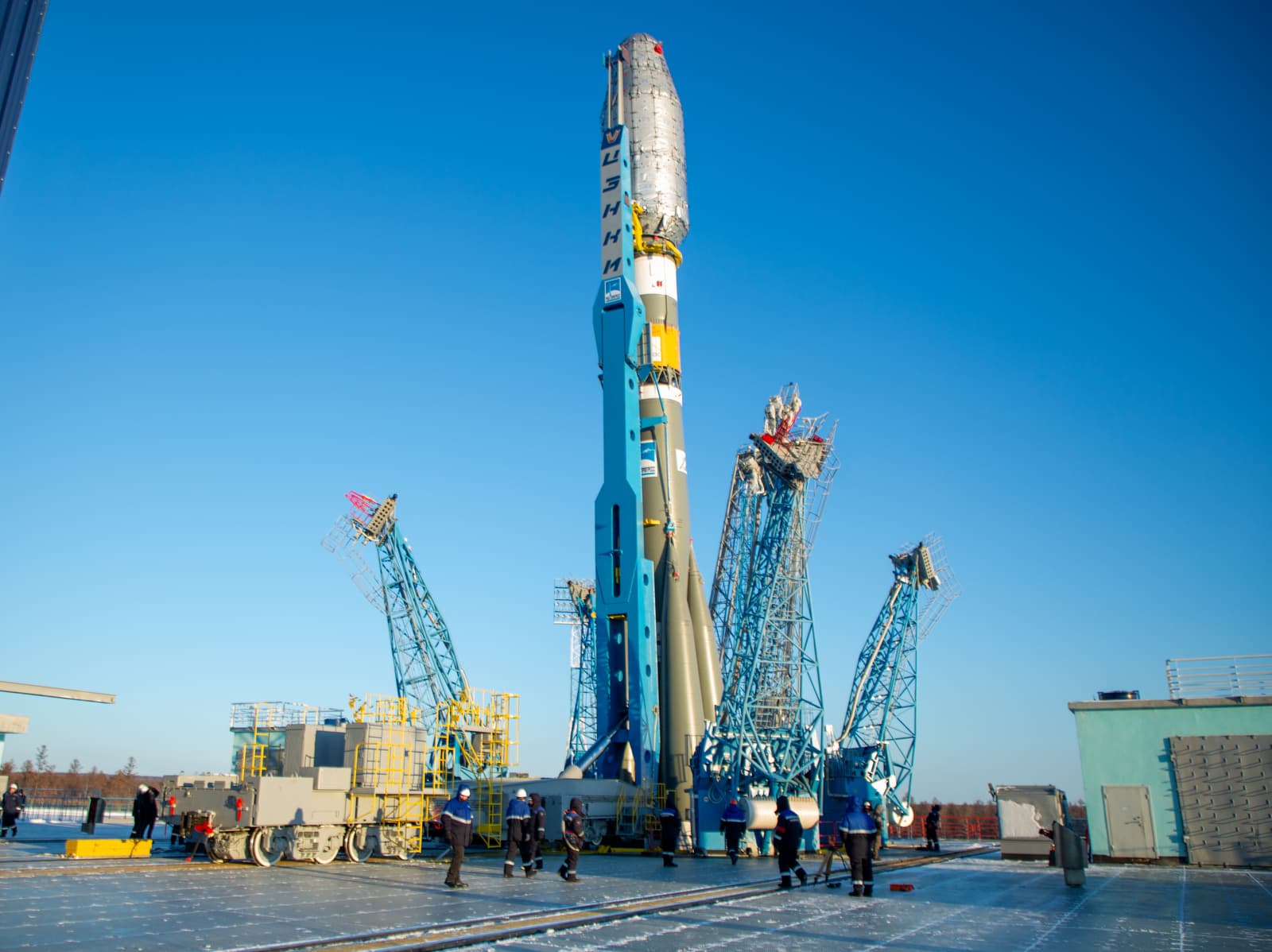
Another landmark achievement was the “AIST-2D” Earth observation satellite (530 kg), launched on April 28, 2016, during the inaugural launch from Russia’s new Vostochny Cosmodrome—attended by President Vladimir Putin. Designed as a technology demonstrator, “AIST-2D” operated for nearly eight years (versus a planned three) and imaged 93 million square kilometers of Earth’s surface. Real data from this and subsequent missions now form the backbone of the university’s educational programs, driving both applied and fundamental research through hands-on experience in satellite telemetry reception and processing.
University-Built CubeSats
Also in 2016, the SamSat-218D CubeSat—designed and manufactured entirely at Samara University—was launched alongside “AIST-2D.” This 3U (10×10×30 cm) microsatellite enables low-cost testing of novel engineering approaches, leveraging the standardized CubeSat form factor to reduce development costs. Over the past decade, Samara researchers have fully designed multiple such satellites in-house, without purchasing any off-the-shelf avionics, establishing a closed-loop domestic production cycle. This deep integration allows precise control—even during anomalies.
In June 2023, the university launched SamSat-ION, a next-generation 3U CubeSat built on a new proprietary platform. An upgraded version—“SamSat-Ionosphere”—features enhanced power systems and updated software. Orbiting at 550 km, it collects data on Earth’s ionosphere and magnetosphere, supporting improved forecasting of communication disruptions and enhanced navigation accuracy.
Looking ahead, the “SamSat-Orion” nanosatellite is scheduled for launch in 2026. Equipped with instrumentation from the Space Research Institute of the Russian Academy of Sciences, it will study the lower ionosphere using low-orbit radio tomography. Ultimately, these satellites are expected to form a dedicated constellation supporting Roshydromet (Russia’s Federal Service for Hydrometeorology). The university’s lab capacity currently allows for the production of up to ten such satellites annually.
National Firsts
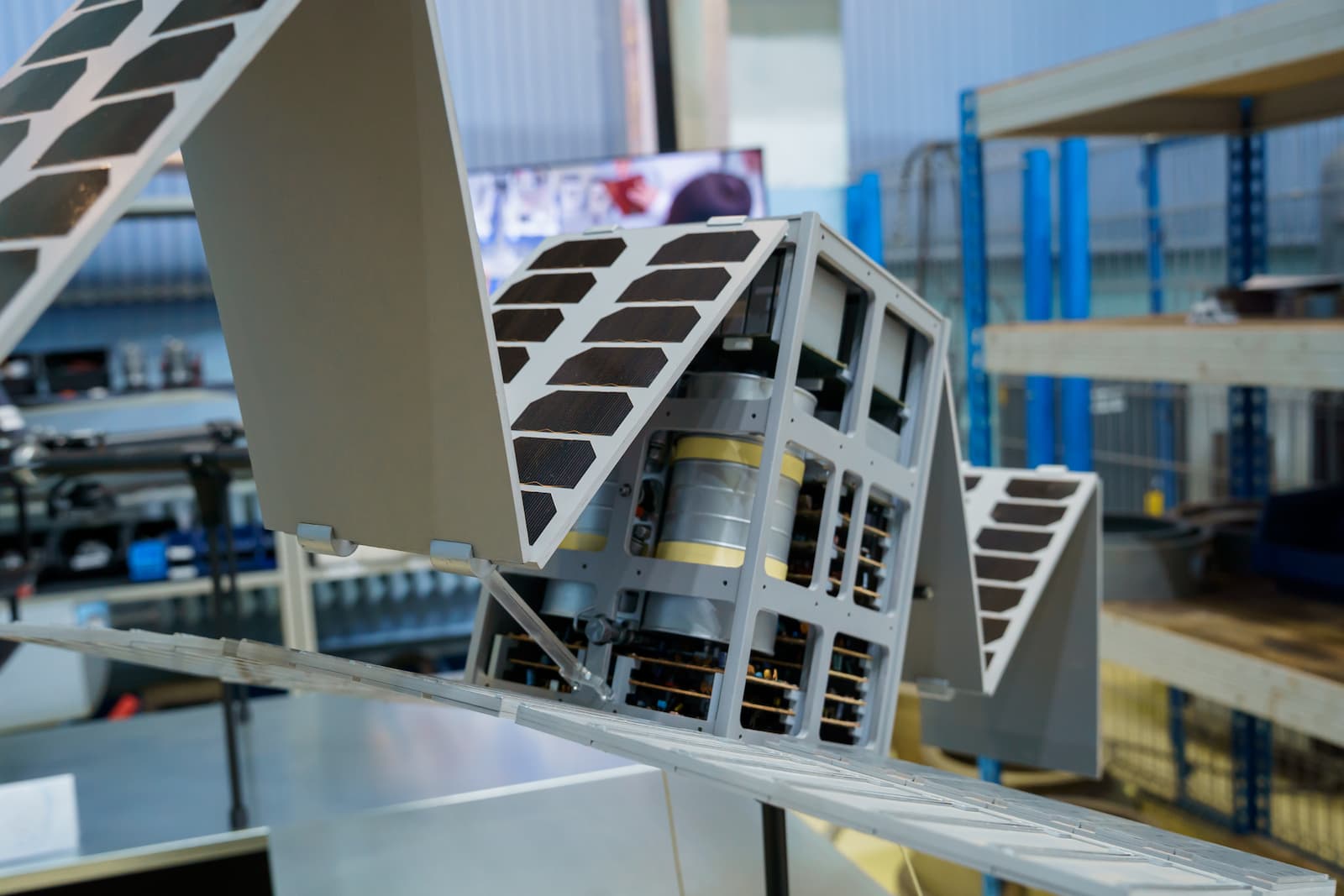
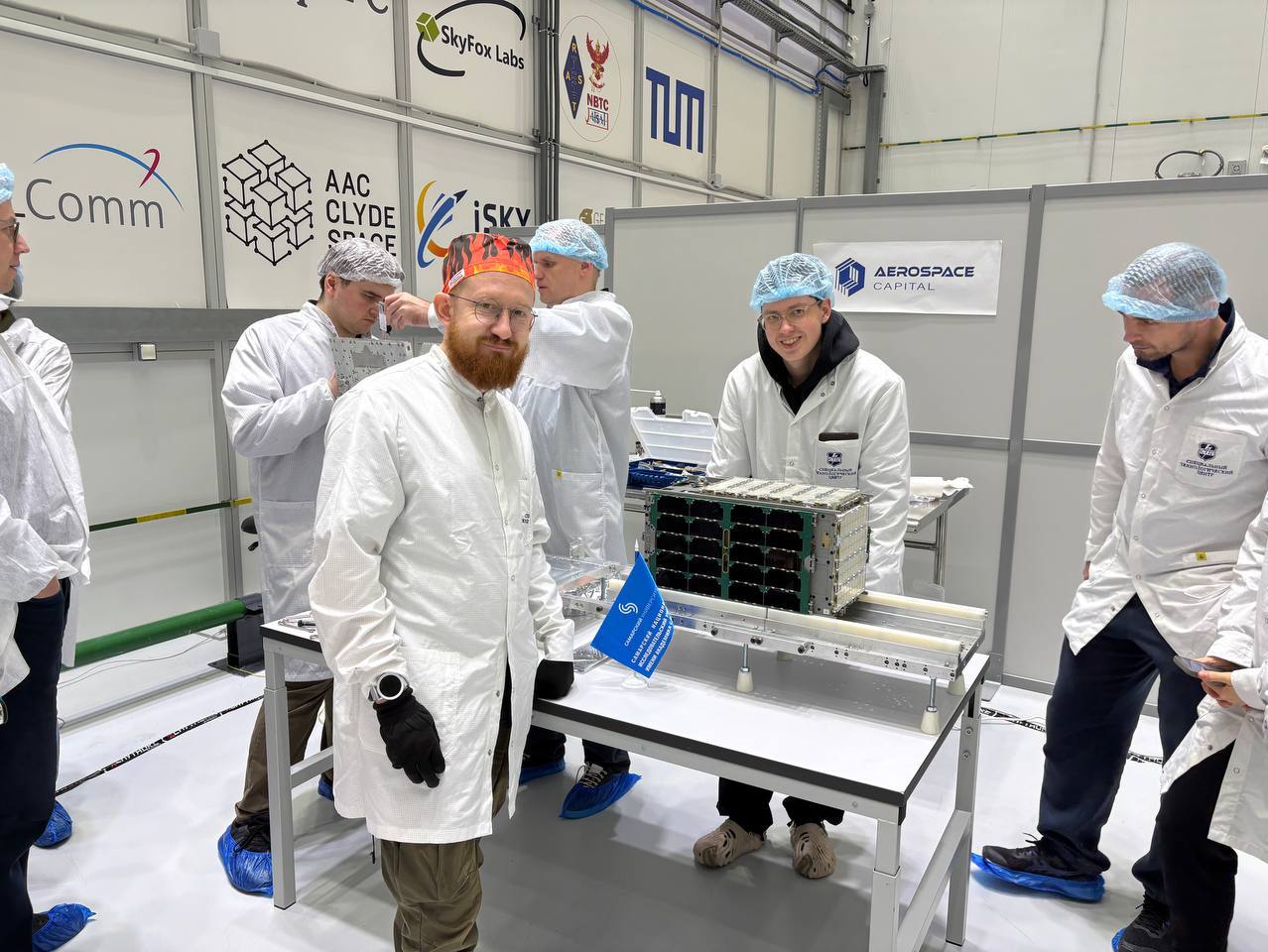
Development of the “AIST” family continues. In 2025, two “AIST-2T” satellites—built by “Progress” Rocket Space Centre on the “AIST-2D” platform—were launched from Vostochny for stereoscopic Earth imaging. Alongside them flew the 16U CubeSat “AIST-ST”, co-developed by Samara University and specialists from Special Technology Centre LLC (St. Petersburg). This radar-equipped satellite will monitor Earth’s surface regardless of lighting or weather conditions—a critical capability for Arctic and Antarctic ice-thickness mapping to support icebreaker navigation.
“‘AIST-ST’ is Russia’s first ultra-small satellite with onboard radar equipment,” emphasizes Ivan Tkachenko. “Fitting a functional radar system into such a constrained volume was previously considered impossible. We’re now eagerly awaiting the first activation of the payload to begin receiving imagery. Only two or three satellites in Russia currently perform this type of monitoring—and the data is invaluable, especially in autumn and winter when cloud cover obstructs optical observation.”
Additionally, the satellite carries a unique experiment: remote measurement of cosmic dust accumulation. University students and young scientists developed a specialized module based on quartz microbalance technology to measure contamination of the satellite’s external surfaces caused by outgassing in space. This research will improve the reliability of optical and radar systems on future missions.
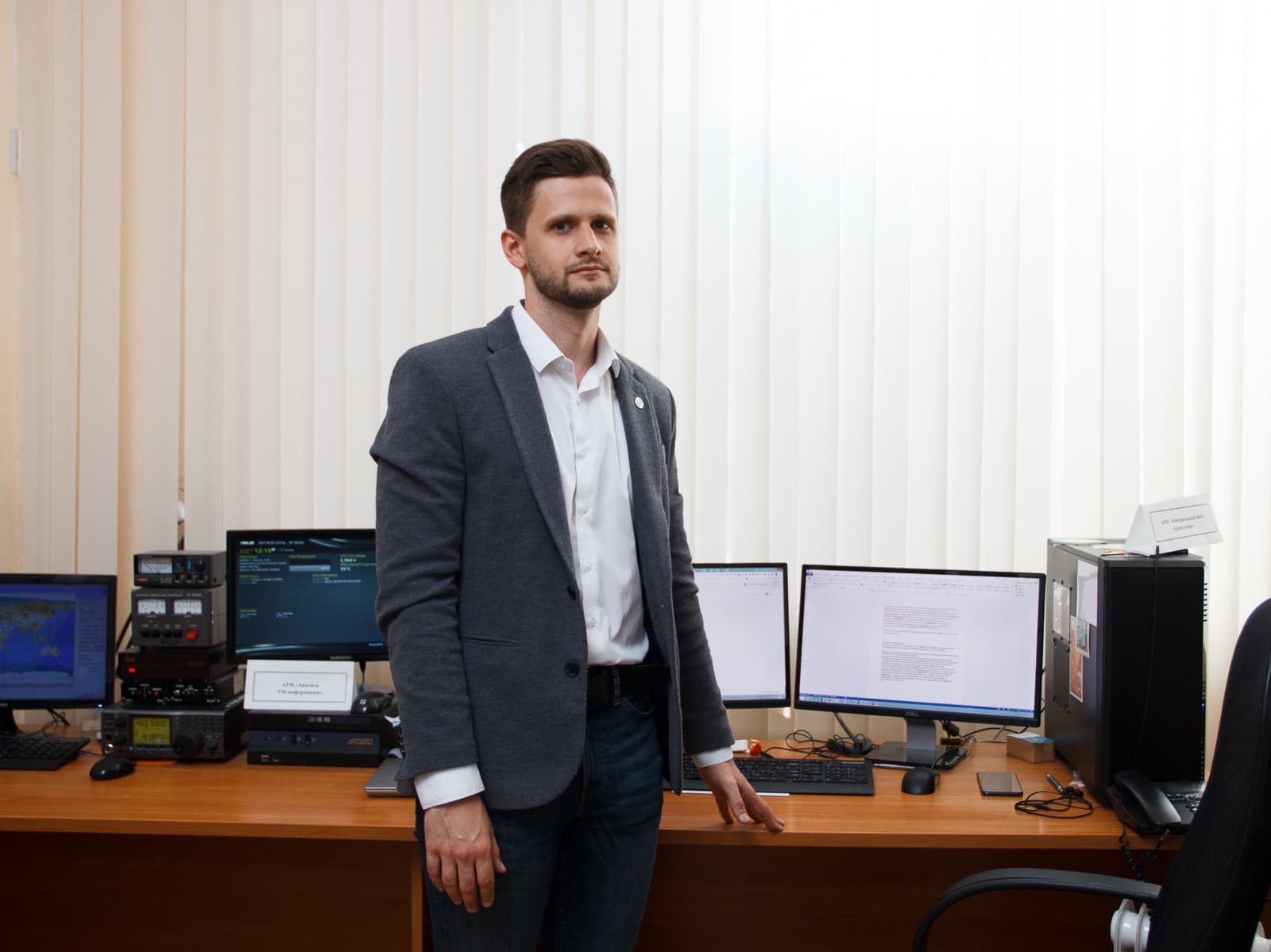
“The satellite carries two primary payloads,” explains Maxim Ivanushkin, Assistant at the Department of Spacecraft Engineering named after Chief Designer D. I. Kozlov.
“First—the X-band radar (8–12 GHz), which emits signals and captures reflections to generate surface imagery. Second—a surface contamination sensor using quartz microbalances to study the satellite’s ‘self-generated atmosphere.’ In space, materials behave differently; plastics outgas, and eroded particles from circuit boards or structural elements can settle on sensitive optics. Understanding this process is essential to protect star trackers, cameras, and other critical instruments.”
Future Horizons
In January 2026, Moscow hosted a review of the “UniverSat” program—a six-year initiative to deploy university-built small satellites. The resulting 25-satellite CubeSat constellation now supports heliogeophysical monitoring and maritime safety operations. Samara University is among the key contributors.
“We have multiple new projects at various stages of development,” summarizes Tkachenko. “Our focus is shifting toward very low Earth orbits—200–300 km altitude—to test long-duration flight and refine Earth observation technologies.”
In 2023, Roscosmos and leading technical universities, including Samara, signed an agreement to establish the “Roscosmos Constellation” Space Science and Education Innovation Consortium. The goal: integrate resources to coordinate talent development and create a unified ecosystem for education, research, and innovation. A roadmap titled “Advanced Space Systems and Services” outlines near-term milestones—including, by 2028, flight tests of a new VLEO-capable spacecraft, for which design documentation is already underway.
Moreover, since 2026, specialized universities have been participating in Russia’s national “Space” project, accelerating the development of service systems and payloads for communications, Earth observation, and radar applications. For young scientists, this hands-on experience provides a solid foundation—not only for fundamental research but also for building real-world prototypes of tomorrow’s satellites.
Source: firstsamara.ru
