


Scientists from Samara University and the Institute of Archaeology of the Russian Academy of Sciences (RAS) have confirmed a long-standing hypothesis regarding the practice of human sacrifice in the Middle Volga region during the 1st century AD. According to the researchers, these sacrificial rituals were performed during the burials of elite warriors belonging to Finno-Ugric tribes. These groups migrated from the Trans-Ural forest-steppe and conquered parts of the Middle Volga, specifically within the Volga-Oka-Alatyr interfluve.
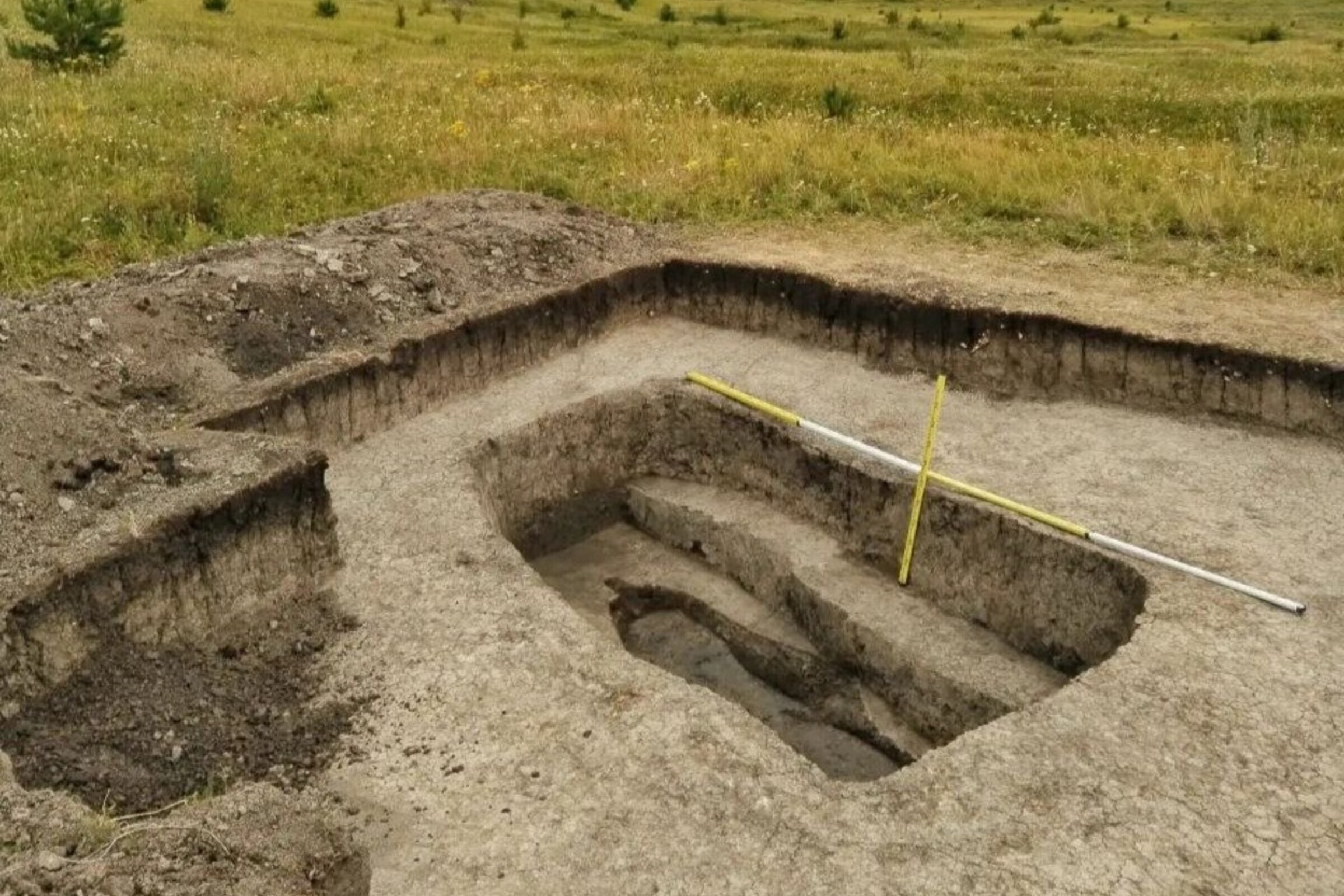
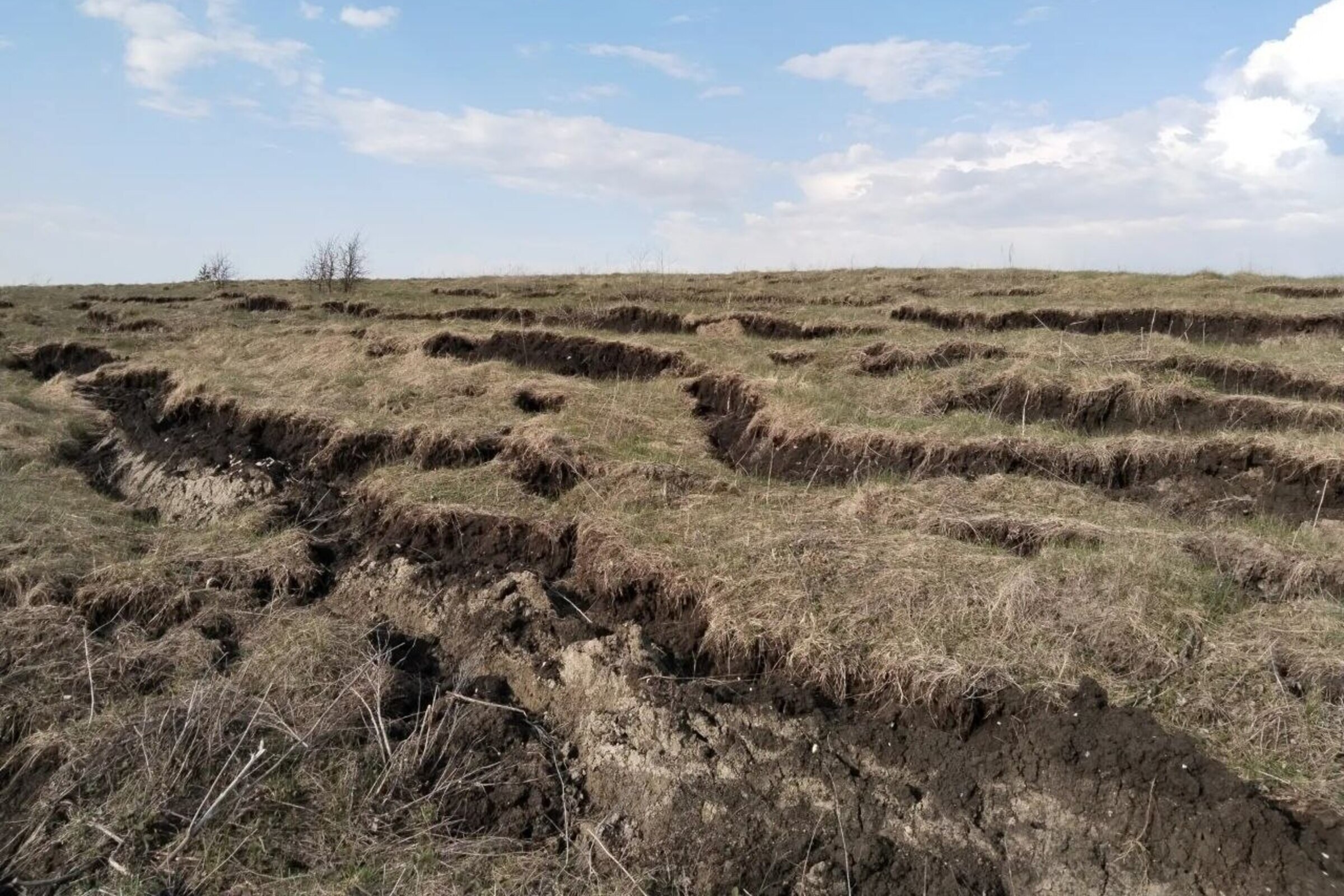
"During this field season, we continued our archaeological excavations at the Pilninsky 1 flat-grave burial ground, located in the Anda River valley near the urban-type settlement of Pilna in the southeast of the Nizhny Novgorod region," said Sergey Zubov, Head of the Expedition and Scientific Supervisor of the Archaeology Research Laboratory at Samara University. "This burial ground was first discovered by our team in 2009. Its materials date back to the 1st century AD and belong to the group of monuments known as the Piseralsko-Andreevsky type. This type of monument is essentially a precursor to the ancient Mordvin culture, meaning we are actually investigating the very earliest origins of the Mordvin ethnos. By studying these sites, we are trying to understand the genesis and ethnogenesis of the Mordvin people."
According to him, only seven burial monuments of the Piseralsko-Andreevsky type are currently known, located in the Republics of Mordovia, Chuvashia, Mari El, and the Nizhny Novgorod region. The term derives from two structurally similar burial mounds discovered in the last century: one near the village of Piseraly in the Mari El Republic, and the other near the village of Andreevka in Mordovia.
"It is important to emphasize that all these burial complexes were created not by the indigenous population, but by incoming groups—essentially conquerors. They were a group of heavily armed warriors possessing a large and diverse arsenal of weapons for that era," Zubov noted. "While their exact origins remain a subject of various hypotheses, I believe they came from the Ural and Trans-Ural regions. They were likely representatives of a Finno-Ugric population group, which is supported by similarities between the Pilninsky burials and those in the Ural regions in certain funerary rites. They clearly passed through the territory of modern-day Bashkortostan, where mounds with similar material culture and burial practices have been found. The fact that they were warriors, rather than peaceful farmers or herders, is evident from the colossal amount of weaponry in their graves compared to other contemporary peoples: swords, broadswords, daggers, spears, chain mail, helmets, and various types of arrowheads."
Excavations at this burial ground have been conducted intermittently since 2021. To date, ten burials, both male and female, have been identified.
"This year, we conducted emergency rescue excavations. The headland where the ancient cemetery was located is being actively destroyed by landslides. We managed to document two burials—one male and one female—within the landslide zones, which had already been partially disturbed by natural events. Another male burial was investigated after being damaged by modern grave robbers. There, we found remnants of chain mail, arrowheads, beads from the Northern Black Sea region, and bronze warrior belt ornaments.
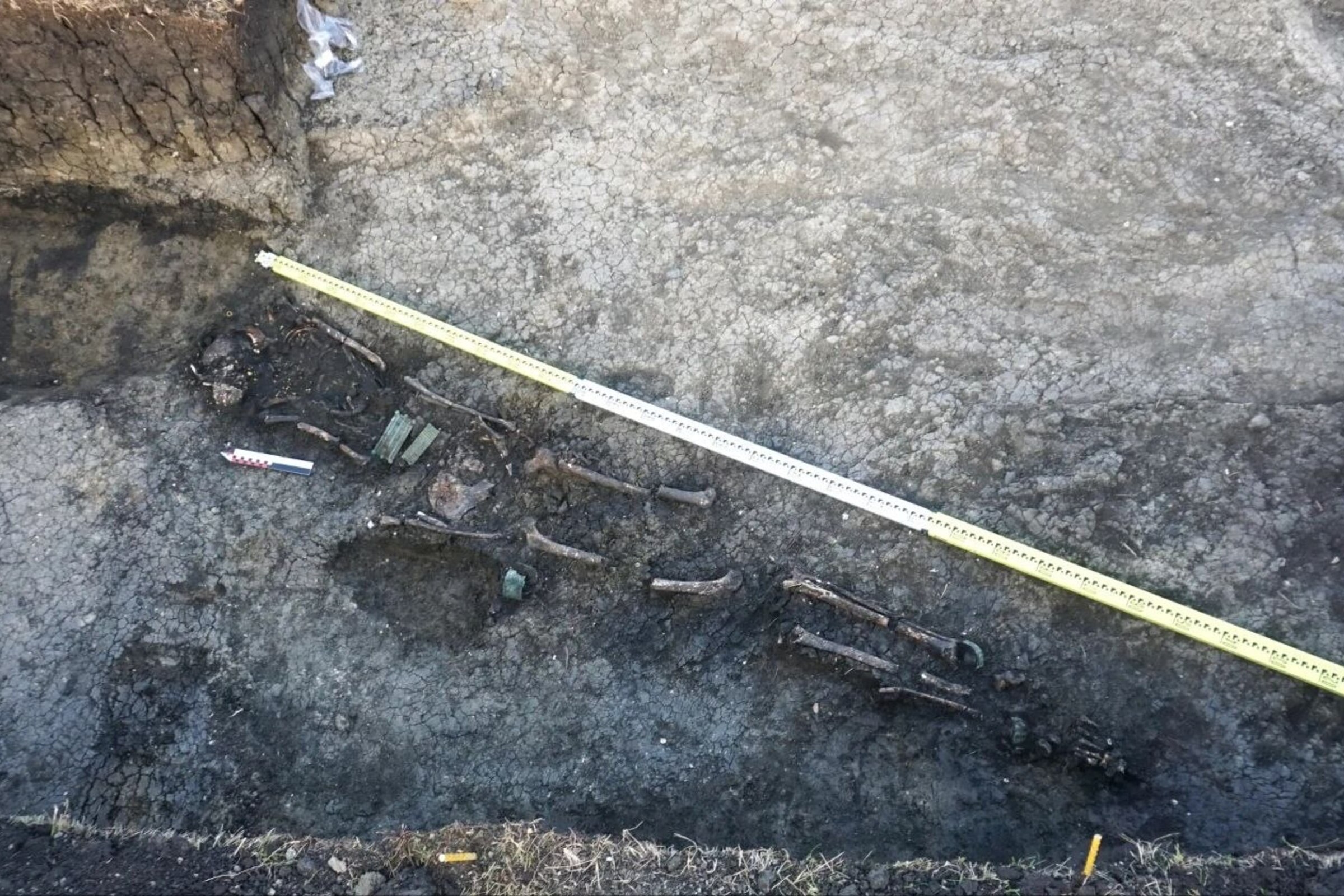
However, our true stroke of luck was the discovery and excavation of an unusually large grave, measuring approximately 3.5 by 2.5 meters. On the ancient surface of this grave, we found a cluster of horse bones, while at the bottom, the burials of two young warriors were discovered. One warrior was buried with a spear, a broadsword, and horse tack (a bit). The other was buried with a spear, a sword, and a clay pot. Both retained bronze buckles from their combat belts on their waists.
Remarkably, a severed human skull was found lying separately on the long ledge of this double grave. As we see it, this was a sacrifice made during the funeral, and the victim was likely an enemy captive or a slave. This is not the first such find in Piseralsko-Andreevsky type monuments, where human skulls have been discovered above warriors' graves. Previously, researchers assumed these skulls belonged to the buried individuals whose bones had not survived for some reason. We had previously hypothesized that these skulls above the graves were exclusively sacrificial and sacred in nature. Now, based on the results of our excavations and research, we can state with absolute certainty that the funerary culture of these incoming warlike tribes included the practice of human sacrifice," emphasized Sergey Zubov.
Archaeological excavations and research at the Pilninsky burial ground in the Nizhny Novgorod region are planned to continue next year.
For Reference:
Research at the Pilninsky 1 flat-grave burial ground in the Nizhny Novgorod region is traditionally conducted by specialists from the Middle Volga Archaeological Expedition of Samara University (led by S.E. Zubov) and the Seimsko-Sudzhinskaya Expedition of the Institute of Archaeology of the RAS (led by O.A. Radyush). This year, students and faculty from the Moscow Financial and Law University (MFUA) also participated in the excavations.
