

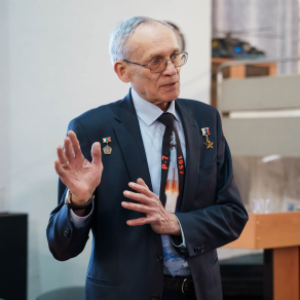
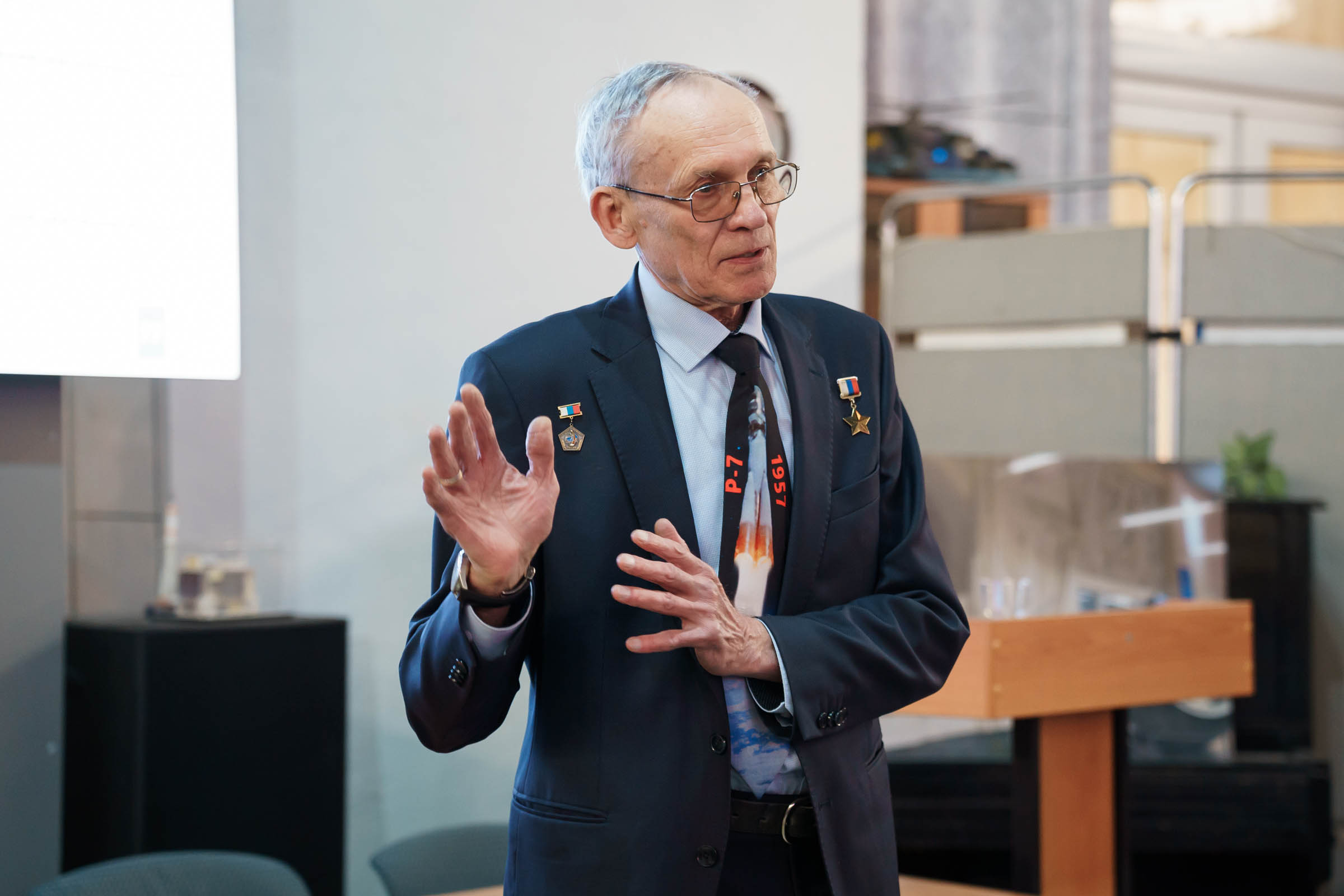
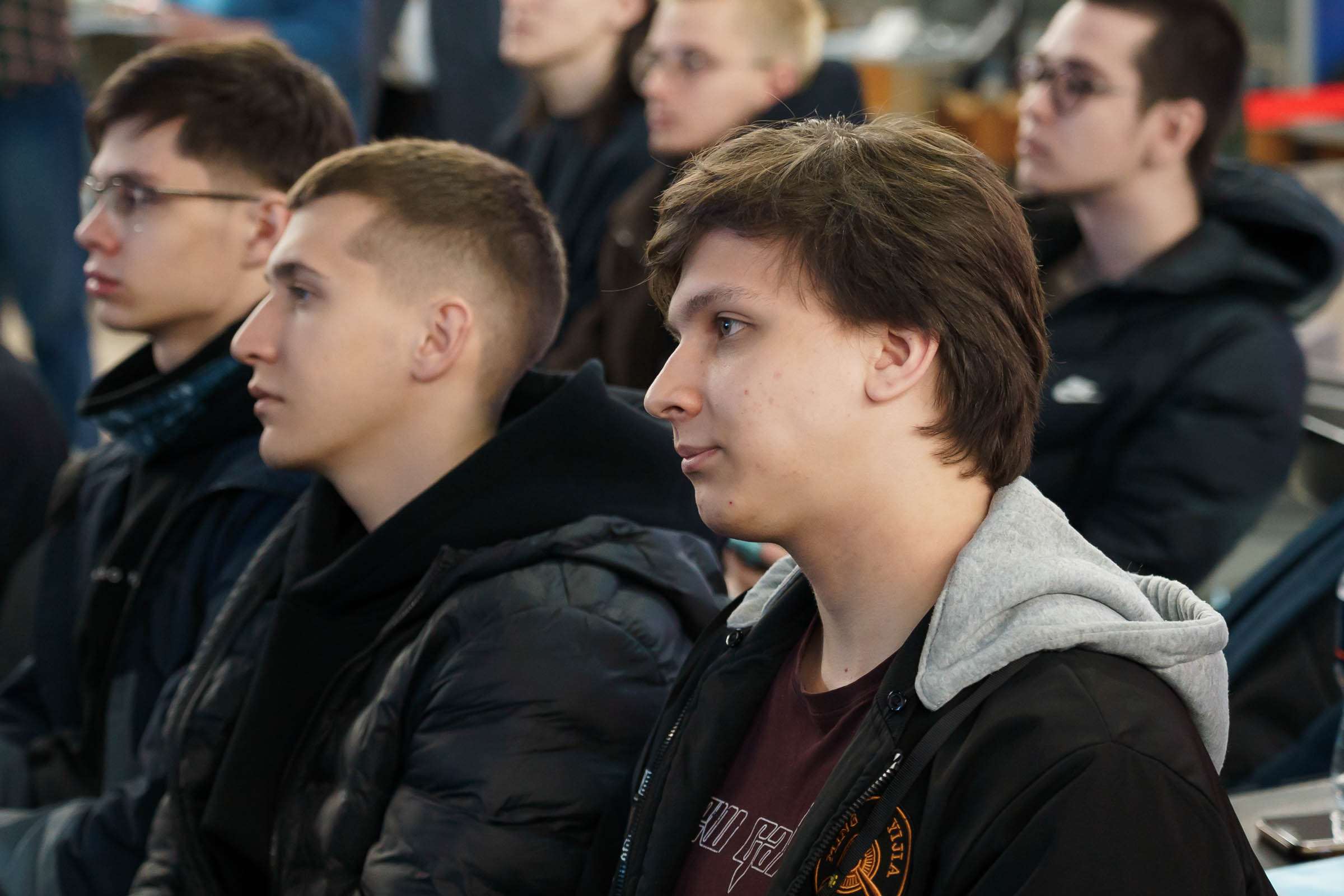
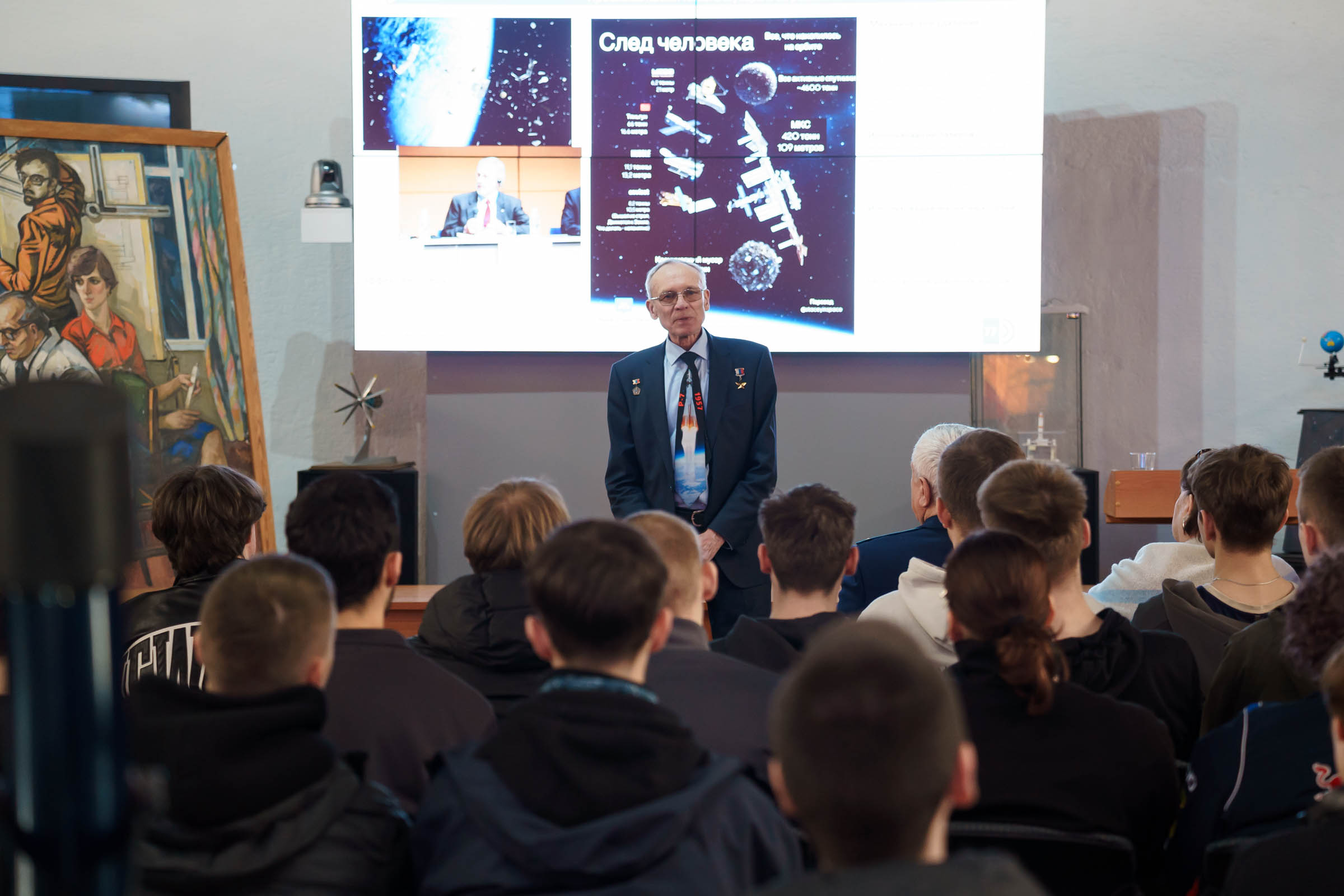
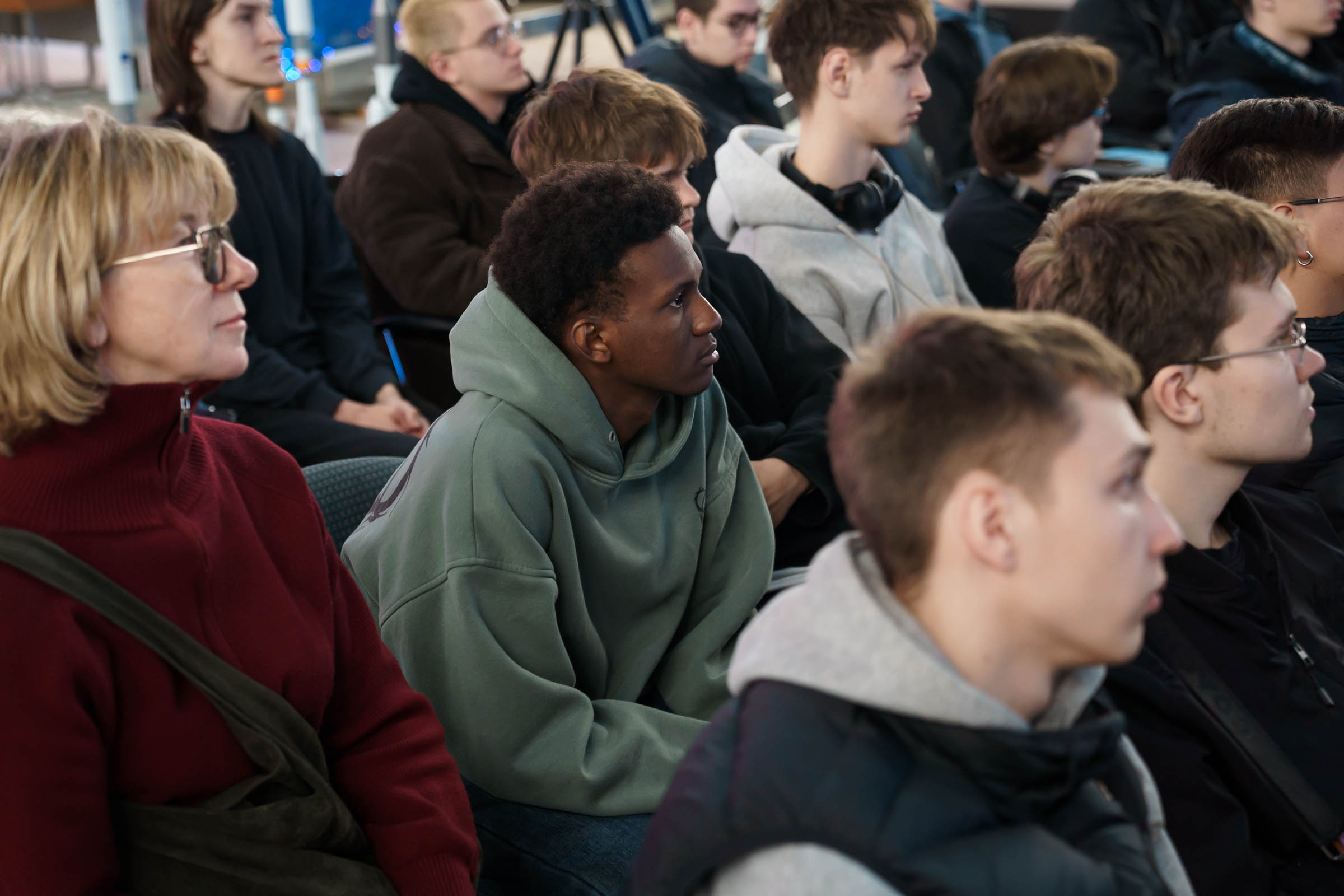
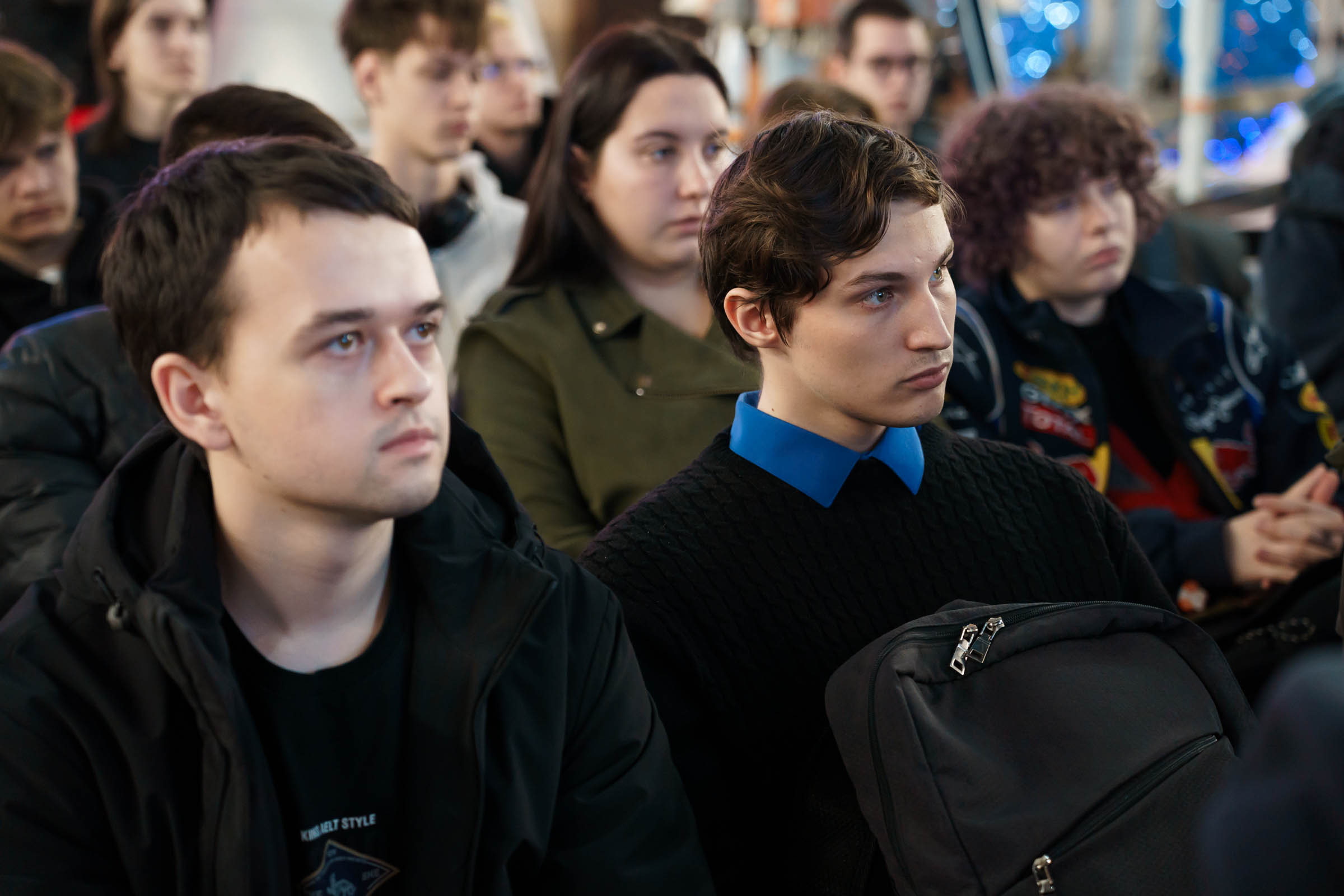
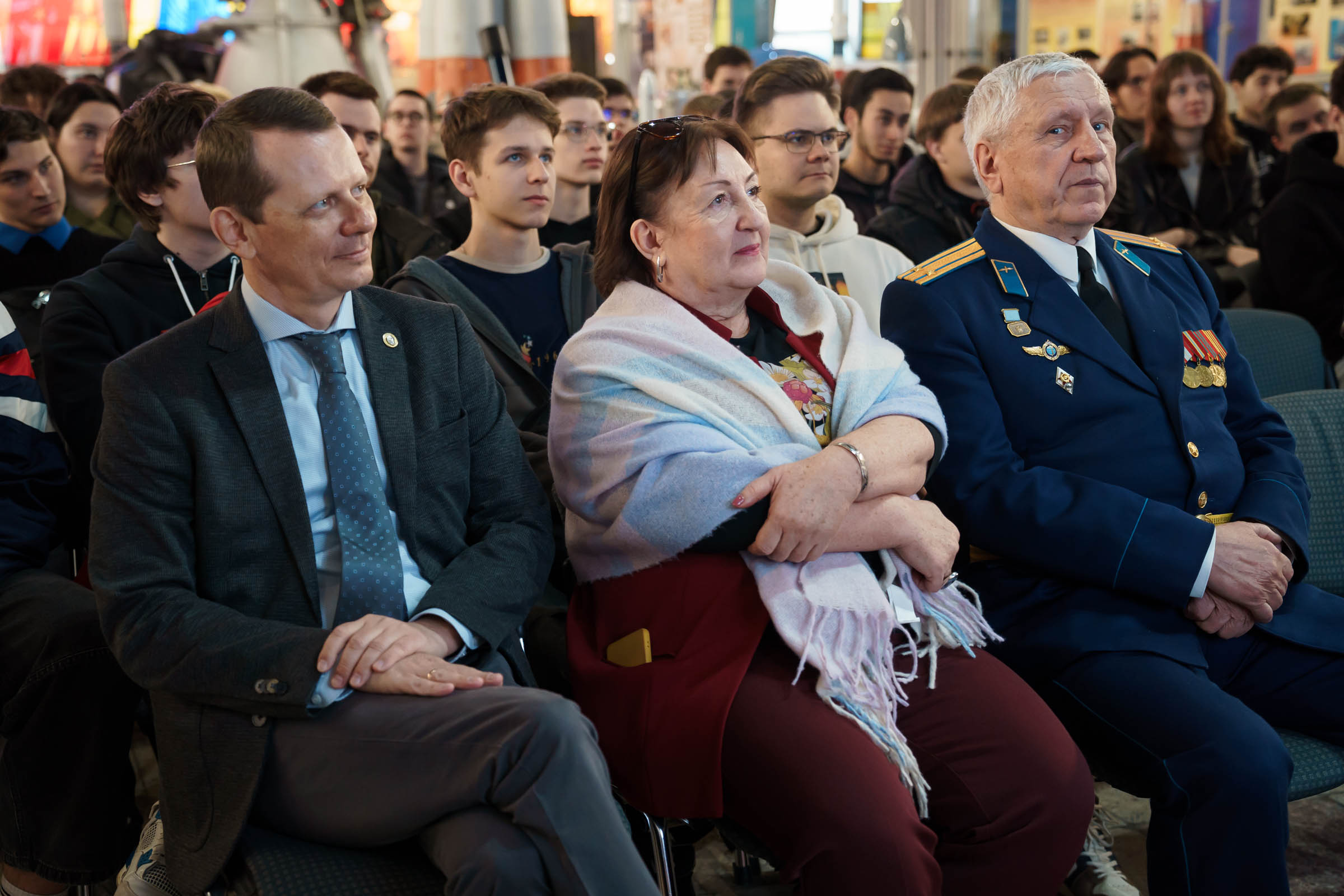
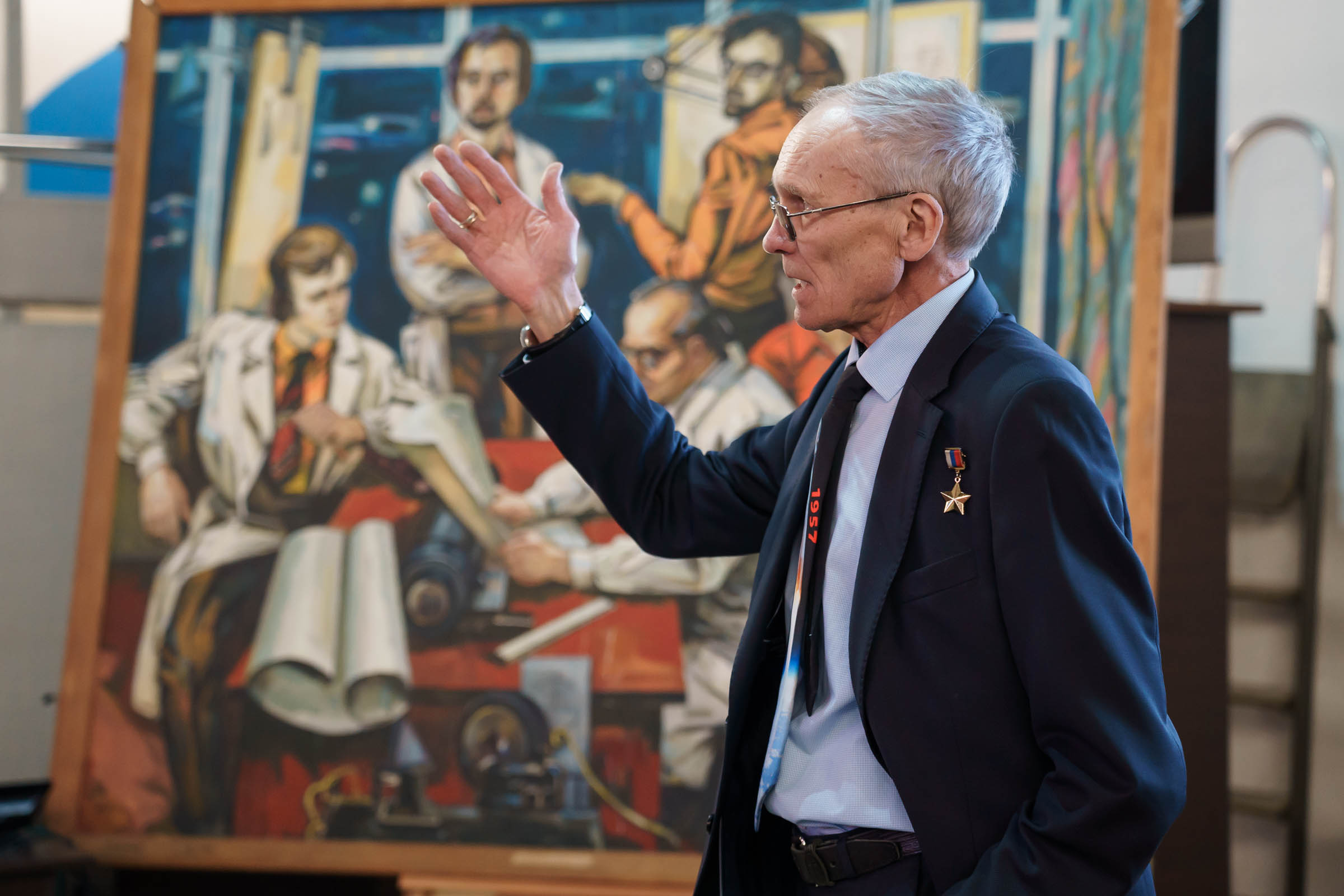
At the Museum of Aviation and Cosmonautics, students from the Institute of Aerospace Engineering had a rare opportunity to meet Sergey Avdeyev—a man who spent over a year continuously in space. The Hero of the Russian Federation and Pilot-Cosmonaut of the Russian Federation shared vivid memories of his missions aboard the Mir Space Station, Russia’s pivotal role in building the International Space Station (ISS), and why space doesn’t smell like roses.
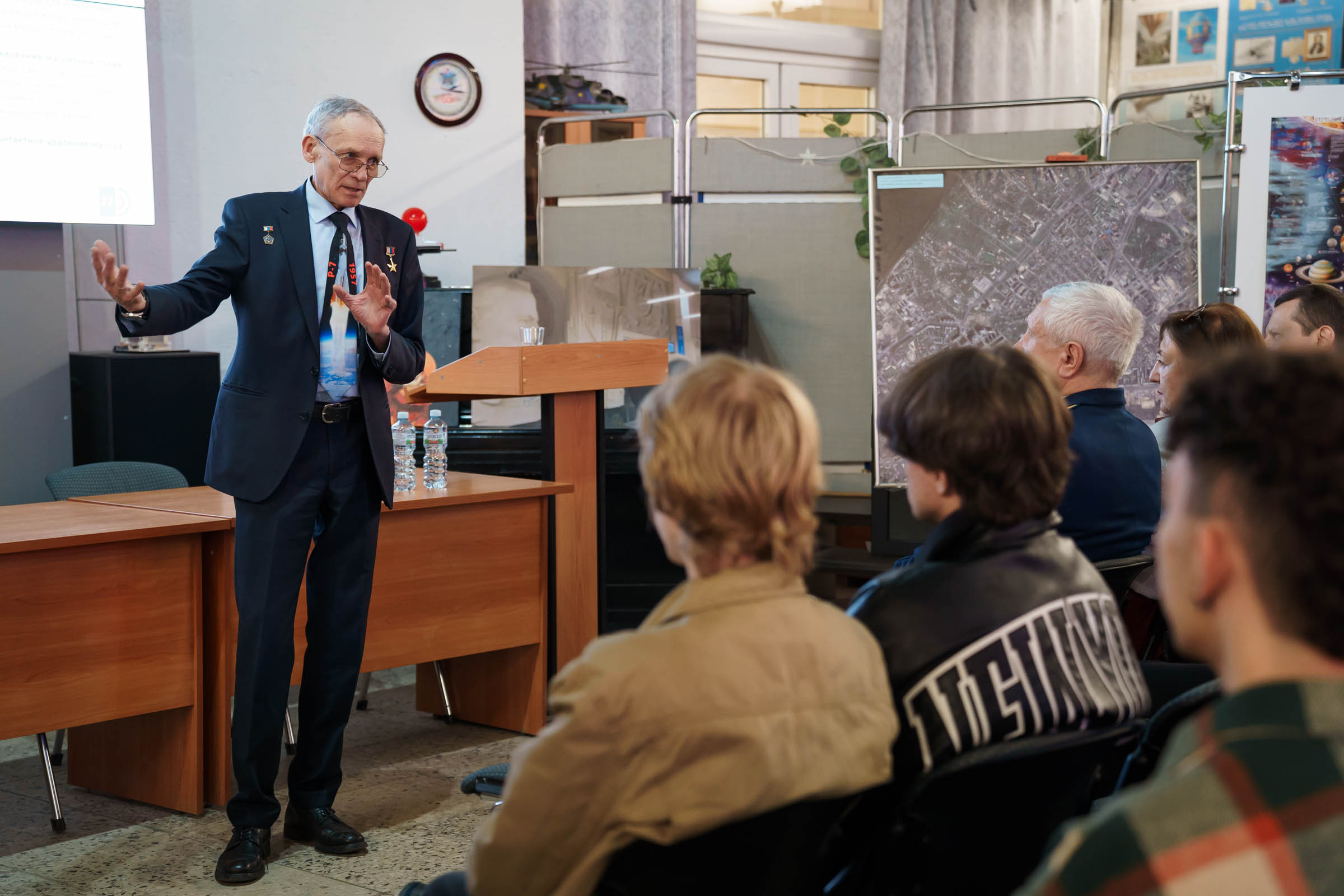
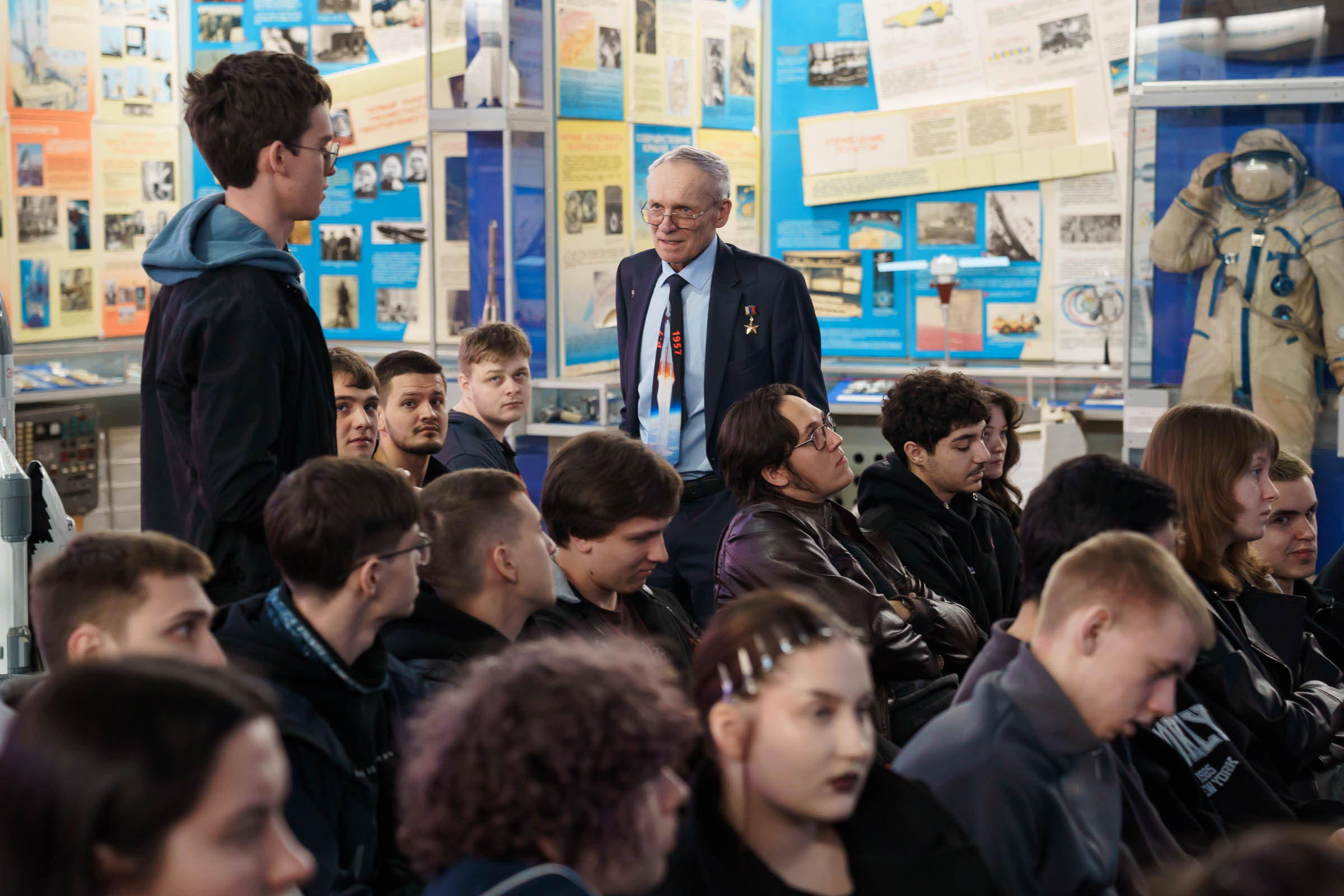
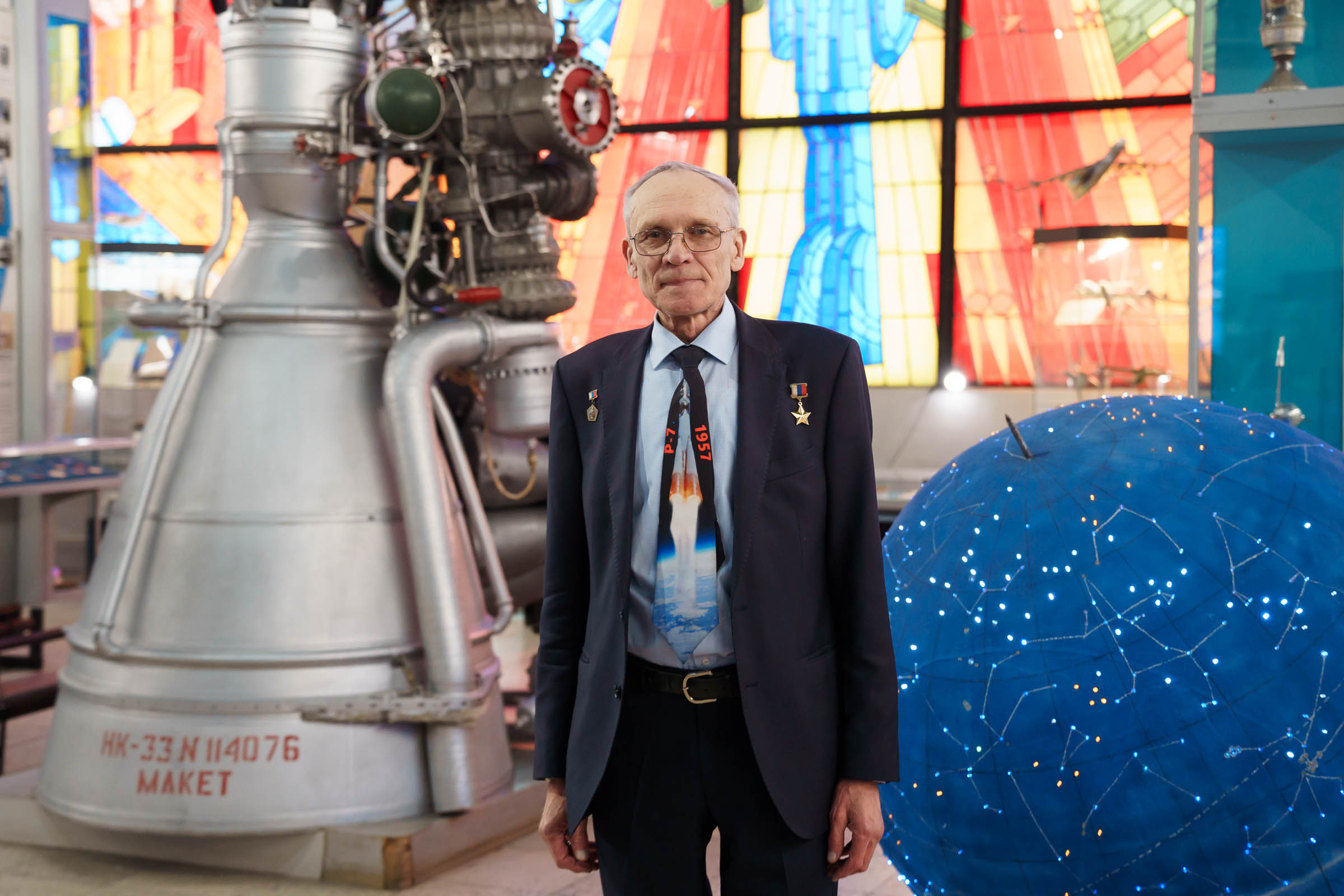
From Chapayevsk to the Stars
Unlike many cosmonauts, Avdeyev is not a pilot—he’s an engineer. His journey began in his hometown of Chapayevsk, continued through studies at MEPhI (National Research Nuclear University), and led to hands-on work at the Energia Scientific-Production Association, where he helped develop a gamma-ray telescope for studying newly discovered cosmic radiation.
“Our telescope could pinpoint the source of signals with high precision,” he recalled.
It was this deep technical expertise that ultimately earned him a place in the cosmonaut corps.
He reminded the audience of the pioneering milestones:
“Yuri Gagarin’s flight lasted just 108 minutes—but it proved humans could survive and work in space. Then came Gherman Titov, who stayed for a full day. Alexei Leonov made the first spacewalk. And manual docking? Imagine trying to connect two spacecraft hurtling at 8 km/s! Every mission opened new frontiers—and new dangers.”
A Record That Still Stands
For Avdeyev, Mir became a second home. His first two missions lasted just over six months each—but his third stretched to 379 days. Across three flights, he accumulated 748 days in orbit, setting the world record for cumulative time in space—a record that stood until Oleg Kononenko surpassed it aboard the ISS.
“It’s right here,” he said, pointing to the suspended Mir station model hanging from the museum ceiling.
“748 days total. An absolute record.”
He emphasized Russia’s indispensable contribution to the ISS:
“Mir was the ninth Soviet station. The U.S. had only operated a long-duration station for two years. Their shuttle missions were brief and confined. When the idea of an international orbital outpost emerged, global partners turned to us—because we had decades of experience building large, long-term stations, designing life-support systems, power generation, propulsion, and ground-based control.”
Life Upside Down: Food, Teeth, and Haircuts
Students listened with fascination as Avdeyev described daily life in microgravity—a reality far removed from Earthly routines.
“Your habits change. Your physiology changes. Your body painfully adapts,” he said.
Oral hygiene
“You brush just like on Earth—but you can’t spit. The paste stays on your face. Every ordinary action requires special tools, and not all survive zero-gravity testing.”
Washing hair
“You squeeze out water to form a floating ‘lake’ above your head, smear it through your hair, add shampoo, and wipe it off with a towel.”
Haircuts
“Two cosmonauts: one cuts, the other immediately vacuums up every strand—so they don’t float around the station.”
Exercise is mandatory: two hours daily on a treadmill or cycle ergometer—otherwise, the heart “forgets” how to pump under gravity.
Disasters in Orbit: Fire, Breach, and Space Debris
Avdeyev didn’t romanticize space—it’s a realm of constant risk.
“We had a fire once. A faulty oxygen-generating canister ignited. The flame was small, but it threatened to melt through the wall, causing depressurization and filling the station with toxic smoke.”
Another time, during a failed ballistics experiment, a module was punctured.
“Air rushed out. We managed to seal the hatch in time—but that compartment was lost.”
And then there’s space debris—fragments of defunct satellites traveling at terrifying speeds.
“I once woke up and saw Earth through a haze. While we slept, the station passed through a cloud of micrometeoroids—they left tiny craters on the viewport glass.”
Today, orbital stations are shielded against micrometeoroids—but a large fragment remains an unavoidable threat.
The Smell of Space and +150°C in Sunlight
Yes, space has a smell—and it’s not floral.
“Air scrubbers work, condensation is collected—but a distinct odor lingers. It’s not pleasant; it doesn’t smell like roses. Just… unique. We joke on Earth when we catch it: ‘Ah, smells like space!’”
During spacewalks, the white spacesuit must endure extreme temperatures: +150°C in sunlight, –100°C in shadow. The color helps—but it’s always a gamble.
Lunar Radiation Is a Different Beast
Asked about lunar missions, Avdeyev was cautious:
“I understand lunar radiation. It’s a qualitatively different level—nothing like low-Earth orbit.”
As a physicist at JSC TsNIIMash—a key developer of the future Russian Orbital Station (ROS)—he advocates for prudence:
“Crewed stations should operate in familiar orbits. Polar orbits, with their intense radiation, should be explored by automated missions first.”
In Closing
The meeting ended in applause. Students left with a clear message: spaceflight isn’t just heroism—it’s daily discipline, readiness for emergencies, and the skill to catch a floating spoon before it drifts away at the worst possible moment.
“Being a cosmonaut isn’t easy,” Avdeyev smiled.
“But if you’re ready to study for years, jump with parachutes, dive underwater, and master celestial navigation—welcome to the corps. And remember: today, we prioritize candidates with engineering backgrounds.”
Photos by Olesya Orina
