

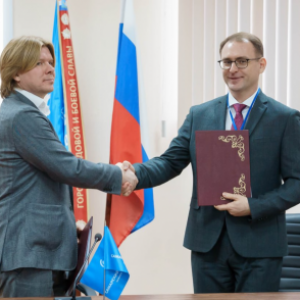
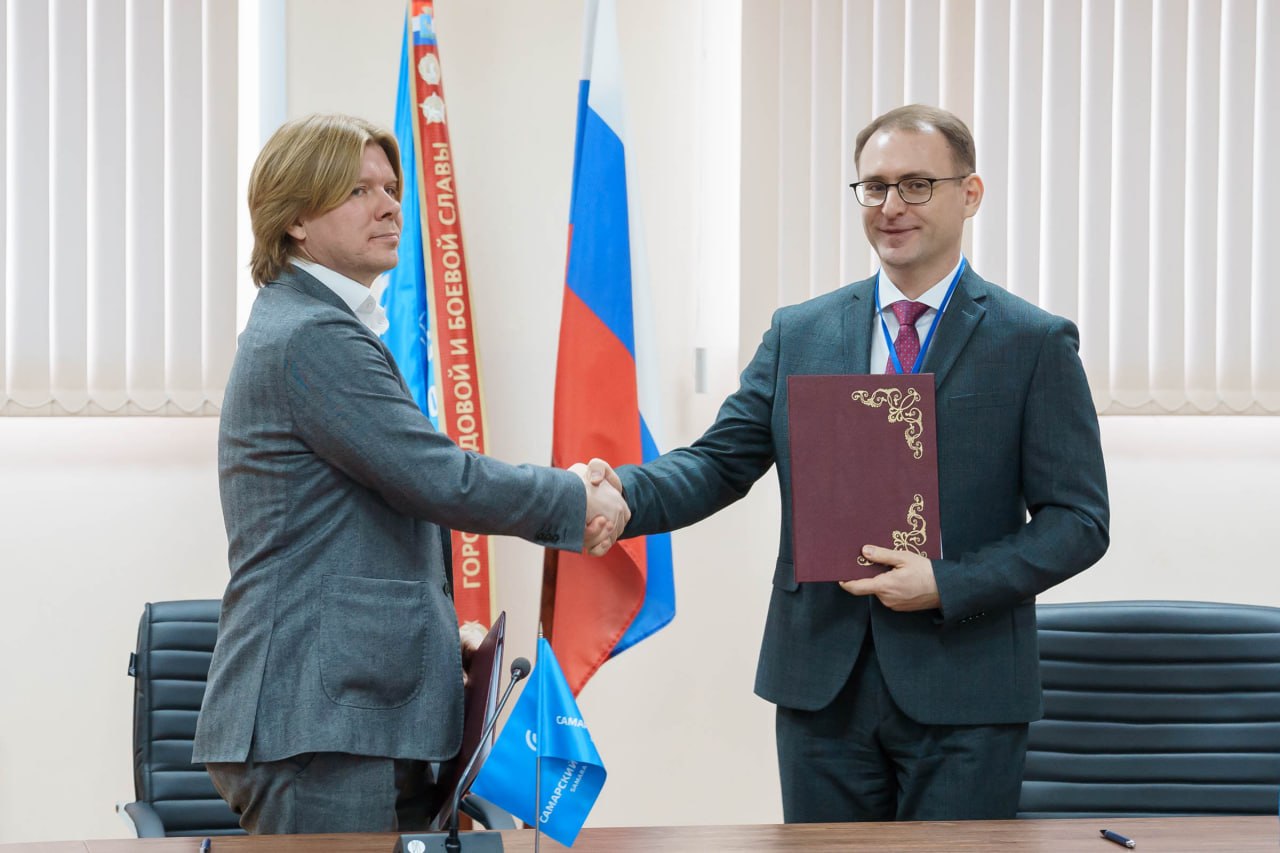
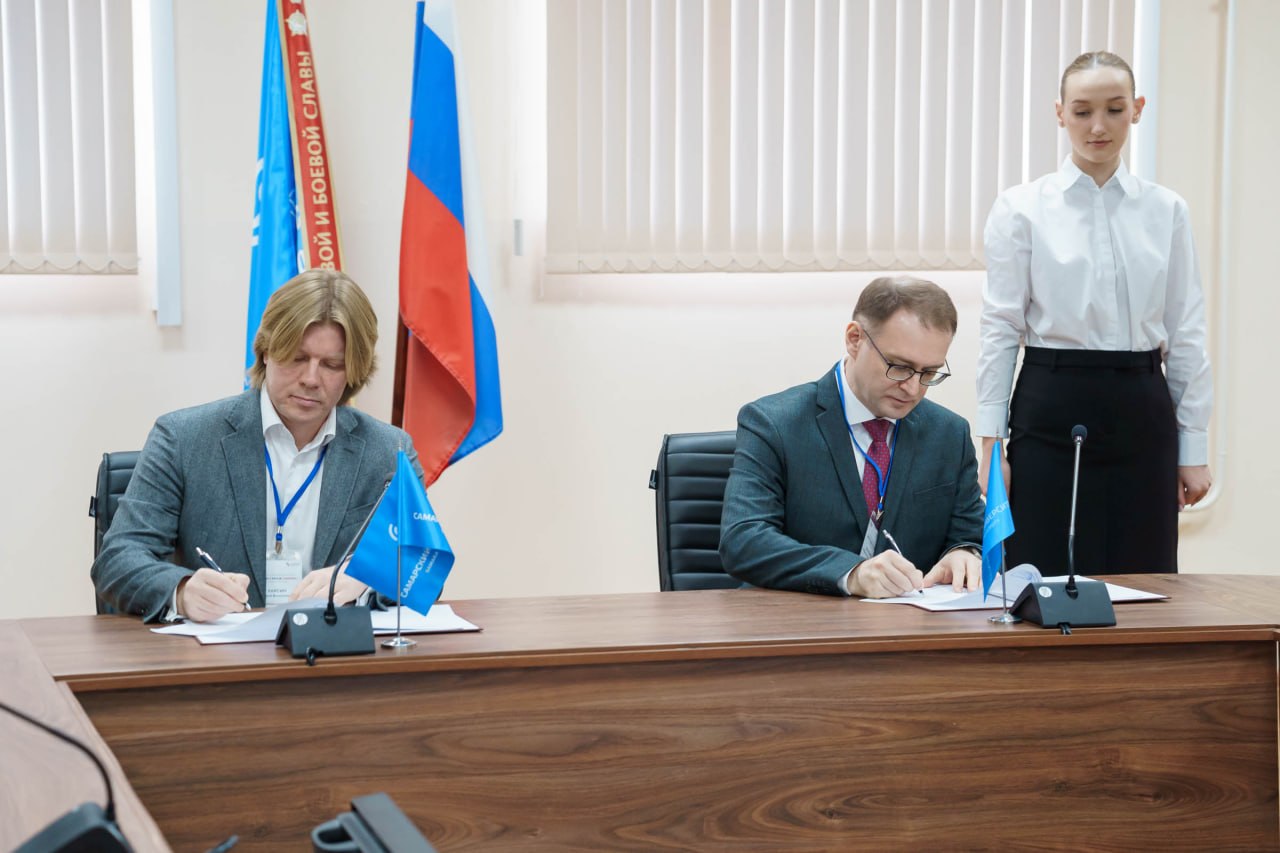
On Thursday, April 9, Samara National Research University hosted the signing of a cooperation agreement to establish the “Drone Garage” Technological Workshop—a key component of the Integrated Educational Model “Drone Garage.” The document was signed by Vladimir Bogatyrev, Rector of Samara University, and Dmitry Kaysin, Rector of Russia’s first digital institution, “University 2035,” in the presence of Vyacheslav Romanov, Deputy Chairman of the Samara Region Government, along with representatives from regional authorities and the professional community.
The “Drone Garage” model integrates several strategic activities: testing cutting-edge technological solutions, hosting engineering competitions, and developing innovative educational formats in the fields of unmanned autonomous systems (UAS), robotics, and digital technologies.
“This agreement with ‘University 2035’ and the launch of the ‘Drone Garage’ mark a new chapter in the development of unmanned aviation in the Samara Region,” said Vyacheslav Romanov.
“Here, both schoolchildren and university students will gain hands-on exposure to drone technologies. In fact, all young people should engage with this field—it’s one of the most promising sectors, essential for the future of our economy. Even if they don’t pursue careers in UAS, they must understand how these systems work and how they can be applied across industries. The ‘Drone Garage’ offers exactly that: immersive learning, experimentation, and a platform to test their own projects.”
Conceived as a “convergence hub” for the regional tech ecosystem, the “Drone Garage” will bring together developers, manufacturers, educators, and government bodies. Challenges identified through this collaboration will be addressed via engineering competitions and translated into relevant, up-to-date educational curricula.
“The opening of the ‘Drone Garage’ is not just an event—it’s a catalyst for interregional cooperation aimed at strengthening human capital and technological capacity in the UAS sector,” noted Dmitry Kaysin.
“In just one year of operation at our Moscow site, we’ve seen tremendous interest from tech companies, IT startups, and young innovators who constantly come to invent, build, and test their ideas.”
For the Samara Region, this initiative goes beyond education—it’s a systemic mechanism to assemble a full-fledged UAS ecosystem, spanning talent development, engineering competencies, solution validation, and joint project implementation.
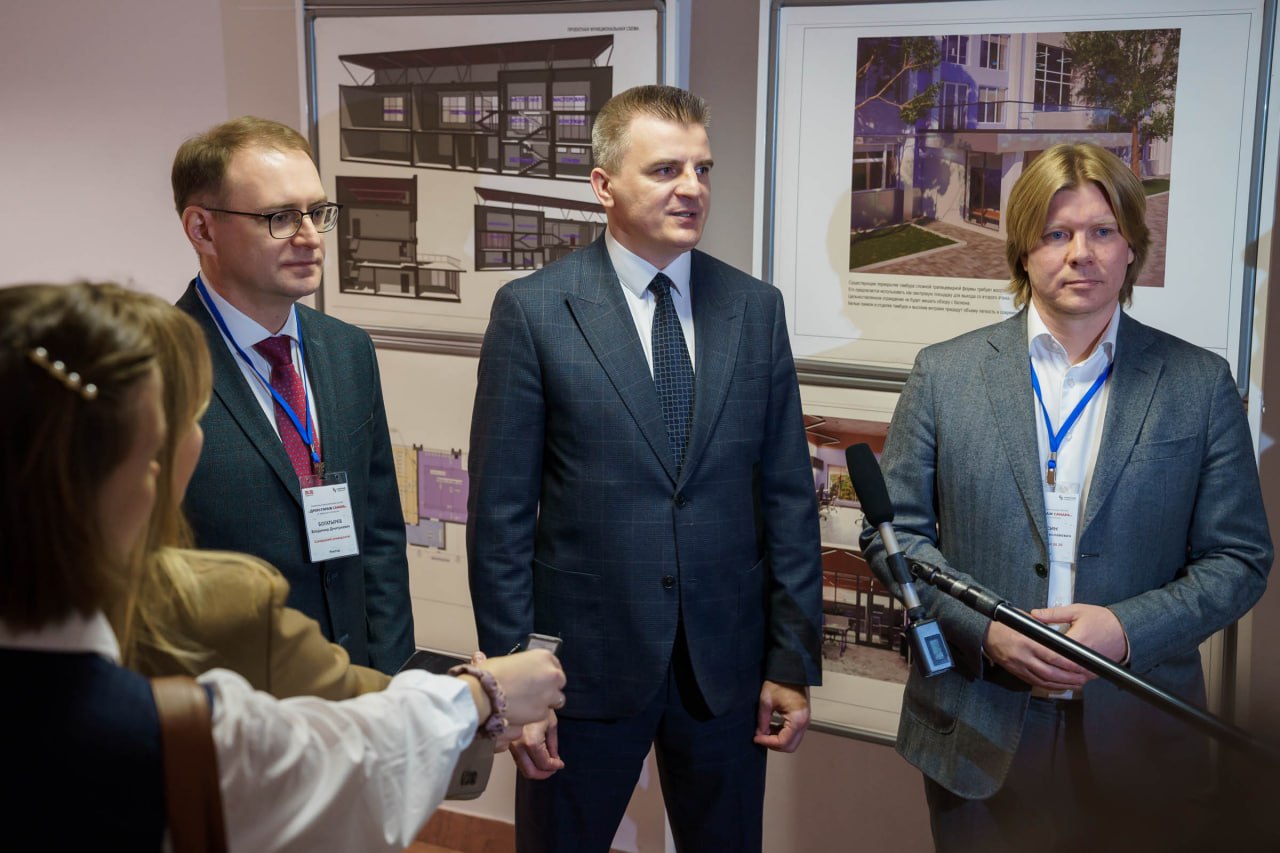
Commenting to the media, Vladimir Bogatyrev emphasized Samara University’s deep-rooted commitment to aerospace:
“Since its founding, our University has served the aerospace industry. A decade ago, recognizing the potential of unmanned systems, we launched a dedicated greenfield initiative—the Center for Unmanned Systems. Over the years, we’ve built strong expertise in drone design, programming, flight control, payload development, and AI-driven data processing. We’ve introduced advanced educational programs, developed new hardware and software frameworks, and trained specialists nationwide. Today’s agreement to create the ‘Drone Garage’ is the logical next step—a showcase for our achievements, a space for public outreach, and a proving ground for new ideas. Our goal is to make this hub a gateway into the drone world for schoolchildren, vocational students, and university learners alike.”
The “Drone Garage” will be based at Samara University, with a flight zone as its operational core. The facility will also feature an exhibition area, maker spaces, and a mini flight operations center.
This initiative aims to accelerate the region’s technological advancement by creating an accessible, dynamic ecosystem for experimentation and the implementation of forward-looking engineering and digital solutions.
Samara University was chosen as the host institution for good reason: it has amassed extensive experience in UAS development and workforce training. In 2024, the university became the largest provider under the federal “Personnel for UAS” project, having trained over 2,500 specialists through 70 programs across 34 Russian regions in just two years. This performance placed Samara University among the top three most effective providers nationwide, earning high marks from federal agencies and industry employers for the quality and practical relevance of its training. Additionally, the university spearheaded the introduction of an experimental legal regime for UAS in the Samara Region and, in 2024, received certification as an Aviation Training Center for civil aviation personnel.
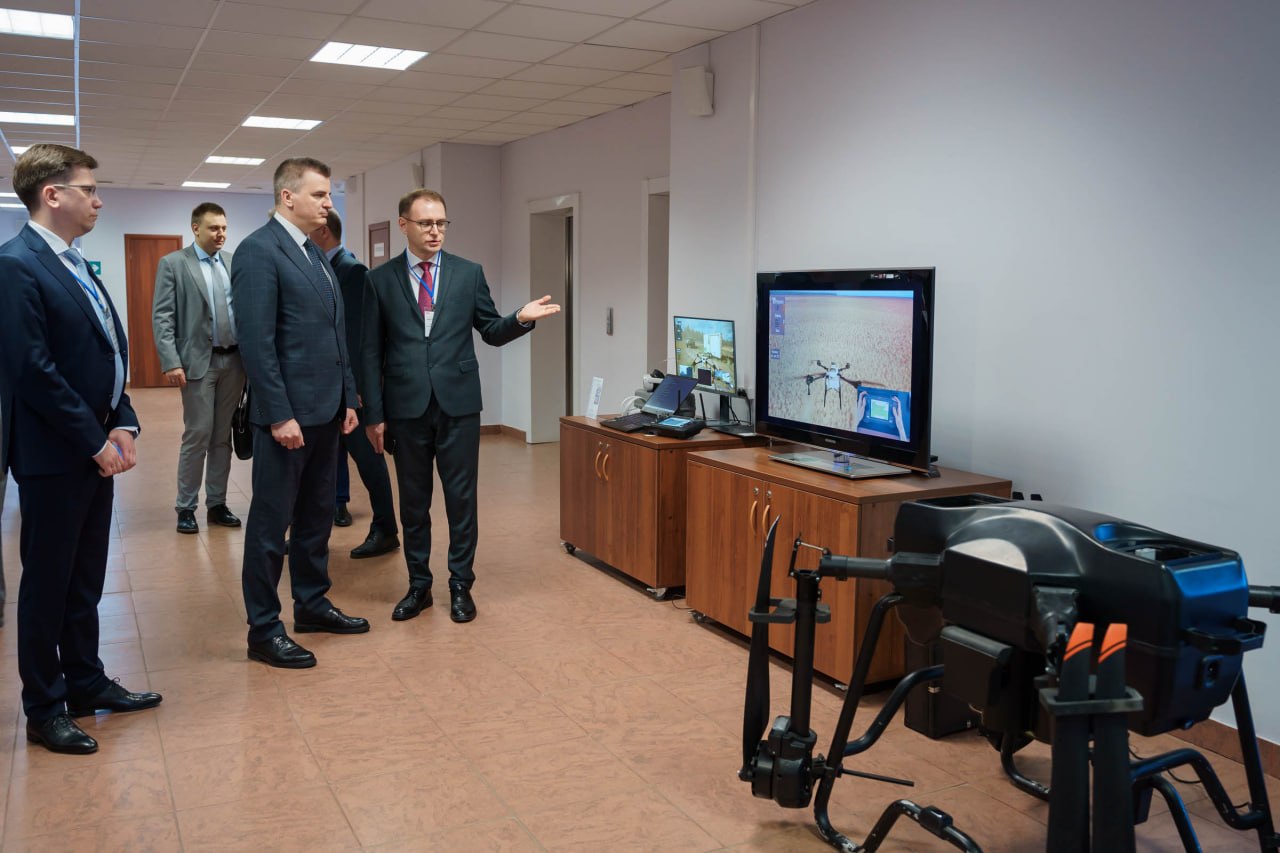
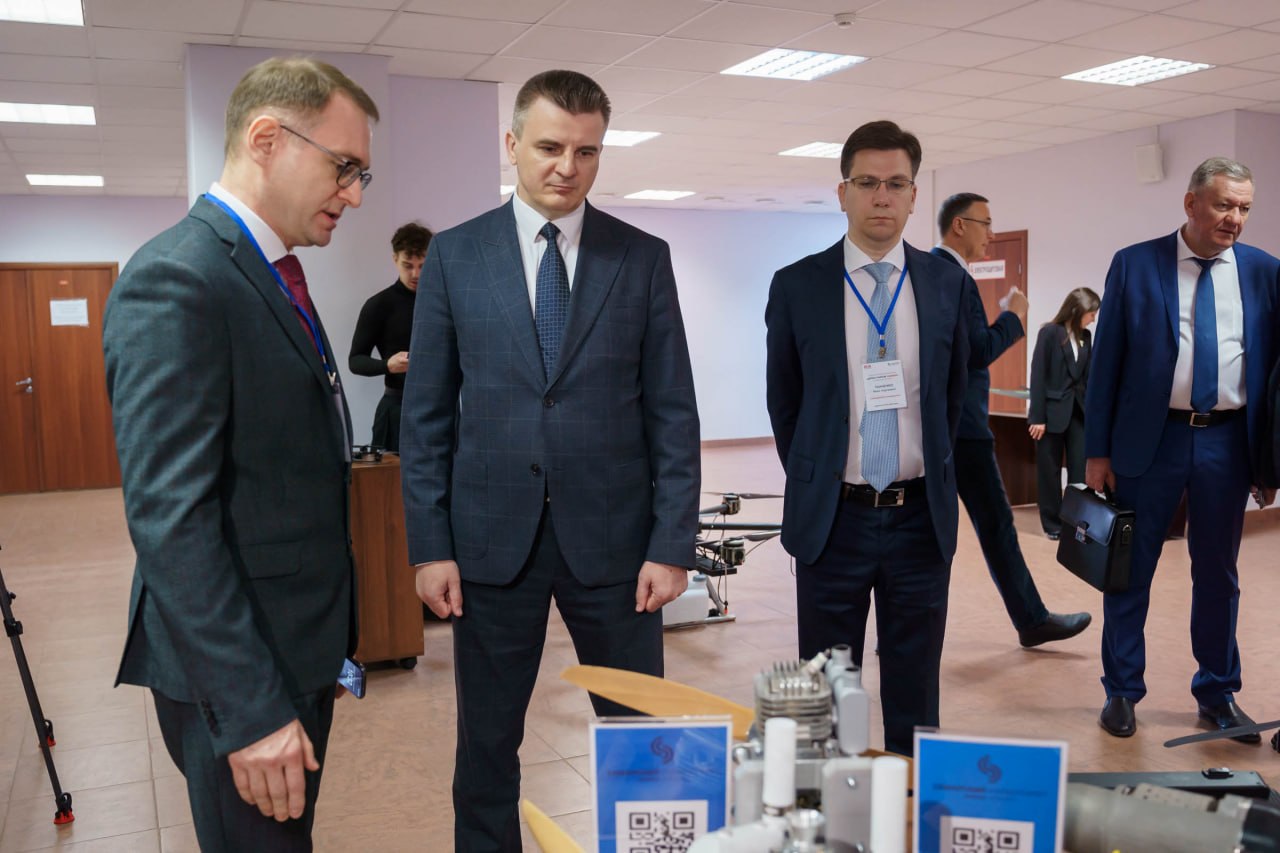
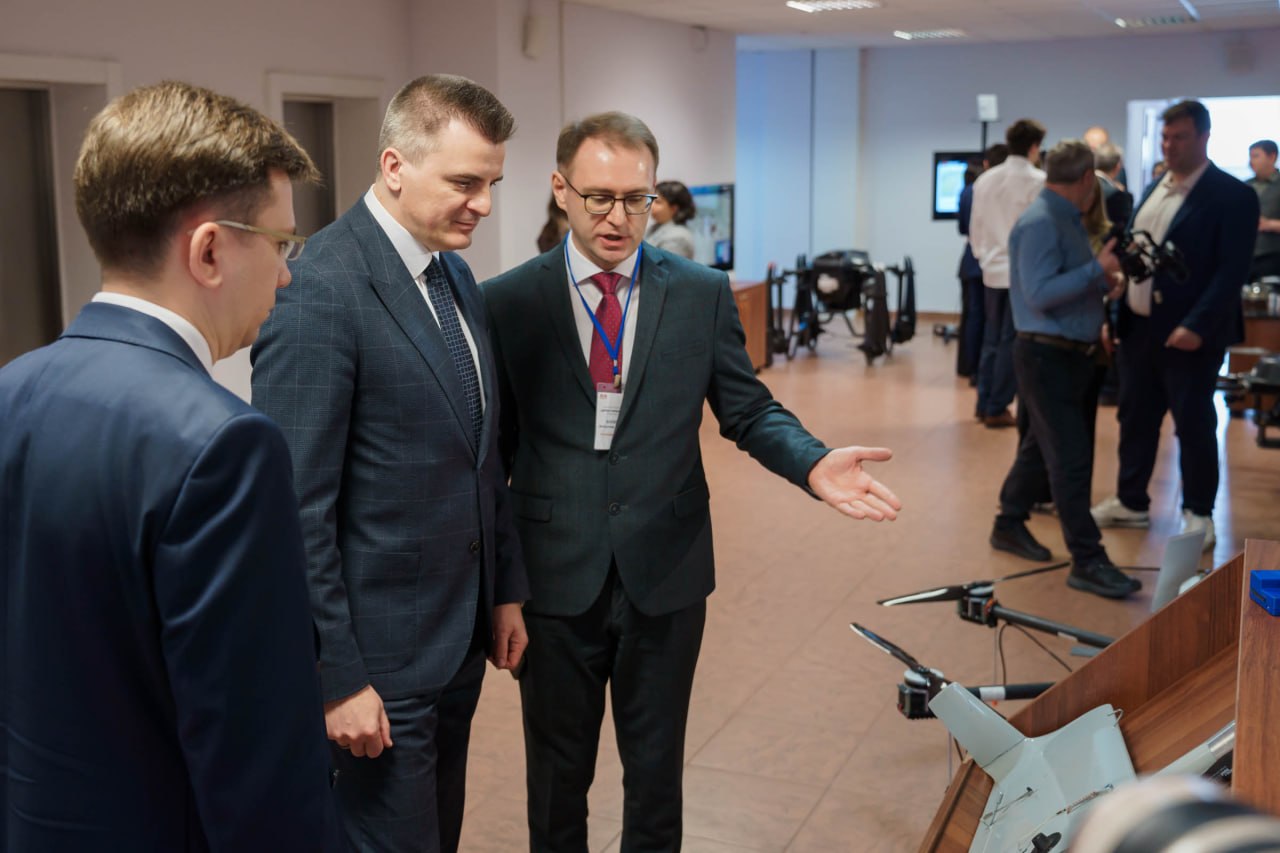
During the event, Rector Vladimir Bogatyrev presented key UAS developments to Deputy Governor Vyacheslav Romanov, including:
- The “Boomerang” aerial observation system for photogrammetry;
- The “Dobrynya” piston engine prototype, designed for fixed-wing UAVs and serving as a domestic alternative to imported motors;
- A training aircraft replica for beginner pilots and school students;
- An AI-powered pre-flight preparation system for unmanned systems;
- And other innovations in drone technology.
On the same day, under Romanov’s chairmanship, the Regional Council of the Government Commission on UAS Development convened at the university. Additionally, a strategic design session was held in a brainstorming format, where stakeholders—including educational institutions, businesses, and government representatives—defined the organizational model, mission, and collaborative framework for the “Drone Garage.”
For Reference:
The “Drone Garage” Technological Workshop aligns with the National Development Goals of the Russian Federation. The concept was originally developed during the “Archipelago 2024” intensive forum. In 2025, a permanent site launched at “University 2035” in Moscow welcomed over 10,000 visitors and hosted more than 100 industry events and hackathons. In 2026, the model is set for large-scale rollout across Russian regions.
Photo by Olesya Orina
