


On April 24, Moscow hosted a session of the Presidium of the Commission on Scientific and Technological Development (STD), dedicated to reviewing the performance of Russia’s World-Class Research Centers (WCRCs) in 2025.


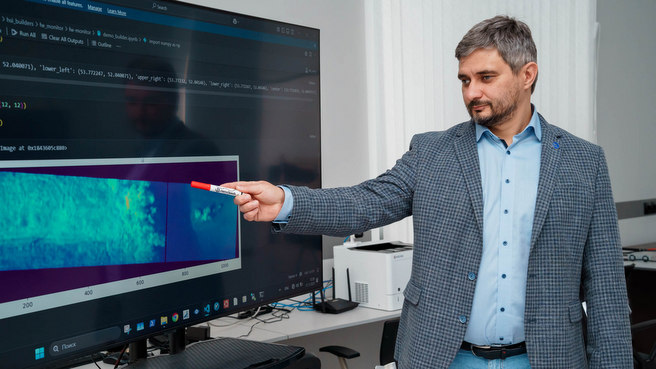
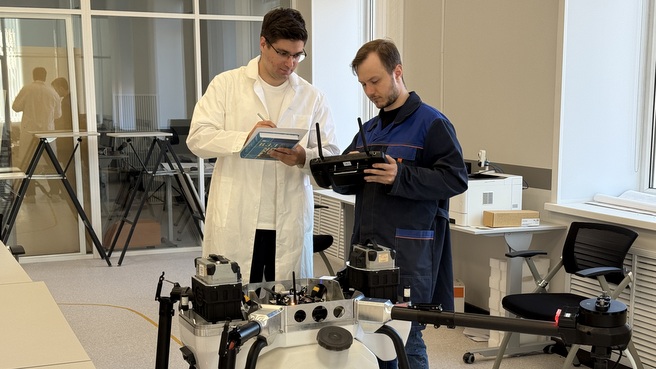
Currently, Russia operates 10 WCRCs, uniting 30 leading academic and research institutions across six priority scientific and technological directions established by presidential decree. These centers serve as critical bridges between fundamental science, higher education, and industry—accelerating not only cutting-edge research but also the rapid transfer of innovations into real-world production.
Opening the meeting, Deputy Prime Minister Dmitry Chernyshenko emphasized the role of WCRCs as national flagships in strategic fields such as bioeconomy, medicine, agriculture, and transport.
“In 2025, the centers not only met but exceeded their planned targets, successfully implementing all scheduled initiatives,” Chernyshenko stated.
“Over 600 leading scientists are engaged in their work, with a notably high proportion—more than half—being young researchers under 39. Many centers are now setting even more ambitious goals to achieve globally significant results.”
Among the ten centers presenting their 2025 achievements was the WCRC “Center for Intelligent Unmanned Aerial Systems” (IUAS), headquartered at Samara University.
According to Rector Vladimir Bogatyrev, the University delivered three key scientific and technological breakthroughs last year:
- Intelligent Design & Manufacturing:
A software suite based on deep learning was developed to generate mathematical models of aerospace structural materials. This innovation accelerates aircraft component design by 30–60 times.
- Integrated Security of UAS:
The first phase of cybersecurity research was completed, resulting in a comprehensive concept for protecting flight control centers against cyber threats. The framework classifies 20 types of attacks across three categories:
- General IT infrastructure breaches,
- Protocol-level command system intrusions,
- Human-factor-related vulnerabilities.
- Human-Machine Interaction:
A hardware-software cognitive monitoring platform was created to reduce operator error and speed up mission planning by 30–40% by tracking cognitive load in real time.
“Our mission is to achieve technological superiority in unmanned aviation—through generative design, artificial intelligence, and coordinated swarm operations,” stressed Bogatyrov.
“Critically, the intelligence of these systems emerges from the seamless integration of diverse components—from power electronics and control hardware to advanced computational algorithms.”
The “Center for Intelligent UAS” operates within a powerful consortium that includes Samara University, Tolyatti State University, the State Research Institute of Aviation Systems (GosNIIAS), and the All-Russian Research Institute of Experimental Physics (RFNC-VNIIEF). An industrial partner, the Russian Federal Nuclear Center (VNIIEF, Sarov), is collaborating on the development of photonic AI systems for next-generation unmanned platforms.
By the end of 2025, the center had fully staffed its team—with over 60% of researchers under 39 years old—and equipped its laboratories with state-of-the-art infrastructure. Looking ahead to 2026, the center plans to develop:
- Advanced UAS simulation complexes,
- Next-gen cyber-defense systems for flight control centers,
- A predictive analytics platform for operator error prevention,
- And novel hyperspectral sensors and optical computing units for onboard AI processing.
With this momentum, Samara’s WCRC reaffirms its position at the forefront of Russia’s push to lead in intelligent aerospace technologies.
