

What do the names and texts that surround us in urban space tell us? How do they shape the unique “text” of a place? And how do they contribute to the construction of our identity?
These—and many other compelling questions—captivated participants at the International Scientific Conference “Linguistic Landscape: At the Intersection of Media, Discourses, and Educational Technologies,” held on March 26–27, 2026, at the Institute of Humanities of Peter the Great St. Petersburg Polytechnic University.
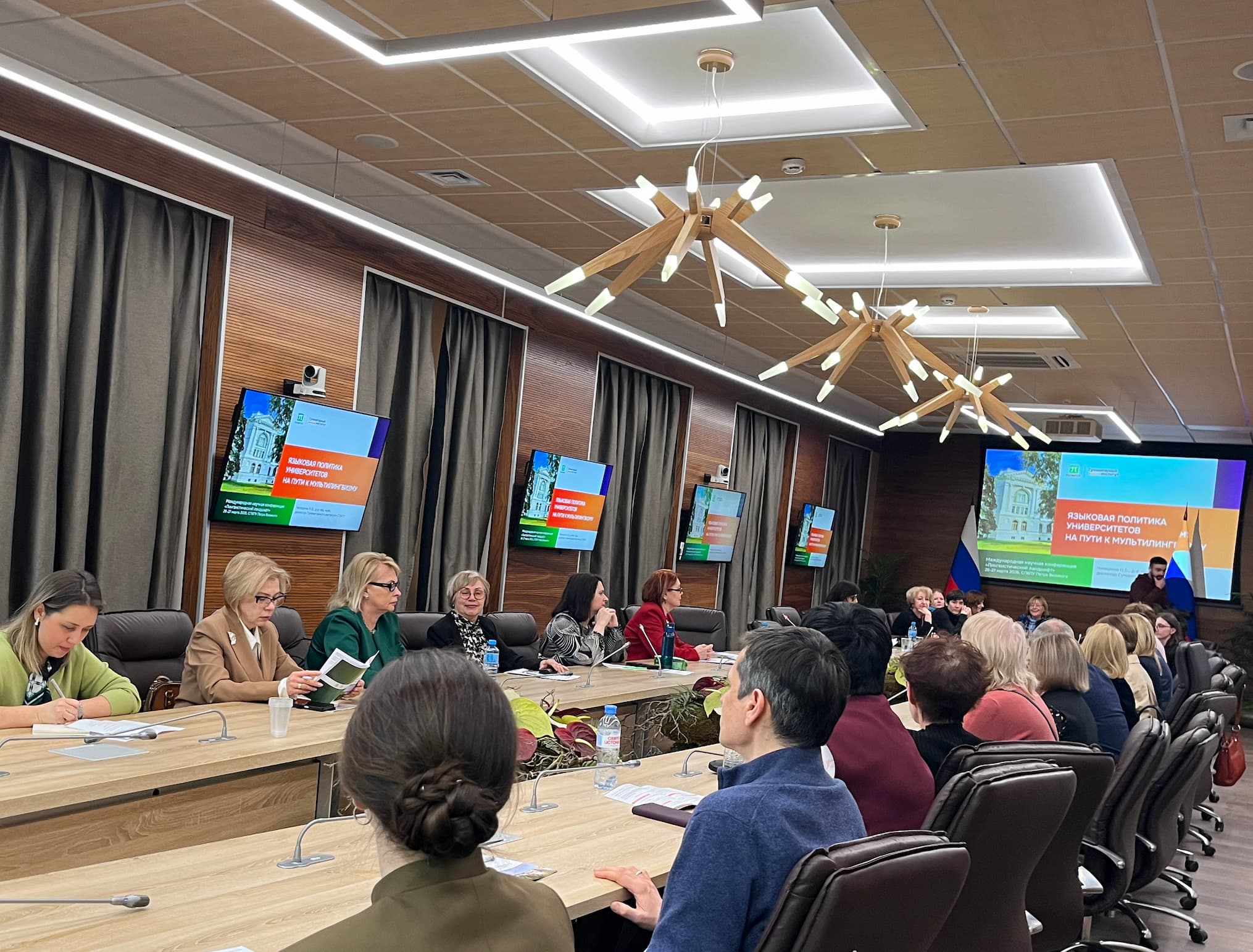
The conference was initiated and inspired by Valeriya Chernyavskaya, Doctor of Philological Sciences and one of Russia’s leading discourse analysts. In her keynote address, she underscored the importance of social indexicality in language and highlighted linguists’ distinctive ability to “read” the urban landscape as a living, meaningful text.
The event brought together prominent linguists from Moscow, St. Petersburg, the Volga region, Crimea, the Urals, Siberia, and Chechnya. It also featured a strong international presence, with scholars from Armenia, Belarus, Uzbekistan, Kazakhstan, Kyrgyzstan, Bulgaria, China, Turkey, and Switzerland—a testament to the global resonance of linguistic landscape studies.
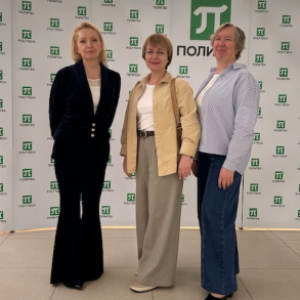
Representing Samara University was Professor Yekaterina Bespalova, Acting Head of the Department of German Philology. Her presentation explored how media representations reflect residents’ perceptions of the evolving linguistic landscape in their city—offering insights into the dynamic interplay between public discourse, urban identity, and sociolinguistic change.
