

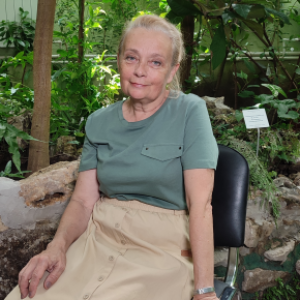
Dr. Lyudmila Kavelenova—Doctor of Biological Sciences, Head of the Department of Ecology, Botany, and Nature Conservation at Samara University, and Scientific Director of the University Botanic Garden—shared her insights on pressing environmental issues and ongoing restoration efforts in the Samara region.
Anti-rankings, Microplastics, and Wetland Restoration
— Recently, headlines claimed Samara Oblast was Russia’s worst region for air pollution in 2025. The Ministry of Natural Resources called such statements misleading. What’s really going on?
Russia has a well-established system for monitoring urban air quality, with annual environmental reports that assess cities based on multiple pollutants. For years, Samara wasn’t on the “problem list”—but recently, elevated levels of certain contaminants, including hydrogen sulfide, have placed us there. This is largely due to the incorporation of the Volgar residential district, built on previously undeveloped land. While this localized issue tarnishes the city’s image, it doesn’t reflect the overall air quality across Samara as a whole.
— If you had to rate the ecological state of Samara Oblast on a scale of 1 to 10, what would you give?
It depends on the indicators—but we’re certainly not among the worst in the country.
— Do you monitor environmental conditions in Tolyatti?
Our university focuses less on Tolyatti; that work is primarily led by the Institute of Ecology of the Volga Basin (RAS) and Tolyatti Polytechnic University. Still, the Samara–Tolyatti agglomeration is one of Russia’s largest—and while we share some challenges, each city also faces unique issues.
— Do you collaborate with Tolyatti colleagues?
Yes, though less actively than before—especially since the joint dissertation council at the Institute of Ecology was dissolved. Now we mostly meet at conferences or expert panels.
— In 2026, Samara Oblast will host 297 events as part of the nationwide “Water of Russia” campaign—cleaning riverbanks and lakeshores across 37 districts. Beyond aesthetics, what real impact will this have?
For decades, humanity pursued “indestructible” materials—only to create an environmental crisis. Plastics don’t just sit inertly; they shed micro- and nanoplastics that infiltrate water, soil, and even living organisms like fish. These tiny particles can be lethal to wildlife. Cleanup efforts are vital—not just for beauty, but for ecosystem health.
— Why restore wetlands? Aren’t they just swamps?
Far from it. Wetlands are irreplaceable ecosystems. Certain rare plants, birds, and animals exist only in these habitats. Where historical wetlands have been lost, restoring them is not just commendable—it’s ecologically essential.
— Does Samara Oblast have many wetlands?
We do have rare sphagnum bogs—unusual for our region. But given our climate and human pressures, I believe it’s equally important to protect our native zonal ecosystems: steppes and forests.

Waste Sorting, Urban Greening, and the Disappearing Trees
— Why hasn’t waste sorting taken root in Samara?
The issue isn’t public willingness—it’s the lack of infrastructure for processing sorted waste. Few recycling bins exist, and without organizations committed to full-cycle handling, individual efforts can’t solve systemic problems.
— What eco-habits do you practice personally?
I avoid overconsumption and minimize my ecological footprint—especially by reducing ultra-processed foods.
— Beyond air and water pollution, what silent crises threaten Samara today?
One major issue is the aging urban greenery. Soviet-era trees were planted as functional shields—filtering dust, providing shade, cooling streets. Now, those mature trees are dying. Replacing them with similarly sized specimens is nearly impossible due to dense underground utilities. As a result, modern greening often becomes purely decorative. But solutions are emerging: in December 2025, I participated in a roundtable on developing Samara’s future “blue-green framework.” Strategic planning is underway.
— Is this unique to Samara?
No—it’s a nationwide urban challenge. Though I’d say Tolyatti handles it better… despite its forests suffering severe wildfire damage. Restoration there is already in progress.
— What about courtyard greenery vanishing?
Many courtyard trees were planted too close to buildings. Over time, they lean away from shaded walls, becoming unstable and hazardous. Add to that the demand for parking—something never anticipated when these courtyards were designed—and you get massive pressure to remove greenery.
Reintroduction, Ecotourism, and the “Human + Nature” Equation
— What ecological projects are you working on now?
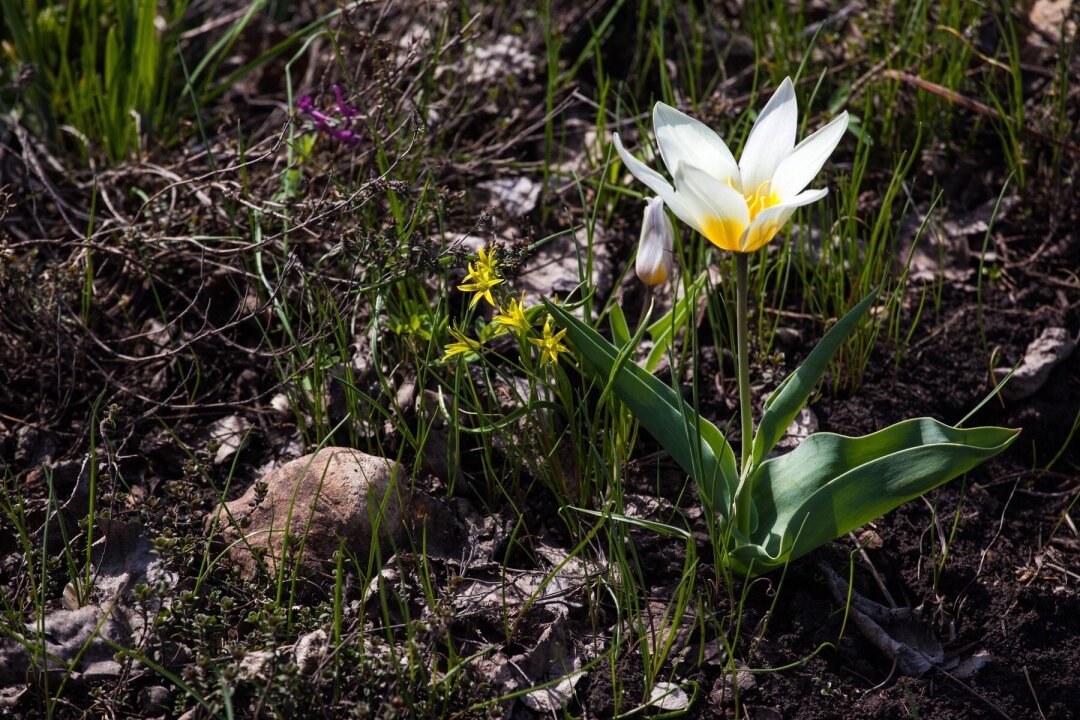
My focus is on plant ecophysiology, biomonitoring, and reintroduction programs through the Botanic Garden. Our region faces recurring droughts, extreme summer heat, and occasional winter frosts—making plant survival tough. Yet many species adapt remarkably. I study their structural and metabolic traits that enable resilience. Under the Ministry of Ecology’s mandate, we’ve spent years reintroducing rare plants into the wild.
— What is reintroduction?
It’s returning plants to their natural habitats after conservation and propagation. For example, in the scorching summer of 2010, a small population of Cossack juniper on Mount Zolnaya in Zhiguli Nature Reserve burned completely. Years earlier, with the reserve’s permission, we collected cuttings from that very site. Our garden successfully propagated them—and later used that same genetic material to restore the fire-destroyed population. We essentially rebuilt nature with its own original blueprint.
— What about opening recreational sites near protected areas?
Reserves were once purely for conservation and research—but today, they must also educate the public. That requires infrastructure. The danger arises when developers with no understanding of protected-area principles take charge. Poorly managed access can cause irreversible damage.
— Can tourism ever truly be “eco”?
It depends entirely on human behavior. Even in our Botanic Garden, visitors ignore rules—stepping off paths for photos, trampling rare plants. Multiply that by a million residents, and soon you have compacted soil where unique flora once grew.
— How do we preserve this fragile balance?
Through regulated recreational load. At Mount Strel’naya—a premier ecotourism site in Zhiguli Reserve—we helped design a dedicated trail to a scenic overlook. But people still strayed off-path, damaging slopes. The solution? Mandatory advance registration. Initially unpopular, it’s now accepted—much like booking theater tickets. Limited capacity isn’t exclusion; it’s sustainability.
— Some argue humans should never interfere with nature—just let it evolve on its own. What do you think?
In today’s overcrowded world, that’s unrealistic. Nature provides essential resources and ecosystem services—yet often receives pollution, destruction, and neglect in return. Complete non-interference is a luxury we no longer have. Our task is to intervene wisely, responsibly, and with deep respect.
Source: sobaka.ru
Text: Ksenia Vozgorkova
Photo: Press Service of Samara University
