

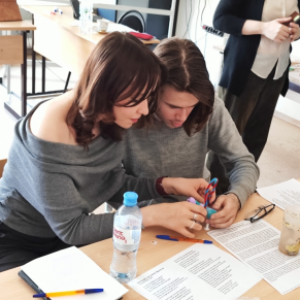
On April 16, 2026, third- and fourth-year students at Samara University took part in an intensive seminar led by Professor Alfred Nordmann of the Technical University of Darmstadt (Germany)—a distinguished scholar whose influence spans continents. In addition to his role in Darmstadt, Professor Nordmann holds honorary professorships at St. Petersburg Polytechnic University and the University of South Carolina, and serves as President of the International Society for Philosophy and Technology.
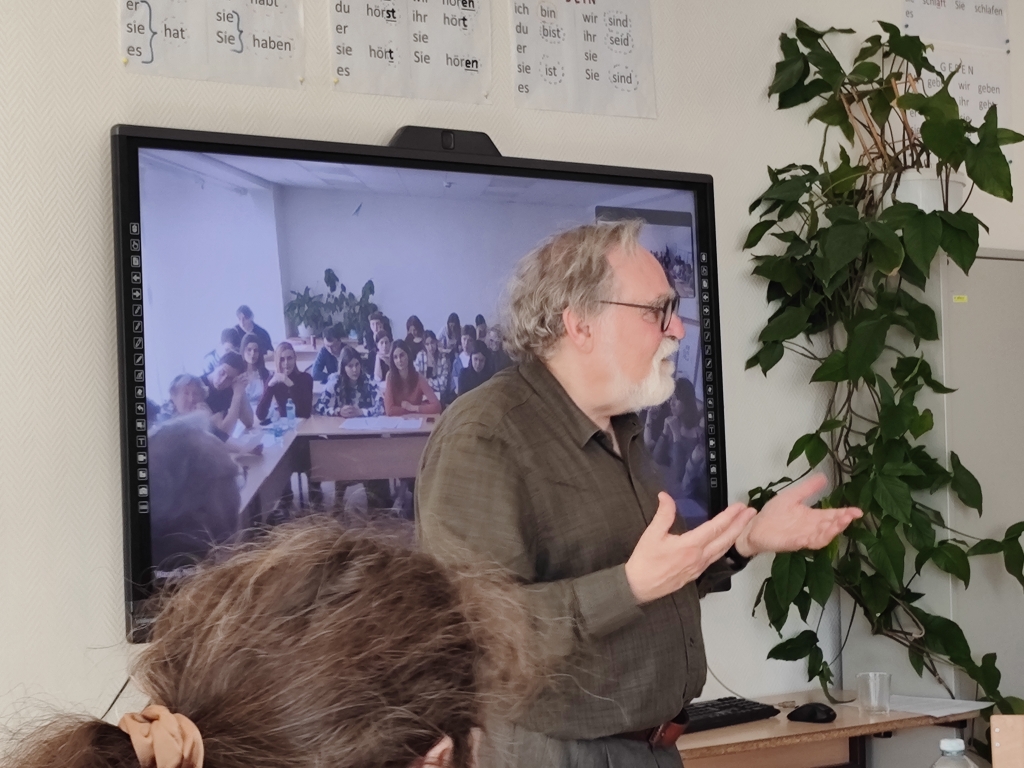
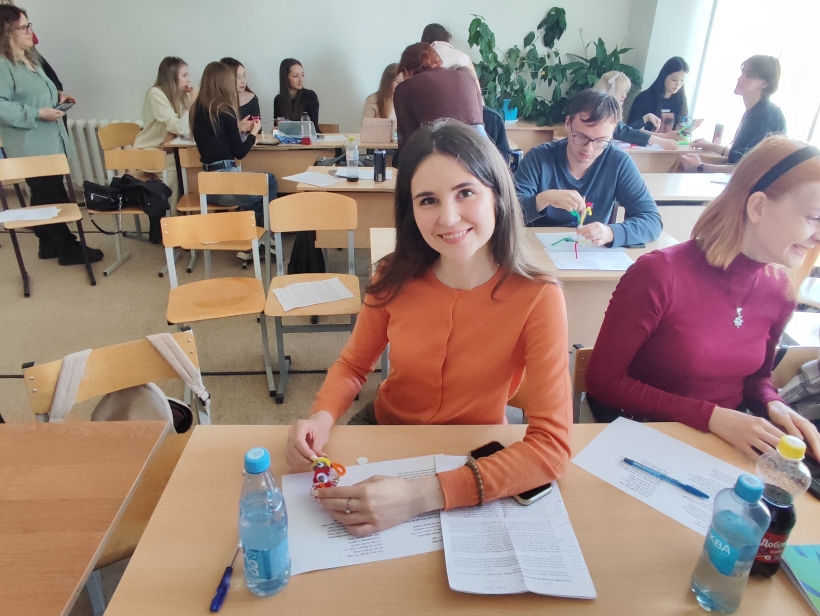
The joint seminar, attended by students majoring in Foreign Philology and Linguistics, centered on a close reading of Franz Kafka’s short prose piece “Die Sorge des Hausvaters” (“The Cares of a Family Man”). Conducted entirely in German, the discussion invited students to move beyond surface interpretation and delve into the philosophical depths of Kafka’s mysterious object—Odradek. Together with the professor, they explored its elusive nature through lenses of care, domesticity, materiality, scientific inquiry, and the human confrontation with the unknown.
Far from a mere ironic sketch about a strange household artifact, Kafka’s text emerged as a profound ontological provocation. Students examined it through etymological, phenomenological, and existential perspectives—unpacking how language, being, and ambiguity intertwine in Kafka’s world.
The conversation expanded beyond Samara via a live teleconference link to students at St. Petersburg Polytechnic University, enriching the exchange with additional voices and insights. Notably, Samara students demonstrated remarkable linguistic agility—switching effortlessly between German when engaging directly with Professor Nordmann and English during discussions with their peers in St. Petersburg.
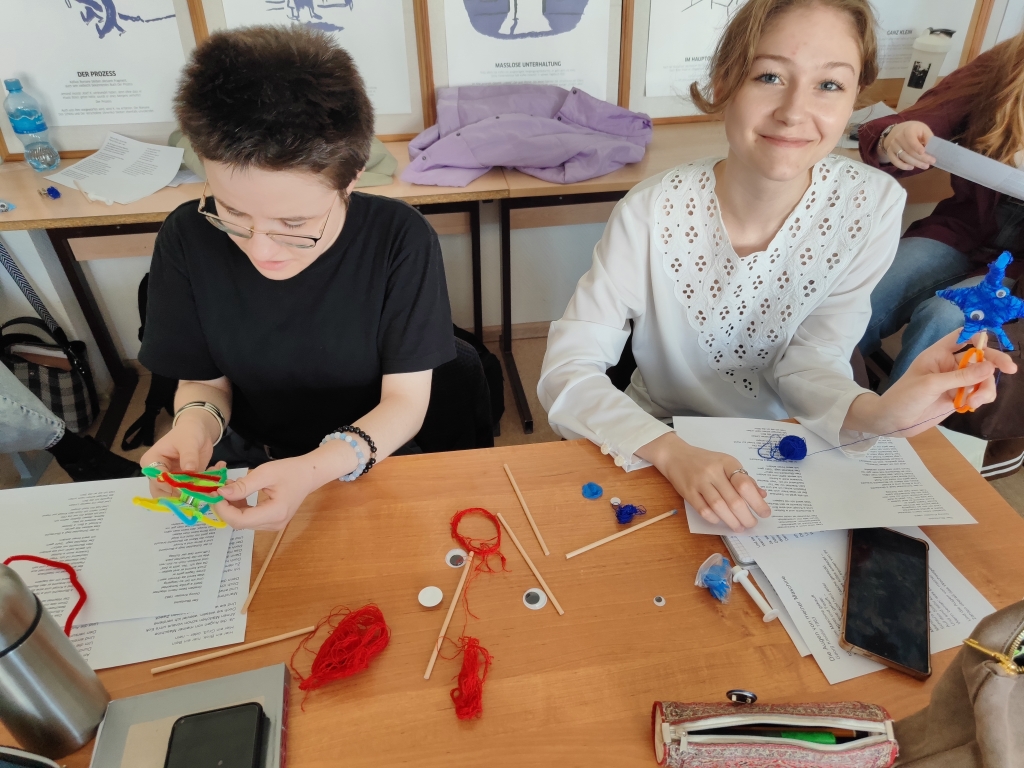
The latter part of the session shifted focus to Georg Kreisler—the Austrian poet, musician, and master of satirical chanson—whose multifaceted work resonates deeply with Kafkaesque themes. What began as an introduction to Kreisler’s songwriting evolved into an interactive philosophical workshop: students creatively visualized their interpretations by crafting physical representations of both Kafka’s Odradek and the enigmatic object described in Kreisler’s lyrics, using materials provided on-site. The exercise blended literary analysis, philosophical reflection, and hands-on artistry into a dynamic learning experience.
Professor Nordmann’s expressed desire to return next year for another collaborative session speaks volumes about the intellectual vitality and mutual inspiration generated by such encounters.
We extend our deepest gratitude to Alfred Nordmann for his generosity, insight, and commitment to cross-cultural academic dialogue—and to the leadership of the Institute of Social Sciences and Humanitiesfor making these exceptional events possible.
Text: Natalia Barabanova
